Author: Kidmin Bellin

  • Yes, Emilia Pérez is as Bad as they Say

    Yes, Emilia Pérez is as Bad as they Say

    Rating: 1.5 out of 5.

    Emilia Pérez is a Spanish-language musical crime film about a Mexican notorious and ruthless cartel boss who discreetly undergoes gender affirmation surgery and fakes her death, leaving behind a wife, two children, and a life of crime. After recovering, she starts fresh as Emilia Pérez, and tries to live a moral life by founding a charity to help victims of the cartel. Despite this promising premise, the film offers little more than a sloppy characterization of a trans woman and a surface level depiction of the issues that it attempts to tackle.

    Initially, the film received critical acclaim upon its release, from receiving a standing ovation at the 2024 Cannes Film Festival to the various awards and nominations it has received from the Golden Globes and Academy Awards.

    Slowly but surely, as the buzz about the film grew, and as it reached more audiences, the reaction began to shift online. Audiences criticized the film’s depiction of Mexico from improperly representing the Mexican judicial system to awkwardly written Spanish lyrics. Audiences also criticized the film’s depiction of transness, showcasing a protagonist with an evil, violent, inner-masculine side that comes out when she’s angry. There is an entire song that her children sing about how Emilia smells like their father, the filmmakers seemingly unaware that Emilia, having taken hormones for years, would smell completely different. All of these criticisms could have easily been avoided with the smallest amount of research, which the director, Jacques Audiard openly confessed to doing none of, stating, “No, I didn’t study much. I kinda already knew what I had to understand.” As a result, the missed details expose Emilia Pérez for its laziness and insincere handling of sensitive issues. But the criticism didn’t end there; everything from its performances to its direction to its musical numbers began to receive mockery.

    In mid-January, the increasingly negative public perception of the film came to my attention when I came across a short clip on Instagram featuring the film’s “Vaginoplasty” sequence where Emilia’s lawyer meets with a doctor to discuss gender affirming surgery. The song features these inspired lyrics:

    Hello, very nice to meet you

    I’d like to know about sex change operation

    I see, I see, I see

    Man to woman or woman to man?

    Man to woman

    From penis

    to vagina

    The song continues with a doctor listing different gender affirmation operations while transgender patients undergo and recover from surgery and gawk at the camera.

    I didn’t know what was more shocking about “Vaginoplasty”: the silly lyrics or the unpleasant melody. The instrumentation is ugly, the singing is unimpressive, and the lyrics are blunt and graceless. I could hardly believe this was a real scene in Emilia Pérez, so I decided to see it for myself.

    Two hours and 10 minutes later, my confusion was even stronger. During the first 30 minutes, I was admittedly invested. The movie starts off from the perspective of Emilia’s lawyer, Rita, and learning about Emilia from this perspective adds a lot of mystery. It is easy to be sympathetic when she opens up about her gender dysphoria, but the film doesn’t let the audience forget she is still a dangerous person. When Rita is taking too long to find a doctor to perform the operations, Emilia has henchmen break into her apartment, threatening to kill her if she doesn’t hurry up. They allow Emilia to be complex and human. After she transitions, though, the film acts as though she has instantly been redeemed of any criticism, for both her past and present.

    As Emilia attempts to lead a new and moral life, I waited for the consequences of her past to catch up with her. They don’t. Instead, Emilia invites it all back herself. After four years, she starts to miss her children, so she pretends to be a long-lost cousin and orders her former wife and kids to move in with her. Surely, upon seeing how her “death” affected her wife and children, and after continuing to lie about her identity, Emilia will reflect or feel guilt over the trauma she’s been putting them through, right? No, instead, Emilia is just happy to have them around, wanting them to be as dependent on her as possible.

    Later on, when Emilia starts a nonprofit to help identify the bodies of cartel victims, I waited once again for her to reflect on her past as a vicious cartel boss. But she’s not interested in reflecting, and neither is the movie. The nonprofit is revealed to be funded by corrupt and dangerous donors, and though initially this hypocrisy is called out, Emilia doesn’t care, and the film never brings it up again. Emilia never acts remorseful, nor is she held accountable for her actions. Yet the movie’s finale presents her as a saint-like figure.

    This image released by PATHÉ FILMS via IMDB

    The problems don’t end there. Karla Sofía Gascón and Zoe Saldaña give decent performances, but the same cannot be said of Selena Gomez, who plays Emilia’s wife. At her best, she’s fine; at her worst, she appears like she doesn’t understand the words coming out of her mouth.

    While “Vaginoplasty” is by far the silliest and craziest musical number of the film, most of the songs suffer from underwhelming and occasionally awful vocal performances.

    In spite of all this, Emilia Pérez has already won four awards at the Golden Globes, including for Best Motion Picture – Musical or Comedy, and it has received 11 nominations at the Academy Awards.  I imagine that its various award wins and nominations will not be looked back at fondly.

    So yes, Emilia Pérez is as bad as they say. The movie is plagued by a lack of authenticity and it pretty much fails on every level: as a musical, a drama, and as an entertaining viewing experience.

  • The First American Gay Novel That Nobody Knows About

    The First American Gay Novel That Nobody Knows About

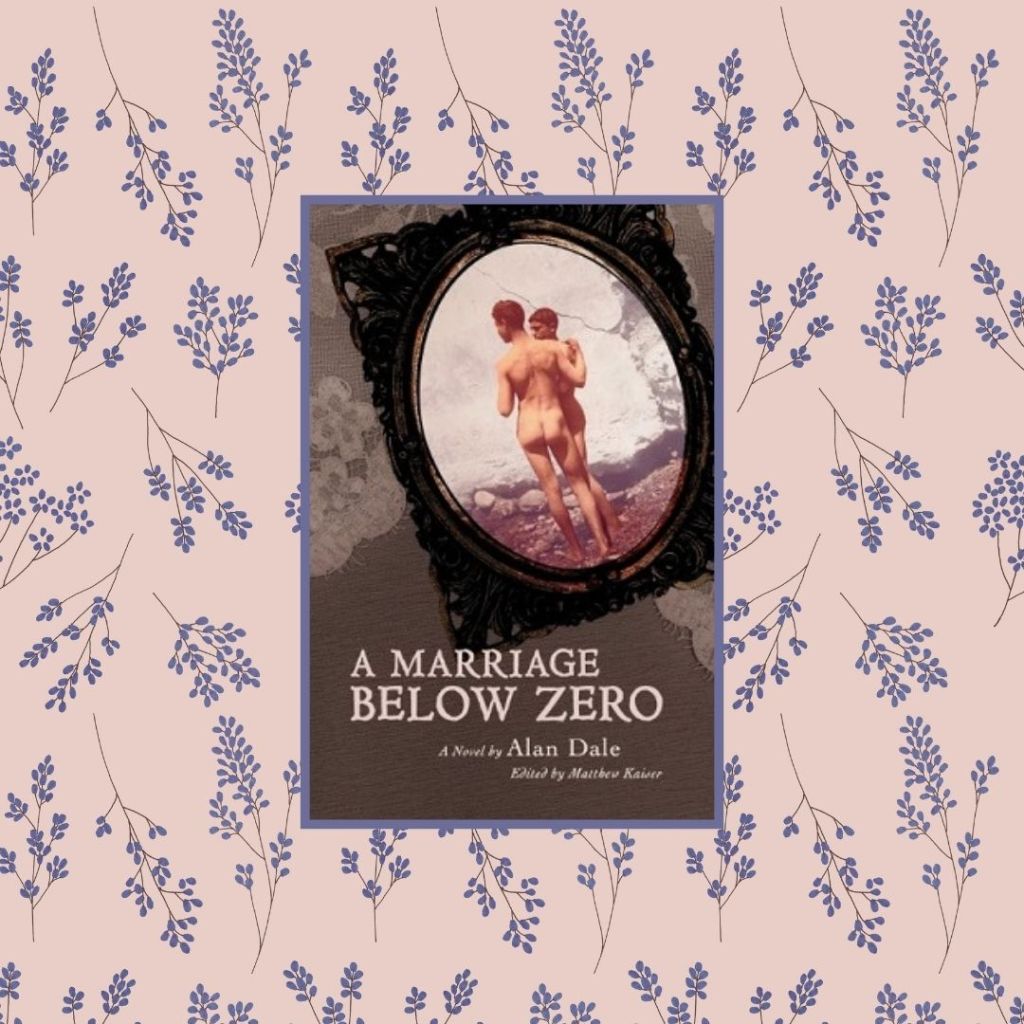
    I recently discovered and read the 1889 melodrama often attributed as the first English-language gay novel, A Marriage Below Zero, written by Alan Dale. After finishing it, I was refreshed by its bold depiction of queer sexuality and baffled as to why it remains as obscure as it is.

    For 1889, the homosexuality in the story is surprisingly obvious. While a work like Oscar Wilde’s 1890 The Picture of Dorian Gray was very queer in terms of themes and symbols, here, it’s not subtext; it’s the foreground. The characters’ relationship and sexualities aren’t explicitly labeled, however, I imagine even readers of the time put two and two together. While that is all remarkable in itself, progressive subject matter alone does not equate quality. So is the book any good? Well, for the most part, yes.

    The story centers on Elsie, an unmarried, modern woman with little interest in men until she meets the charming and mysterious Arthur Ravener. He is intelligent and humorous and treats Elsie as an equal. The only downside: he spends all of his time with another man, Captain Dillington, whom Elsie immediately distrusts. Nonetheless, Arthur and Elsie continue to bond and he eventually proposes to her. They get married and set off to live in the Countryside together. Much to Elsie’s frustration, however, Arthur rushes off to London the very night of their honeymoon, and continues to abandon her every chance he gets in the following months. When she expresses her concerns, Arthur dismisses them, often gaslighting her into thinking his behavior is completely normal. Elsie loses her patience and takes matters into her own hands, finding out (if you haven’t already guessed) that he is having an affair with Dillington.

    The work is greatly enhanced by the cleverness and comedic nature of Dale’s writing. The first chapter, for example, opens with Elsie telling the reader: “No, I shall not weary you with a long account of my childhood, and all that sort of thing. When I read a story, I always skip the pages devoted to the juvenile days of the hero or heroine. They are generally insufferably uninteresting, or interesting only to the writer…” only to follow up with multiple pages dedicated to an account of her childhood. The book is written with a humor and sweetness that I found particularly engaging. I was completely hooked by this comedic introduction.

    While Dale triumphs as a writer, he ultimately does not demonstrate the same consistency as a storyteller. The novel suffers from poor pacing, especially during the middle chapters which drag on in a tedious pattern of Arthur doing something secretive and Elsie being suspicious. It is tiresome to read about the same frustration over and over again. While it must be more obvious to a reader in 2024 that Arthur is having an affair with Captain Dillington, I imagine even a reader in 1889 might have grown bored of the same repeating scenes. After all, affairs were not shocking in the 19th century, yet it takes Elsie a dreadfully long time to suspect one. Thankfully, when she does find out, the story picks up again, eventually catching Arthur in bed, naked, with Dillington.

    A Marriage Below Zero is an important book and it deserves more recognition. Many people are completely unaware that 19th century queer literature exists in the first place! Obscure novels like this have the power to paint a more authentic picture of the time they were released in. Though it is flawed, there is something so special about reading a novel from 135 years ago that features a gay relationship, even if it isn’t destined for a happy ending. The novel was controversial and written by a fairly unknown theater critic, so it makes sense that it wasn’t a major success upon its release. However, for its subject matter, it is a highly significant piece of work that should no longer be lost to history. 

  • A Crisis In Sex Education

    A Crisis In Sex Education

    When it came to my high school sex education, LGBTQ+ issues got a single slide in a powerpoint presentation and here’s what I learned: there is no cure for HIV, wear a condom if you have anal sex, and transgender people exist. That was it. As high school continued, I learned about sexual injuries not from the curriculum, but from two different queer classmates, one of whom ended up in the emergency room. Both young adults, like me, were unaware of the crucial safety measures specific to anal sex. These injuries could have easily been prevented if we had been properly educated. However, despite its failure, my high school sex education was still better than most. I have met several individuals who received no mention about the queer community in their sex-ed classes at all. This needs to change. No student should have to learn about such avoidable dangers through traumatic experiences.

    The current standard for sex education in America heavily prioritizes heterosexual, cisgender students. It overlooks the needs and dangers specific to the queer community. According to the CDC, in 2020 alone, 20% of HIV diagnoses were people aged from 13 to 24. Despite the preventable nature of this issue, only 6% of high school students have been tested for HIV. And while it varies from state to state, data from School Health Profiles: Characteristics of Health Programs Among Secondary Schools shows that 39.3% of lead health education teachers from high schools across the nation received professional development on how to support LGBT students. That means that in most cases, queer students are left to their own devices, which can lead to increased spreading of STIs as well as sexual injuries.

    Conversations about testing, PrEP (an HIV preventative medication), and being undetectable make all the difference, not only in making sex less scary for queer youth, but making it safer. And while the LGBTQ+ community is the most at risk, HIV affects everyone.

    It’s important to recognize there is a disproportionate awareness between heteronormative and queer sex in society at large. Traditional “straight sex” is prominently represented in nearly all forms of media: TV shows, movies, books, songs, etc. Consequently, most people grow up and learn about that version of sex, even if it’s not explicitly taught. This is not to imply that heteronormative sex needs less coverage, rather, emphasize the importance of giving equal weight to queer sex education.

    Sexual education is a powerful resource and it should be accessible to everyone. The next generations deserve an education that is more inclusive, one that helps them navigate the world, regardless of their gender and sexual identities.