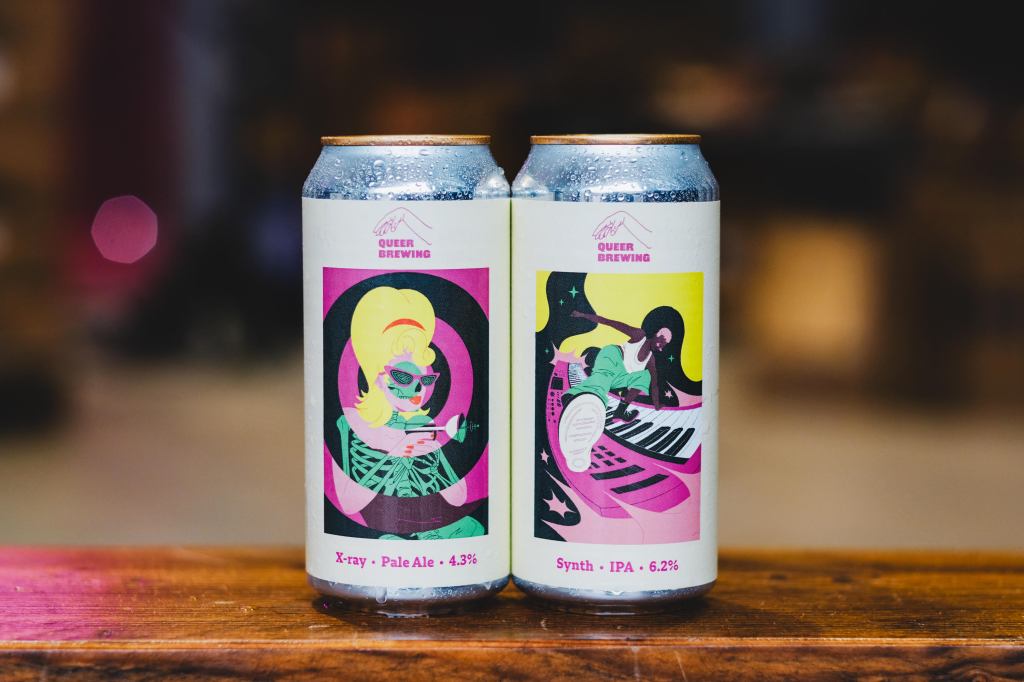
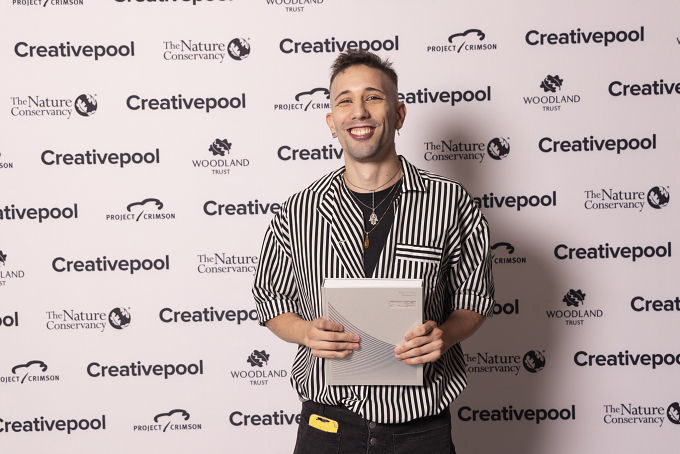
French illustrator Driss Chaoui (Kalakal) recently collaborated with Queer Brewing, the UK’s first queer- and trans-owned brewery, to celebrate Queer History Month. The project, celebrating Alan Hart and Wendy Carlos, received a Silver Award from Creativepool and was named a runner-up by Creative Quarterly this month.
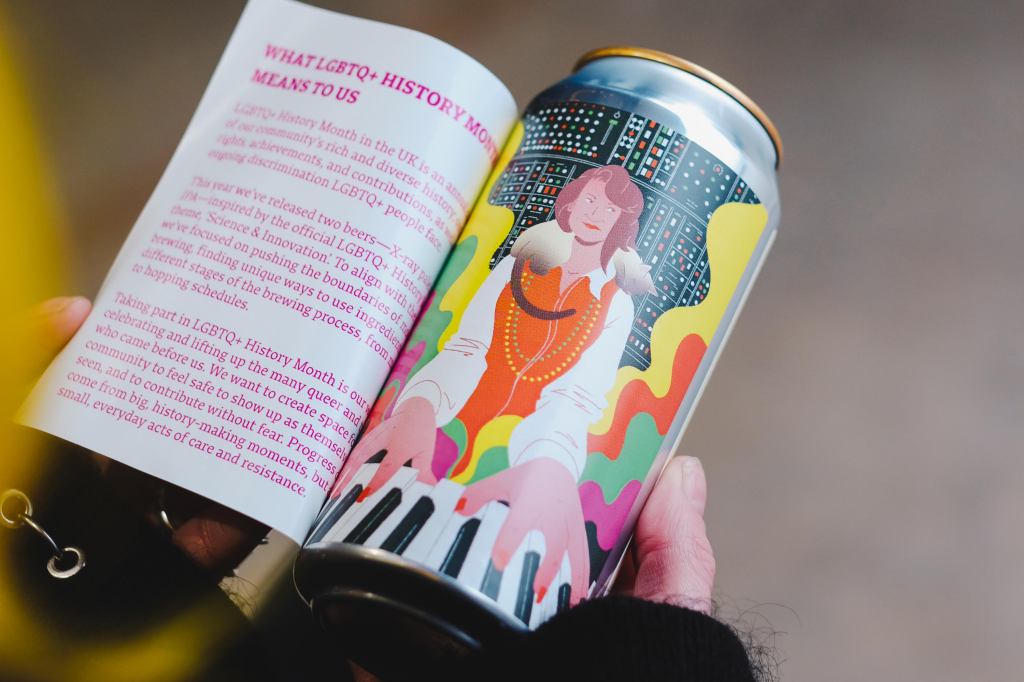
The project celebrates the impact of trans icons Hart and Carlos, whose work had a lasting impact on medical radiology and electronic music, respectively. Hart devoted much of his career to the treatment of tuberculosis, while Carlos helped bring synthesizers to mainstream audiences. Each packaging illustration includes a portrait of both innovators, as well as one original illustration.
Kalakal is a Toulouse-based, self-described “color enthusiast,” working across editorial, publishing, packaging, and commercial projects. Their work combines bold compositions and conceptual storytelling.
According to Kalakal, “The brief was very last minute. I immediately knew I wanted to represent Wendy and Alan in a very dignified way, but adding a fun touch to it. What do X-rays evoke to me? Well, apparently a 1960s weirdo with a beehive, somewhere between Mars Attacks and Juno Birch, but definitely campy as hell.”
Kalakal’s portfolio of art and other projects is available to browse online at kalakalillustration.com
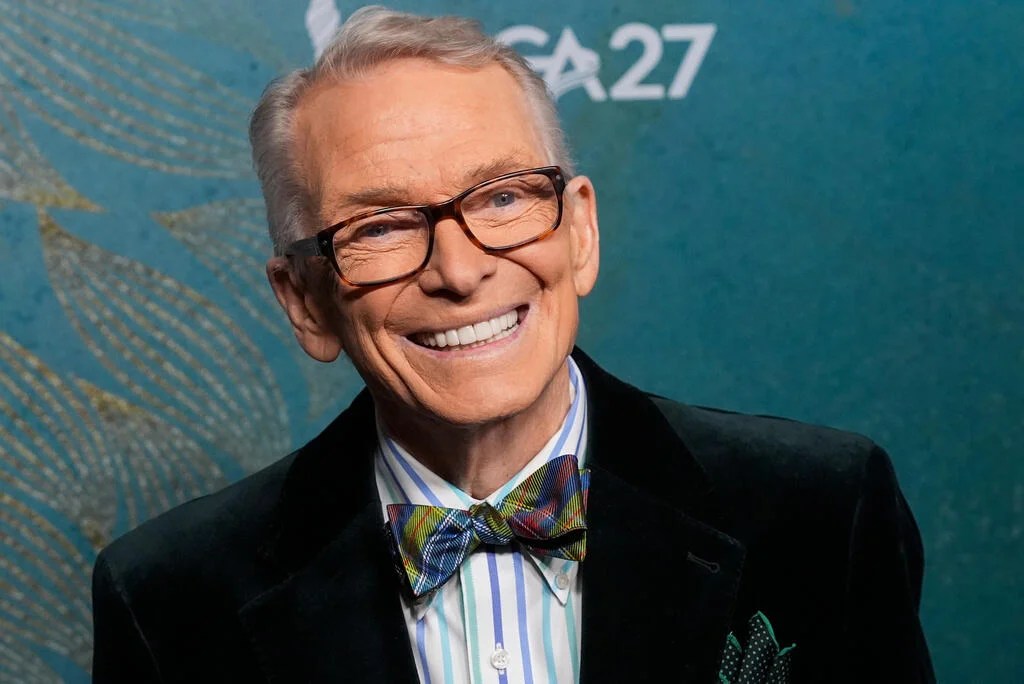
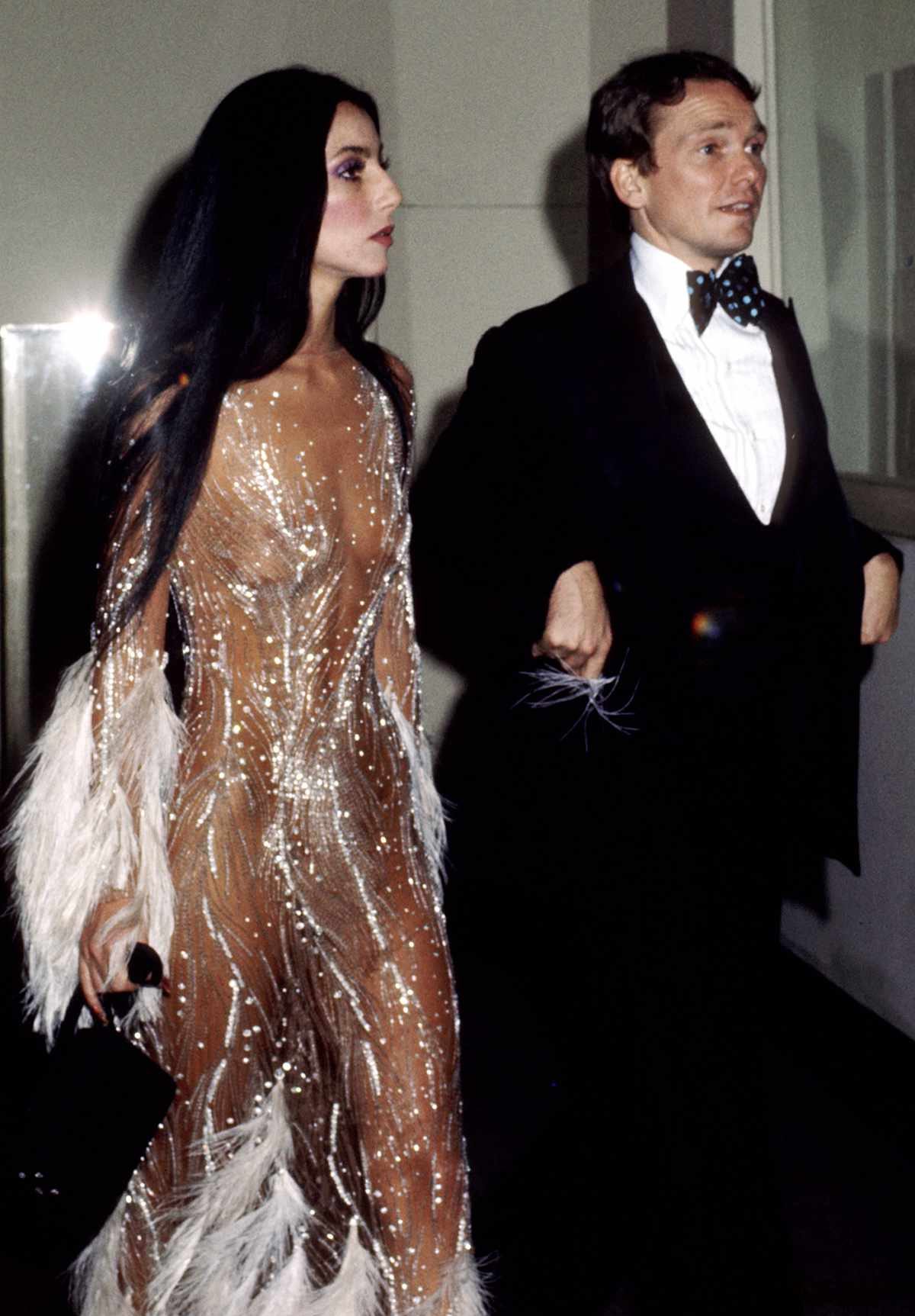
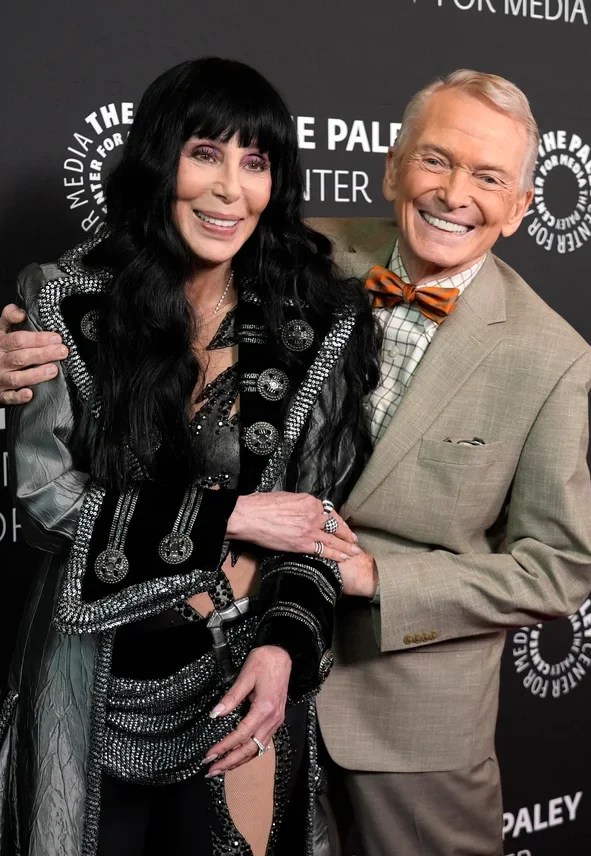
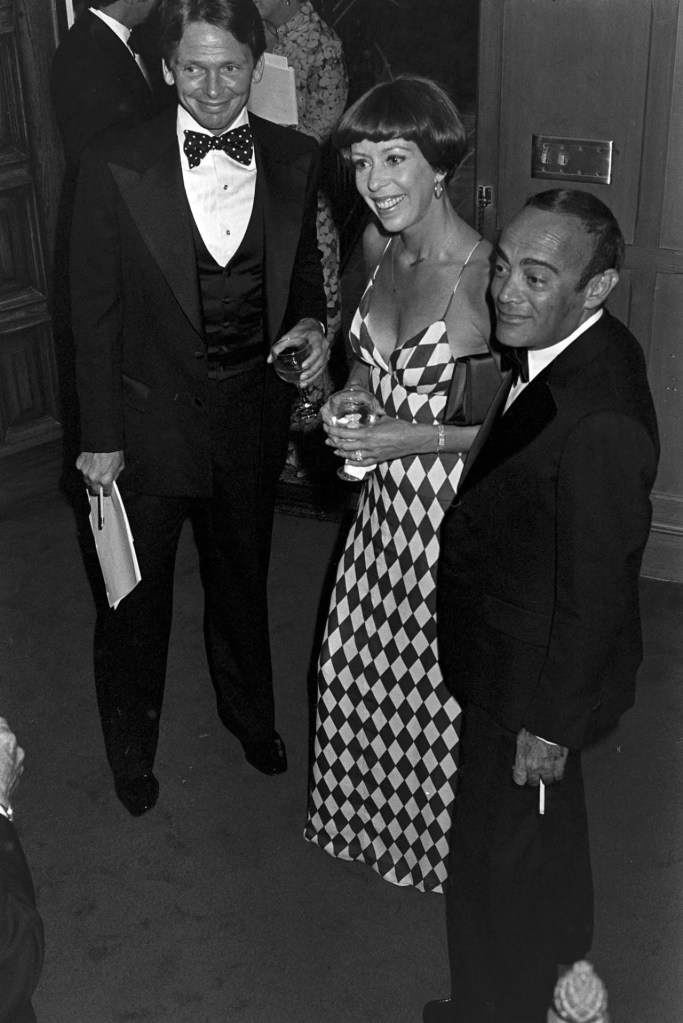
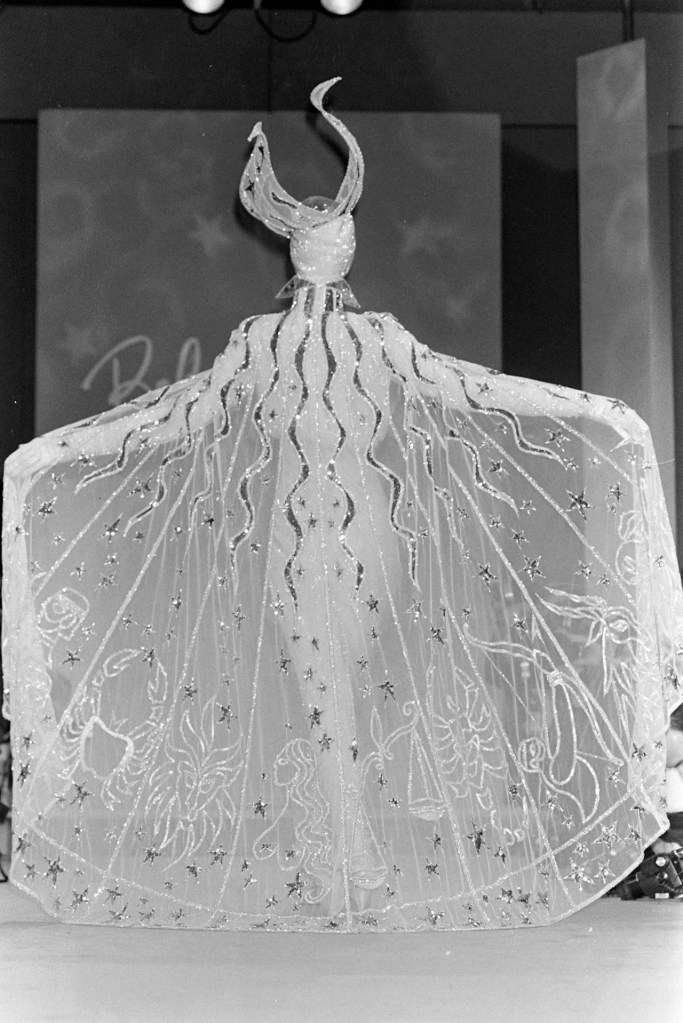
Bob Mackie, the legendary fashion designer known for his collaborations with Cher, Tina Turner, and Elton John, died of pneumonia on Sept 14th.
A post from his Instagram account announced his passing, stating, “He lived his 87 years to the fullest, fulfilling his dream of being a Fashion and Costume Designer, which is all he ever wanted to do. His genius and extraordinary designs will live on forever, continuing to bring beauty into this world.”
In his illustrious career, Mackie earned nine Emmy Award wins, three Academy Award nominations, and induction into the Television Academy Hall of Fame. Mackie’s legacy of iconic work will live on forever.
He is survived by his granddaughter Alyssa Townsend, his great-granddaughters Kyla and Keira Townsend, and former wife Lulu Porter.
After a brief battle with cancer, Dolly Parton, country music singer, Hollywood star, and beloved icon in the queer community, has died at 80 years old.
Parton’s legacy will be forever immortalized with countless hits like “Jolene” and “I Will Always Love You” as well as her roles in films like Steel Magnolias and 9 to 5.
A true beacon of love and kindness, Parton was a vocal advocate for the queer community. She petitioned for marriage equality, defended transgender Americans, and championed drag culture.
Discussing her queer fanbase during a 2014 Billboard interview, Parton critiqued those who use religion as an excuse for homophobia, stating: “If people want to pass judgment, they’re already sinning… I try to love everybody.” While Parton was deeply religious herself, she saw her Christian faith as a responsibility of acceptance, not hate.
There is a question running beneath all of Jake Robertson’s work: What is it that makes us human, and what happens when someone tries to take that away?
Robertson (They/He) is a Soviet cultural historian, educator, theatermaker, and storyteller. They studied Slavic Languages and Literatures at Princeton, trained in acting at the Royal Conservatoire of Scotland, and recently completed a PhD at Oxford, where they researched professional theater inside Soviet Gulag camps.
But Robertson’s work has never been confined to the archive. They have taught Russian language, history, and theater to students around the world. Robertson’s scholarship examines the relationship between artistic expression and political control, exploring how culture survives and sometimes resists under authoritarian systems.
At the same time, Robertson’s career as a theatermaker and drag artist has taken him from Off-Broadway theaters to queer pubs to Shakespeare’s Globe.
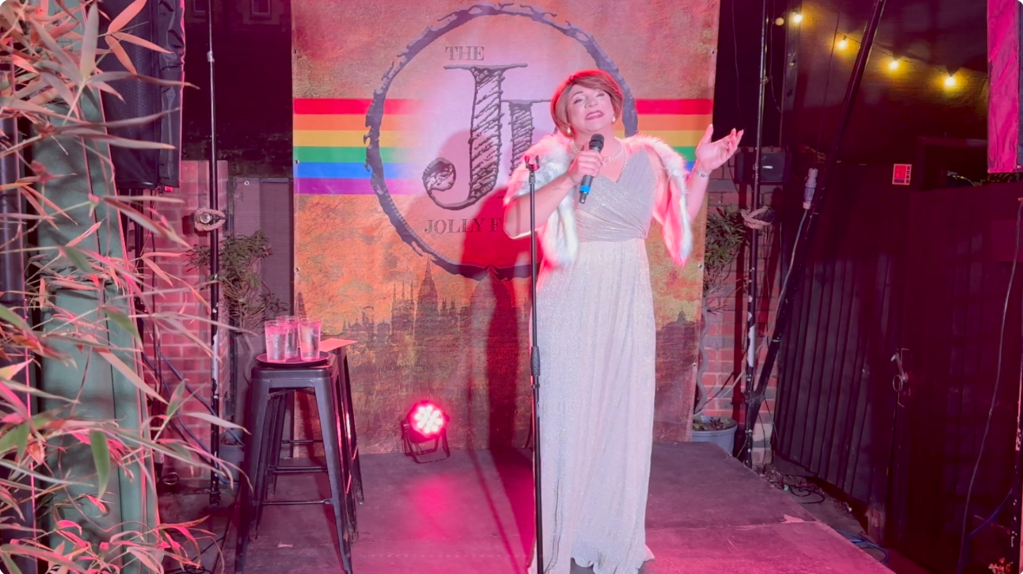
Robertson’s creative projects include Saundra Lezzenbaum: Love in Concert!, a one-woman drag spectacular combining original music, improv comedy, and couples therapy. Love in Concert! was just one of Saundra’s shows. Her current rep is a monthly community mixer called Saturday Night Love. It also combines comedy, cabaret, and group therapy in an effort to foster connections and build community.
There is also Songbird, a play in development that weaves together the life and music of queer Soviet cabaret icon and Gulag theater star Vadim Kozin with the story of a drag artist facing imprisonment in contemporary Russia.
On paper, these worlds might seem impossible to reconcile. An Oxford historian and drag performer. Soviet archives and comedy clubs. Gulag theater and queer performance. But for Robertson, they are all part of the same lifelong inquiry.
“What binds us all together, while at the same time making us wholly unique?”
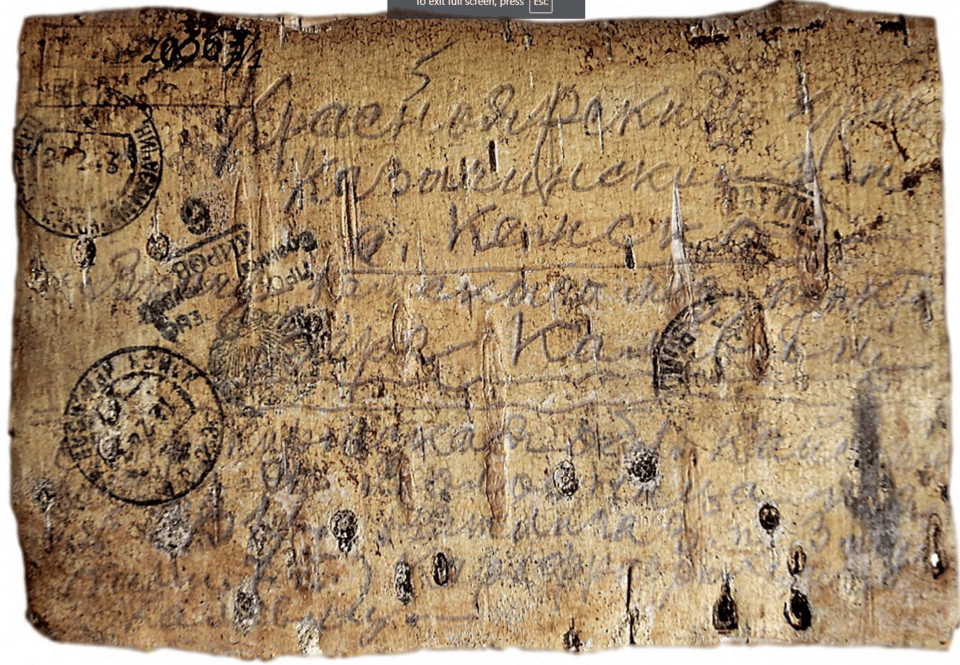
Birch bark letter from Siberia.
The Search for What Connects Us
Robertson’s fascination with humanity has always existed between individuality and belonging.
For much of Robertson’s early life, they carried the weight of a divided identity. They describe spending two decades closeted, negotiating questions about who they were and how openly they could live.
“I began as a nerdy sensitive gay boy in the Midwest and now have broken out of the binary and embrace an expansive queer identity that transcends gender and sexuality, shaping my perspective on almost everything,” Robertson says.
“Now that I have embraced who I am and opened that up more and more, I have become even more interested in bringing us together and what we all share.”
Whether sitting in an archive in Siberia researching a forgotten performer, or stepping onto a stage as Saundra Lezzenbaum, Robertson keeps returning to the same essential human longing. To be recognized.
“There is something magical that happens when you can be seen by someone else,” Robertson says. “We are vast and complex, but in some profound way, we want to be seen.”
For Robertson, that recognition carries almost spiritual weight.
“Namaste,” comes to mind. “The divine in me sees the divine in you.”
That belief may seem far removed from the brutal realities of Soviet repression, but Robertson sees the same human impulse everywhere: the desire to connect and find meaning even in circumstances designed to destroy those possibilities.
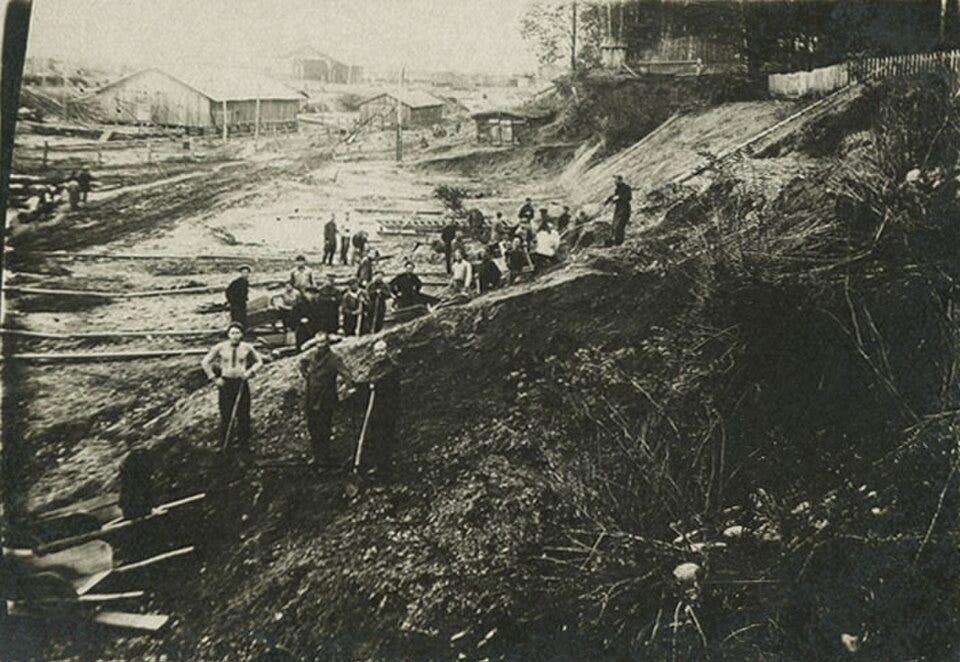
Gulag work.
The Stage Behind the Barbed Wire
Robertson’s doctoral research examined one of history’s most unlikely artistic landscapes: professional theater inside the Soviet Gulag.
The Gulag system was built around forced labor and political control. It was designed to extract productivity from millions of prisoners while attempting to reshape them according to Soviet ideology.
Yet within that system, something unexpected emerged: Theater.
“I got into Gulag theater through memoirs,” Robertson says. “Through these experiences in the camps, I felt this connection to the artists.”
Prisoners who had been actors, directors, musicians, and designers before their imprisonment continued creating. Others found artistic roles within the camps. They built stages, organized performances, designed sets, and produced operas and plays, all while receiving the support and resources of local Gulag administrators.
Within the very system that sought to destroy their humanity, these artists found a way to preserve that humanity through their art.
For Robertson, this transformed his understanding of creativity.
“As a theater maker and a creative, it gave me a deeper reverence for the creative act as an expression of your identity…There is something about revering that act.”
Art was not simply entertainment but proof of existence. It was a declaration.
I am still here.
Robertson’s research also complicates easy narratives. Gulag theater was not simply a story of heroic resistance. The performers often faced impossible moral questions. Some felt guilty because theater offered them privileges unavailable to others. Some prisoners accused them of collaborating with camp authorities.
“The people who survived,” Robertson explains, “are the ones whose memories we are reading.”
History, like humanity itself, is complicated.
“That spectrum of humanity and barbarity is fascinating… The same camp boss who took up the role of patron-of-the-arts, who joyously cheered for the Gulag opera, also oversaw a regime of mass starvation, exploitation and death.”
The contradiction is unsettling. But it is also revealing. History does not only show us what people do. History forces us to contemplate the contradictory vastness of being human.
Robertson’s dissertation will be a book set for release in 2028 with Cornell University Press.
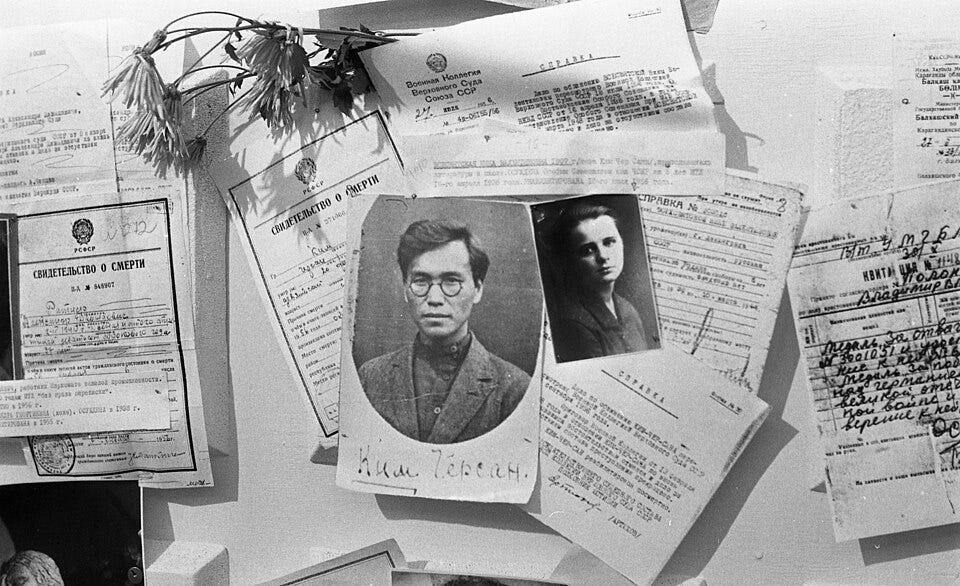
Documents of the Gulag’s victims.
Why Authoritarians Fear Stories
For Robertson, the struggle over history is ultimately a struggle over storytelling.
“Stories were everything. All human institutions and civilizations are built around stories.”
Governments use stories to create national identity, justify policies, and define enemies. The Soviet Union carefully constructed narratives about progress and the inevitable triumph of communism.
But stories are dangerous because they can never be fully controlled. They can also complicate official narratives.
“I believe official narratives are also a form of storytelling, and a powerful one at that. But our stories, especially those that illuminate the expansive complexity of human reality, can also serve as an incisive challenge to those hegemonic discourses. That to me is the power of queer stories, the kind that refuse to submit to norms, conventions and binaries.”
Authoritarian systems often demand simplicity: one truth, one version of history, one acceptable identity. But human experience resists simplicity.
“Reality is more complex,” Robertson says. “That complexity is exactly what my work seeks to preserve.”
“The story of Gulag theater would have been lost to the snowdrifts of time were it not for the local historians, survivors, descendants who preserved those memories and materials. My goal with my decade of research was to do my part to make sure they did not die and disappear.”
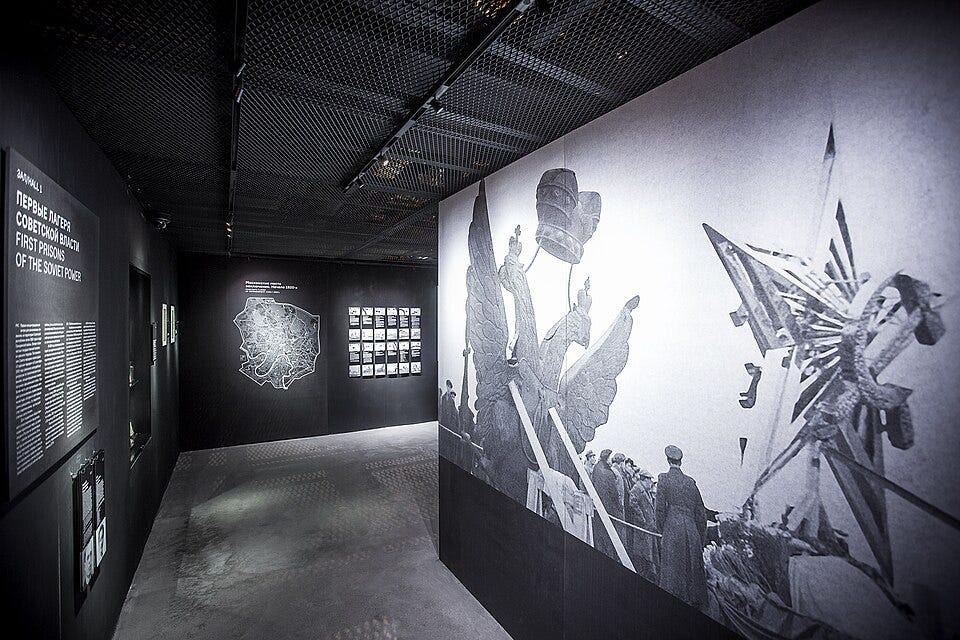
Exhibition of the GULAG History Museum.
Historians are trained to analyze evidence carefully. Artists are trained to explore possibility. Robertson believes both are necessary and mutually enriching.
“I have years of training as a serious historian and as an artist. There is something to be said about the reality and limits of our knowledge, understanding what we can and cannot know for certain.”
But scholarship cannot remain locked away.
“It can’t exist in a vacuum. We need to communicate what we learn and share it.”
At NYU, Robertson went on to create a brand new multidisciplinary course on Soviet Theater. It was called “Soviet Stages: Theatre as Revolution, Repression & Resistance in the USSR.” This fall, they will teach Introduction to Theatre Studies, building the course around the frame of drag and performing gender onstage and off.
“When we did the scenes in class, we learned much more,” Robertson says, reflecting on Soviet Stages. “We could never get that just from words on a page. The artist enlivens and brings to life so many new things that we cannot do as researchers.”
That philosophy informs Saundra Lezzenbaum, Robertson’s drag persona.
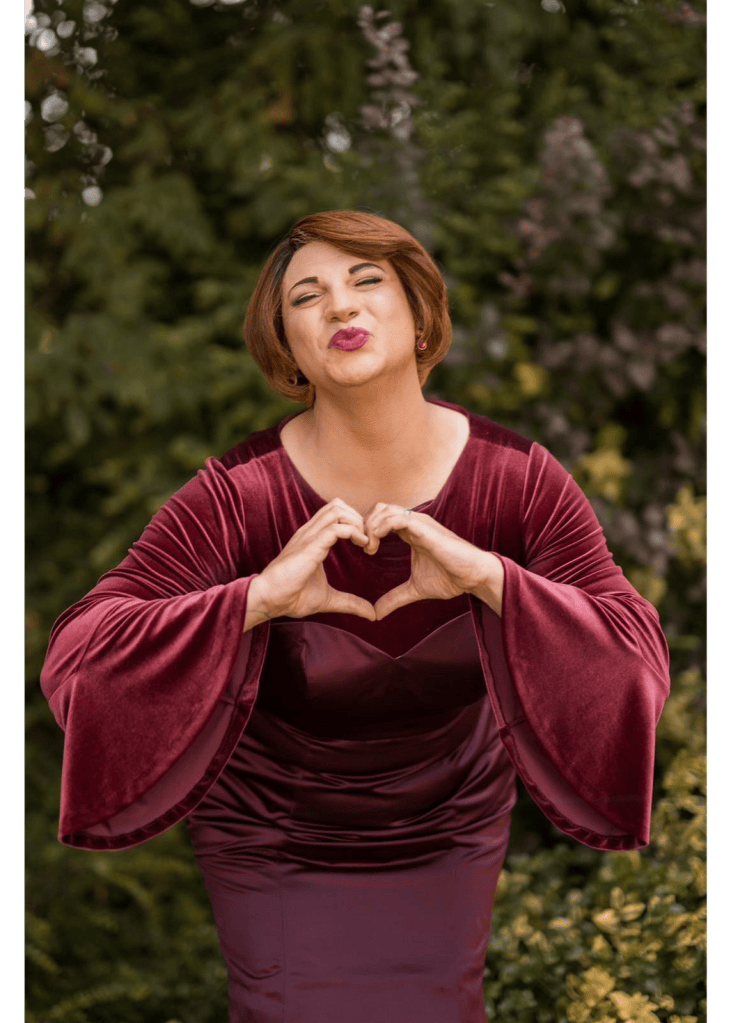
Saundra Lezzenbaum is a fictional character, drag cabaret persona, and self-proclaimed “America’s Queen of Hearts” whose larger-than-life mission is to rescue romance one laugh at a time. Hailing from her “palatial duplex in Ronkonkoma, Long Island,” Saundra presents herself as a world-famous love coach, matchmaker, and relationship expert whose improbable résumé includes a cosmetology background, a lunchtime Emmy-winning television show called Queen of Hearts on The CW, and a collection of wildly imaginative self-help books, including Married to Menopause: Keeping Things Hot Through the Hot Flashes and her love memoire Heart Attack, the Good Kind.
At the center of her carefully crafted mythology is her supposedly flawless marriage to her beloved husband, Max Lezzenbaum, which she uses as the foundation for her advice on achieving “#PerfectMarriage” bliss. In performance, Saundra becomes a comedic Cupid for the modern age, hosting interactive New York City mixers, cabaret shows, and variety events aimed at solving what she jokingly calls the city’s “Cost of Loving Crisis.”
Through her one-woman musical comedy spectacular Love in Concert!, featuring original parody “Saungs” from her fictional album Saungs for a Perfect Marriage, and her audience-driven “Love Lezzons,” where she improvises relationship advice based on real dating dilemmas, Saundra blends satire, theater, and audience participation into a joyful exploration of love and the absurdities of modern romance.
For Robertson, drag is not an escape from serious scholarship. It is another form of historical inquiry. A way of asking: Who gets to be visible and who gets to imagine another version of themselves?
“By doing drag as a community mixer, it combines celebration of individual identity with a commitment to bringing us together and building real human connection.”
Remembering People Well
Robertson’s projects repeatedly return to forgotten voices.
His genealogy project, Ancestory, transforms family history into narrative experience. It asks people to confront their ancestors honestly, not as perfect heroes or permanent villains, but as complicated human beings shaped by their circumstances. Ancestory weaves together rigorous archival archeology and inspired people-centered storytelling, fostering an accessible personalized journey through your family tree. This unique ancestry experience is curated by Robertson.
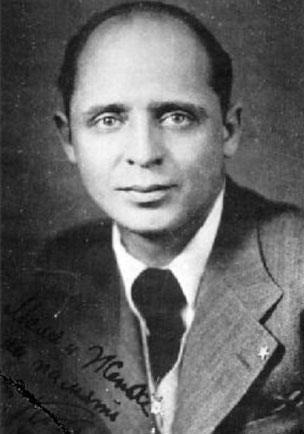
The play Songbird continues this work by exploring the life of Vadim Kozin (1903–1994), a queer Soviet cabaret icon whose career was transformed by Stalinist repression. Known as the “Soviet tango king,” his powerful, lyrical voice blended traditional Russian romance with gypsy soul.
In 1944, at the height of his fame, Kozin suddenly vanished from public life. He was arrested by the Soviet secret police and charged with homosexuality, which was criminalized under Joseph Stalin’s regime. Convicted and sentenced to hard labor, Kozin became the star of the Gulag Theater of Magadan.
The details shift but the mechanisms remain. The attempt to silence certain identities is an attempt to decide whose lives are worthy of recognition.
Vadim Kozin
Near the end of our conversation, Robertson considers a thought experiment: What if tomorrow every archive disappeared? Every book. Every historical document. Every official record. What would remain?
Human storytelling.
What stories would they fight hardest to preserve?
The stories of connection and creativity. The stories of people who found ways to remain human in the face of inhuman circumstances.
“I guess what comes to mind,” Robertson says, “is that there is something in us all that connects us.”
A historian might hesitate because such a statement is difficult to prove. But Robertson has spent their life witnessing it. In Soviet archives and on theatrical stages. In classrooms and in moments of performance and vulnerability.
“There is something that does unite us at our core. And it can be seen by people of vastly different experiences.”
Perhaps that is the thread running through everything Jake Robertson does.
The historian searches the past for forgotten voices. The teacher shares knowledge across cultures. The storyteller preserves complexity. The performer creates spaces where people can be fully seen. And beneath it all is a belief that may be the most radical story of all: Even in the darkest places, human beings continue creating. They continue connecting. They continue telling one another:
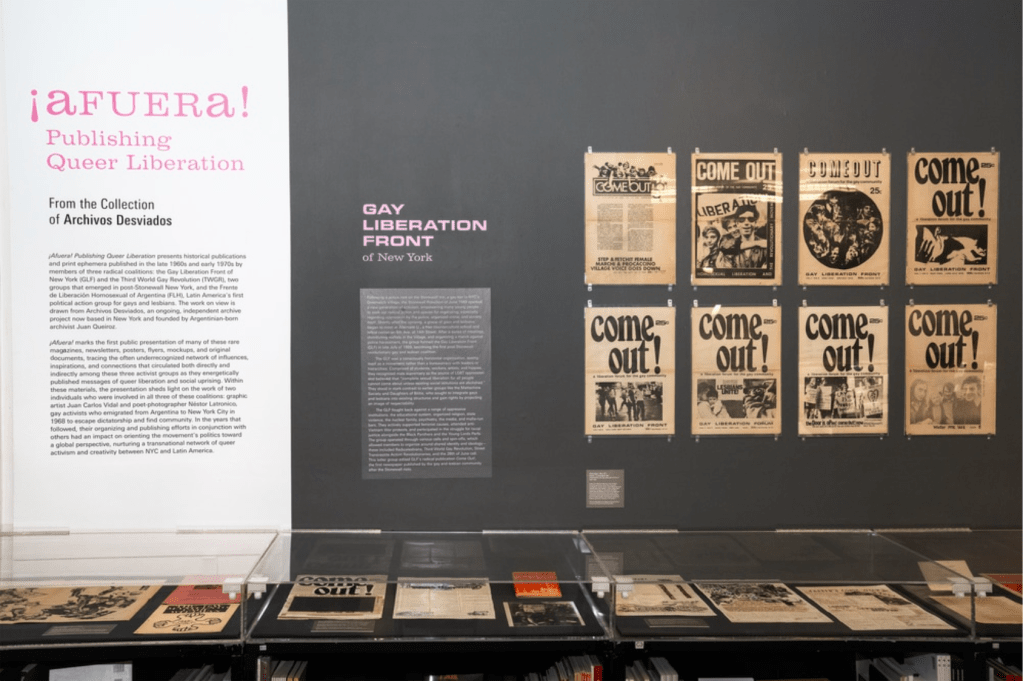
The Queerest attended Printed Matter’s exhibition ‘¡Afuera!: Publishing Queer Liberation’ at its 13th annual LA Art Book Fair, which took place from May 7 to 10, 2026, at ArtCenter College of Design in Pasadena, California.
¡Afuera! marked the debut L.A. exhibition of several historical publications and print ephemera published in the 1960s and 1970s by members of three radical coalitions: New York’s Gay Liberation Front (GLF) and Third World Gay Revolution (TWGR), and Argentina’s Frente de Liberación Homosexual of Argentina (FLH). The exhibition’s rare posters, flyers, newsletters, and magazines shed light on the organizing and publishing efforts of a network of determined social, political, and cultural activists of the era.
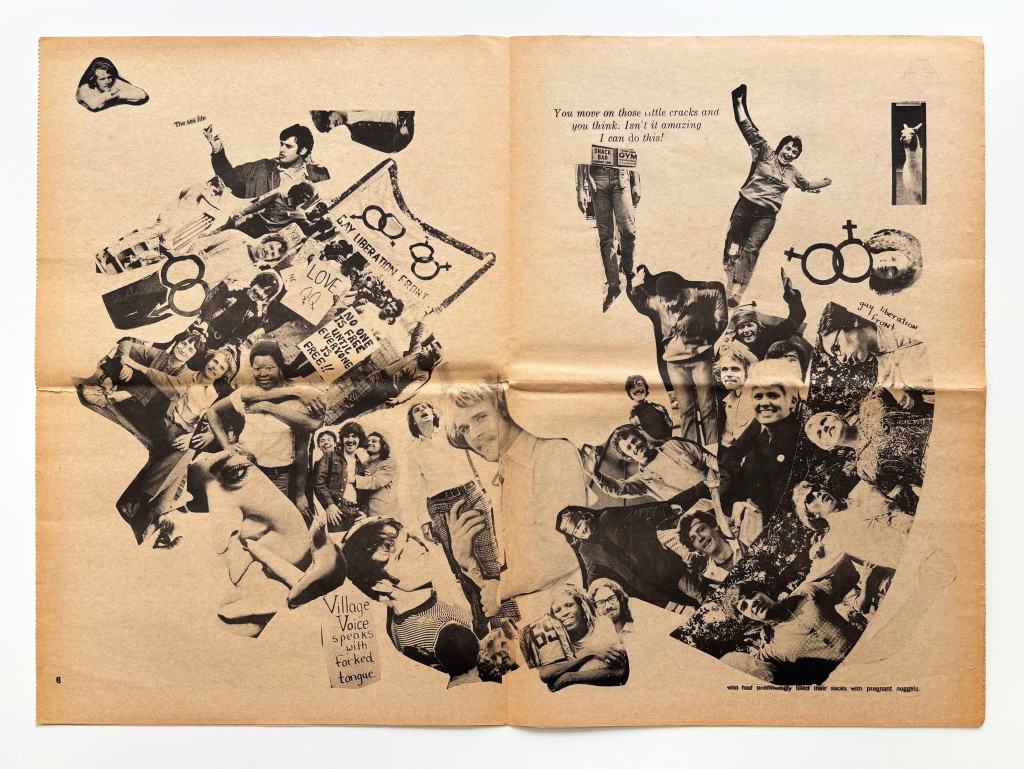
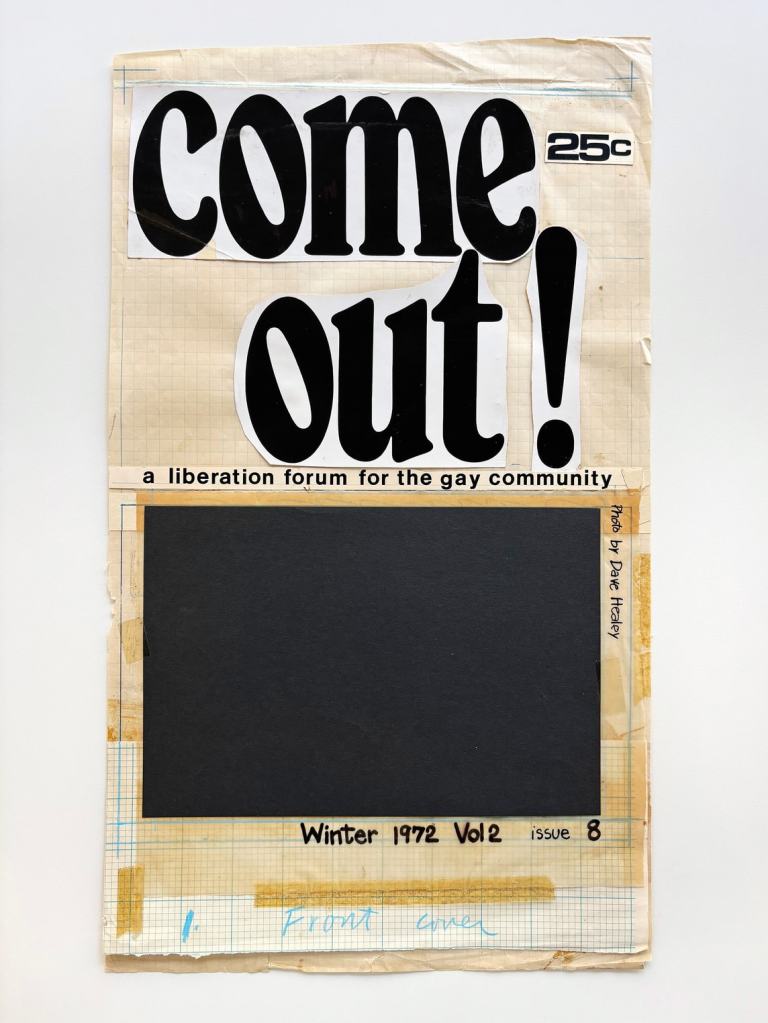
¡Afuera! highlights the work of graphic artist Juan Carlos Vidal and poet-photographer Néstor Latrónico, gay activists who emigrated from Argentina to New York City in 1968 to find a new community. Vidal and Latrónico collaborated on illustration and graphic design for the GLF’s newspaper, Come Out!, and for the FLH’s publication Afuera and its bulletin Somos. Examples of their publications, including all issues of Somos and a mock-up cover of Come Out!, were on display.
Vidal and Latrónico used visually striking, often colorful publications to draw attention to their queer activism and their messages of intersectional liberation, anti-imperialism, and anti-capitalism. The exhibition highlights the role that artist- and community-run printing projects played in sharing resources and information among queer activists in a pre-Internet age.
Original cover mock-up of Come Out! Issue 8, Winter 1972, published by the Gay Liberation Front of New York. Courtesy Archivos Desviados.
The exhibition is drawn from the New York-based collection of Archivos Desviados, which was created by Argentinian-born archivist Juan Queiroz in 2019. The ongoing, independent archive preserves thousands of historical documents from queer movements.
Learn more at printedmatter.org/afuera, and follow Archivos Desviados on Instagram @archivosdesviados.
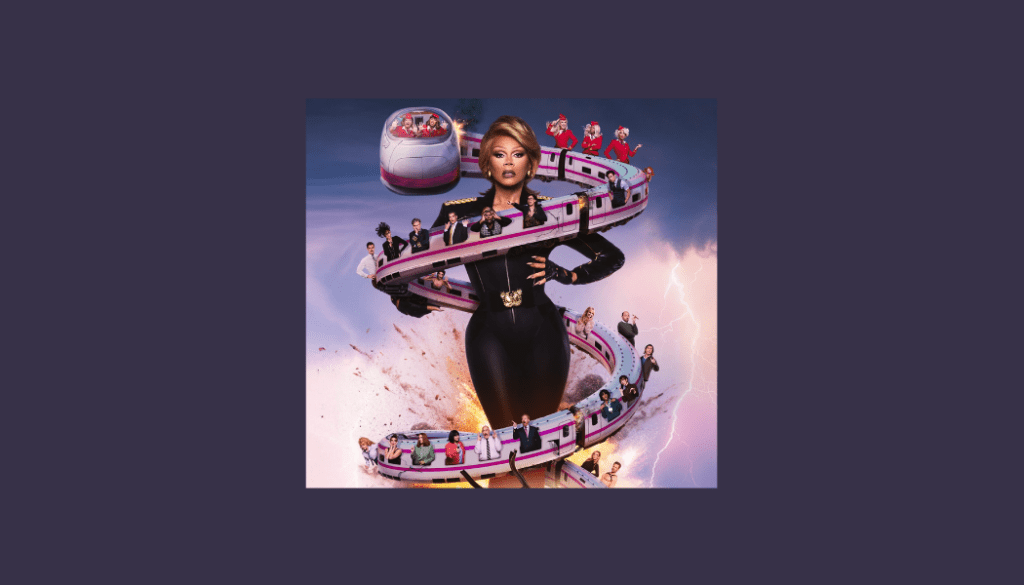
In the weeks leading up to its theatrical release, RuPaul’s upcoming comedy Stop! That! Train! has been under immense scrutiny for its alleged use of AI-generated special effects.
Much of the controversy started when Gloria Cook, a VFX artist and experimental filmmaker, attended the film’s premiere in New York on May 28 and posted a review on Letterboxd shortly after, writing, “It’s one of the most conspicuous uses of AI I’ve seen in a film, with a lot of VFX looking like gen AI… Confirmed in the end credits that Acme AI was the top-billed VFX company on the film.”
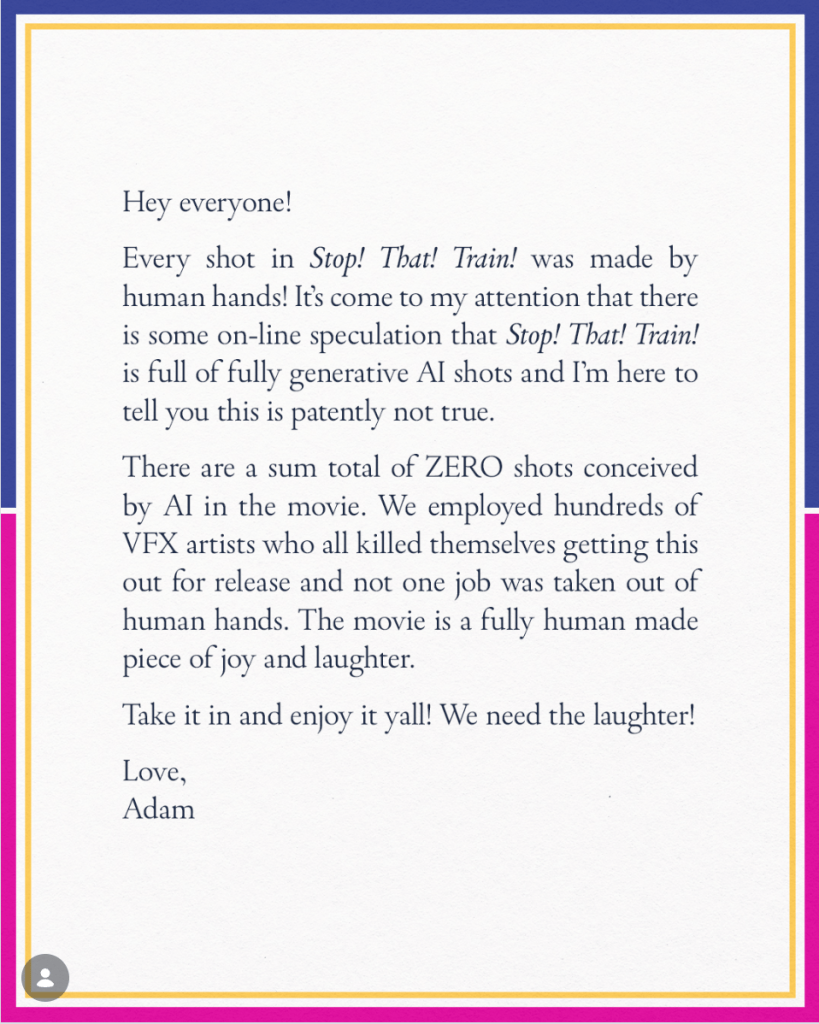
After similar allegations rapidly spread across the internet, Shankman addressed the controversy on June 3, posting an official statement on Instagram, stressing that the movie was “made by human hands.” However, he notably did not address the undeniable collaboration with AI VFX companies.
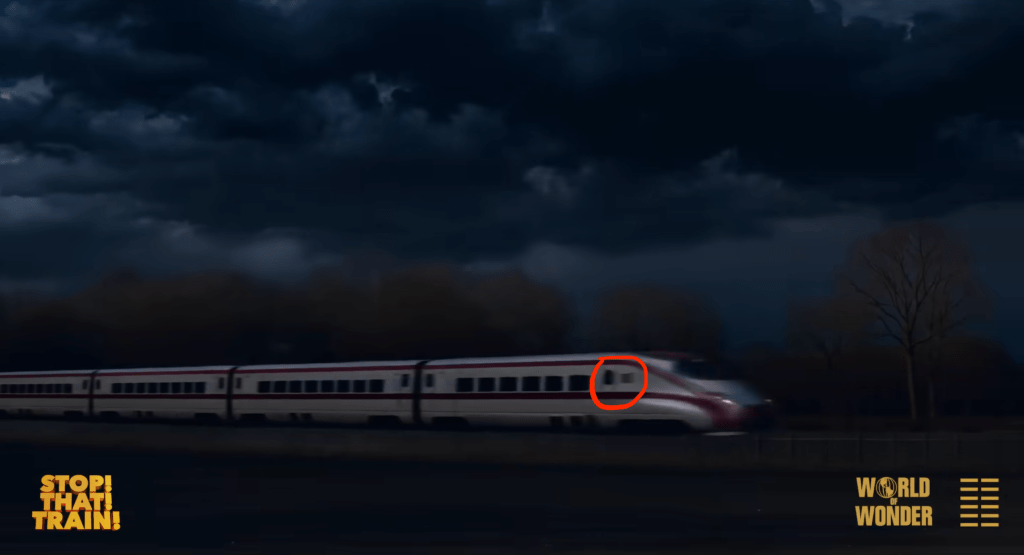
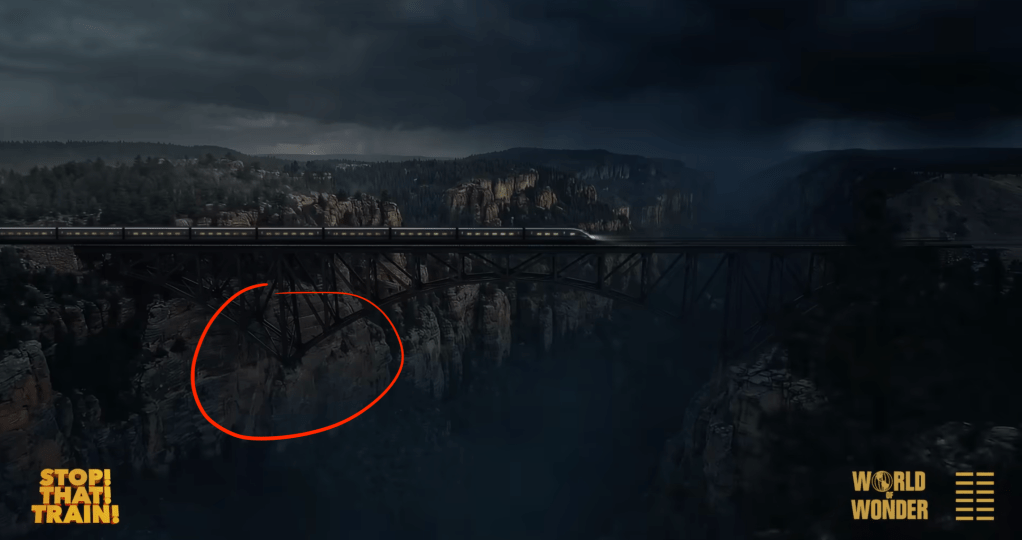
Cook, now clapping back at Shankman’s vehement denial, released a video pointing out several discrepancies in the movie, visible even in the film’s trailer.
The train, for example, appears with a different number of windows in various shots, a suspicious detail since human VFX artists would have reused the same CG model for different shots. There would be no purpose in recreating and intentionally changing the amount and placement of windows.
Additionally, there is a shot of the train crossing a bridge with one of its support legs completely missing, another highly suspicious detail.
The IMDb credits list 26 compositing artists but not a single 3D or CG artist. No one is credited with creating the train assets, only with combining assets. While there is a chance that the IMDb credits are incomplete, Cook notes that “it feels like an odd omission, especially when these VFX shots could only be done with CGI… or AI. And AI requires no animators, only compositors to clean up shots and combine elements together.”
Cook adds that proving these effects were not AI-generated would be fairly easy. “All [Shankman] has to do is post wireframes of these scenes to show off the 3D models.”
But instead, he released a very carefully worded statement, dancing around the issue:
Claiming that the movie doesn’t contain any “fully generative AI shots” (emphasis on “fully”) and that not a single shot was “conceived by AI” does not dispute the accusation that AI was used to generate special effects that would have otherwise been created by a human.
Generative AI is extremely harmful to the environment, with data centers increasing carbon dioxide emissions and pressure on the electric grid, straining municipal water supplies, and disrupting local ecosystems. On top of that, it takes jobs away from actual people. But of course, it is faster and cheaper for a company to use generative AI than to pay a human being. So the only thing we can do to stop it is to make our anger known. Filmmakers must be held accountable for using generative AI; otherwise, its use in the film industry will only grow and become normalized.
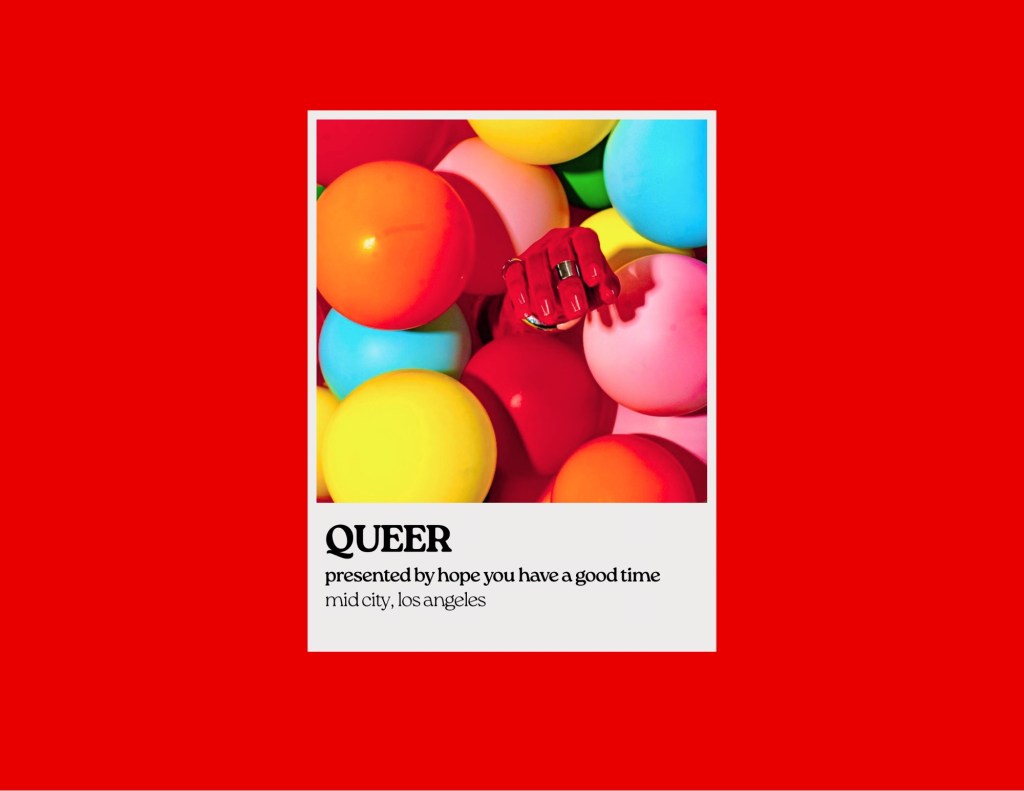
QUEER x hope you have a good time is an art show in Mid-City Los Angeles, bringing together over 20 artists responding to the following quote from Bell Hooks:
“[queer] not as being about who you’re having sex with – that can be a dimension of it – but queer, as being about the self that is at odds with everything around it and has to invent and create and find a place to speak and to thrive and to live.”
HYHAGT × QUEER explores the self at odds with the surrounding world, featuring art installations from 20+ artists, tarot card reading, community art experiences, donation-based drinks, and a DJ set by Emily Alegria.
The marketplace and gallery will be open on May 30th from 5-10pm.
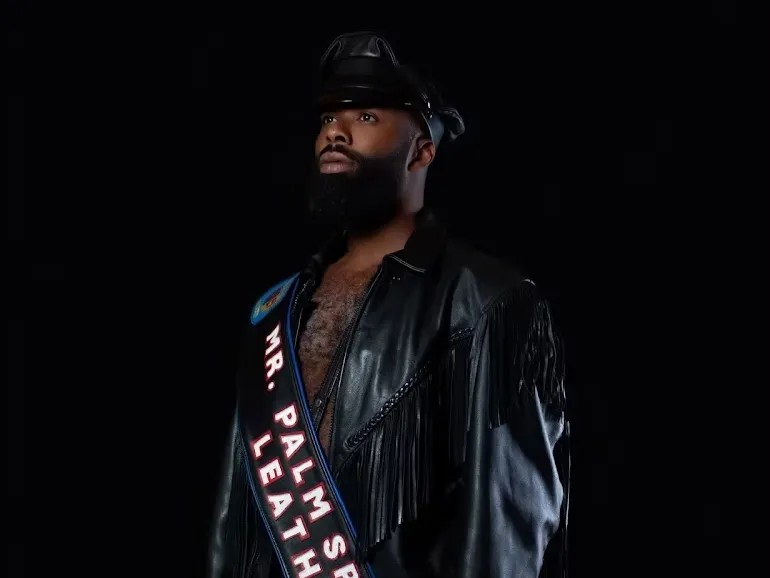
RuPaul’s Drag Racestar, Honey Davenport, wins IML (International Mister Leather) 2026, a multi-day competition and fetish event based in Chicago.
Davenport is best known for her appearance on season 11 of RuPaul’s Drag Race. Seven years later, they are revealing a whole new side of themselves to the world.
After moving to Palm Springs and finding a sense of community in the local gay leather scene, Davenport realized this was more than an interest but a passion. After winning Mr. Palm Springs Leather, IML was the next logical step.
During the contest, Davenport introduced themselves to the audience with the same line they used on Drag Race: “There’s only one thing you need to know about me. This honey is raw and unfiltered.”
Shortly before the final night of the contest, Davenport took to instagram to say:
“When I walked into the work room of [Drag Race], I said my tag line. When I walked on The [IML] stage, I spoke my truth. Same words with new meanings.”
After their win, Davenport shared “And just like that history was made. I am your new [Mister International Leather] 2026. This was definitely a hard one but well worth the blood, sweat and tears. I am so grateful for all of kind words, hard work, and sponsorship my community gave me on this journey. Together we brought this sash home.”
Davenport is the first Drag Race queen to win the title and marks the second year in a row that the title has gone to a Mr Palm Springs titleholder. The runners-up this year were Sgt. Alex (Mr. Cincinnati Leather 2025) and Denzel Belin (Mr. Twin Cities Leather 2026).
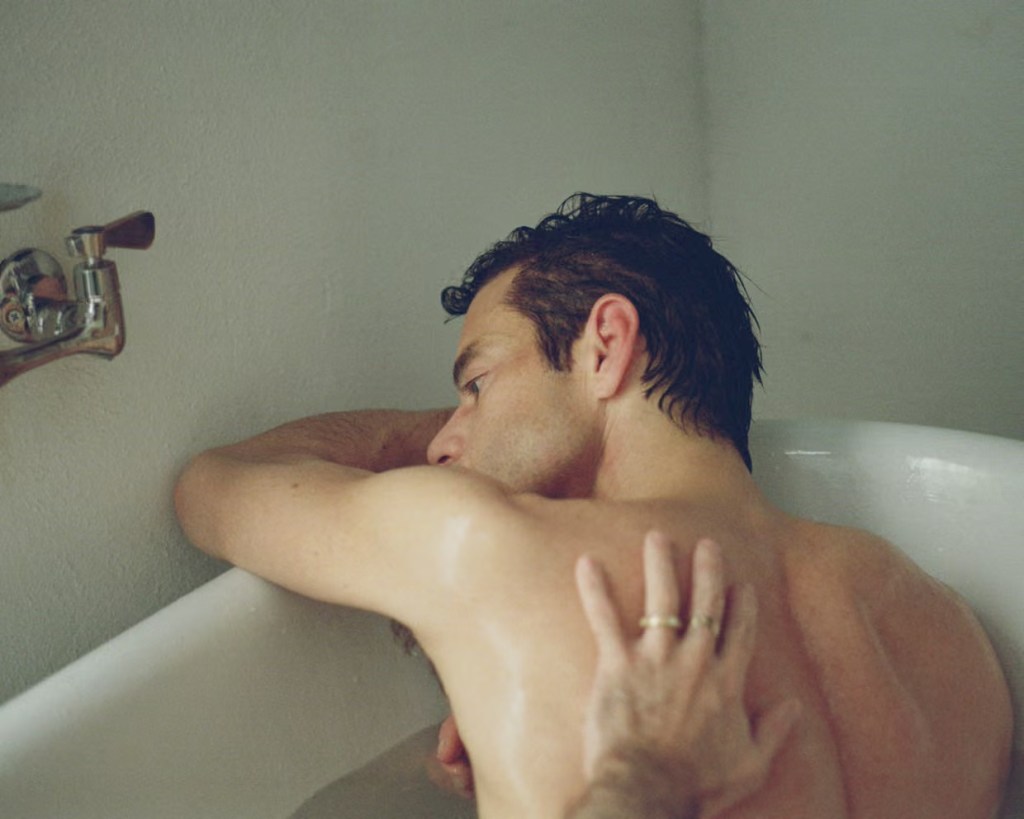
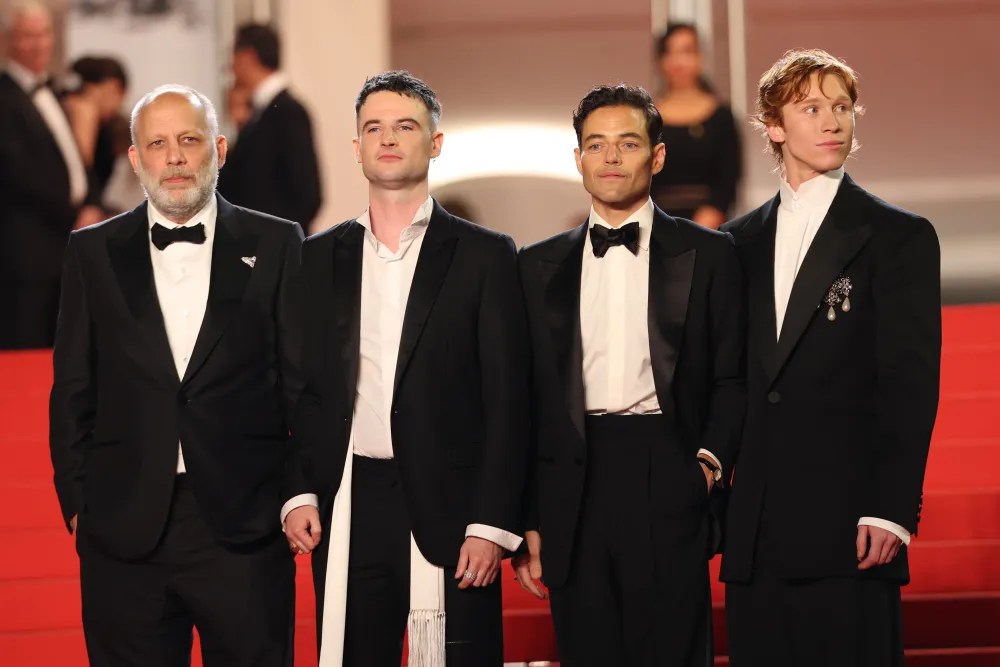
After The Man I Love debuted at Cannes this week, Rami Malek made comments about his initial hesitation to accept the role of Jimmy George, a gay theater artist in the 1980s diagnosed with AIDS. The character was originally intended for queer actor Ben Whishaw, who had to drop out due to another commitment. Though Malek is a talented actor, it is a shame that director Ira Sachs didn’t prioritize casting another queer actor in Whishaw’s place.
When the film screened at Cannes, Malek told reporters: “When I read the script, I said, ‘I can’t do this,’” noting too many similarities between Jimmy George and Freddie Mercury, the latter of whom Malek portrayed in Bohemian Rhapsody back in 2018, winning him the Academy Award for Best Actor.
“There was a certain sense of fear,” Malek said. “And I started to really think about what I was afraid of. Was it the similarities? Was it the singing? Was it obviously what was going on in the period? And the fear was, I knew I had to address the fear.”
Malek further reflected on his performance as Freddie Mercury, stating, “If there’s anything Freddie taught me, it was ‘address the fear.’ And when I raced into it, I started to discover that these were men that were similar, but they were also worlds apart . . . You have an icon, a legend in Freddie, who really had a destination, whereas Jimmy is just searching for creativity and love and intimacy and joy and pleasure in every moment.”
The film received an eight-minute standing ovation at Cannes and initial reactions to the film have mostly been positive. However, this expression of “fear” from Malek comes across as somewhat tone-deaf, given the frequent backlash when straight actors play queer characters.
The majority of roles in Hollywood are already written for straight, cisgender men, so it’s frustrating to see Malek taking this role from a queer actor. It’s even more frustrating to see Malek admit that he was scared to play “another” gay character with AIDS, and how he feels the need to justify the decision, when a queer actor likely wouldn’t feel the need to address it all . . .
Although it is noteworthy that there is more queer representation in Hollywood (and at Cannes) in 2026, queer actors are not getting cast in lead roles. LGBTQ+ actors are out there, but as long as bigger names are prioritized for these roles, it remains extremely difficult for queer actors to break into the industry and make a name for themselves.
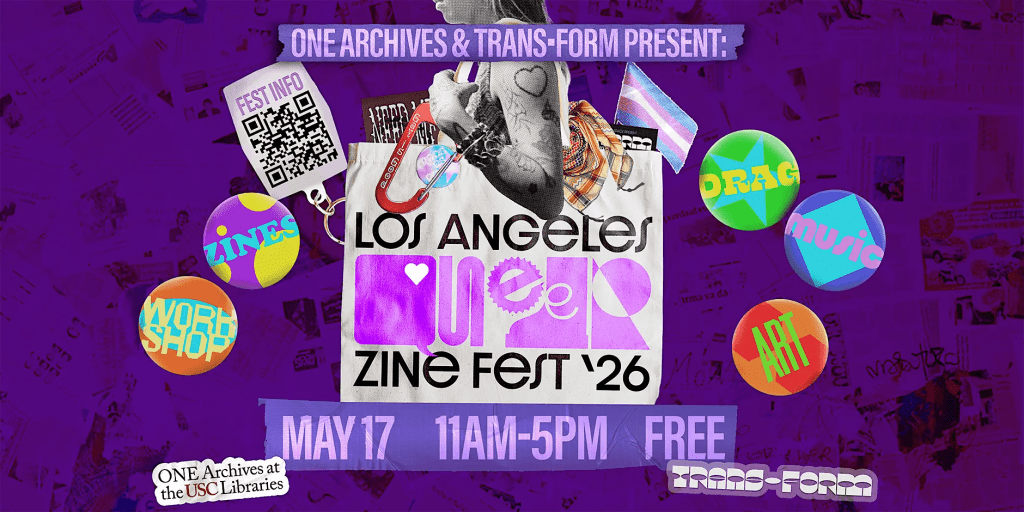
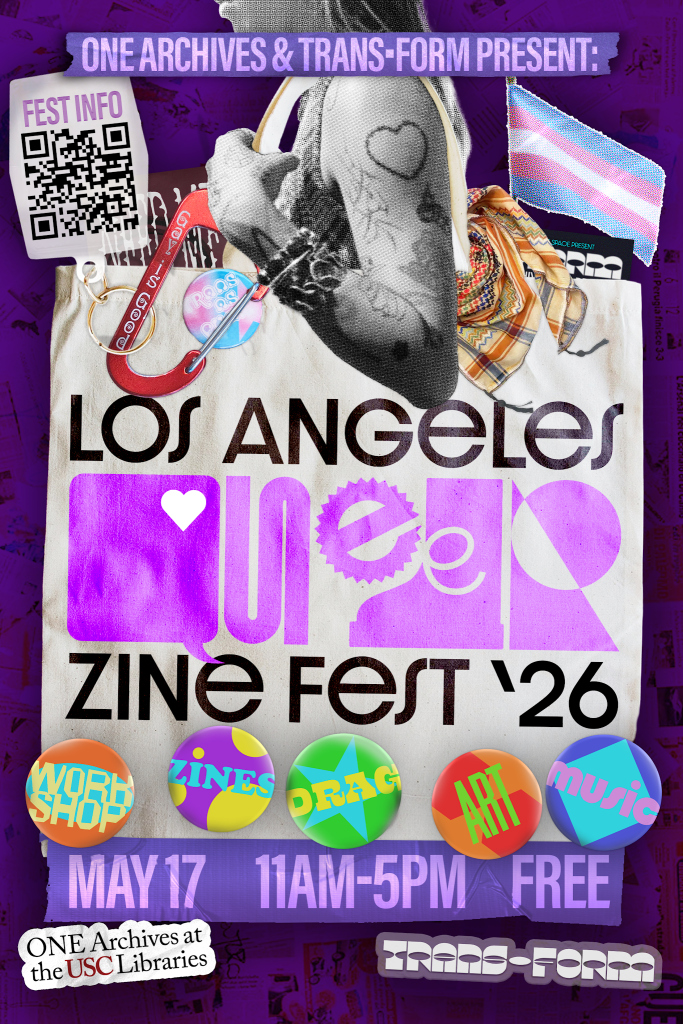
Los Angeles Queer Zine Fest, a one-day celebration of queer and trans zine makers, artists, printmakers, publishers, and performers, is taking place this Sunday at the ONE Archives at the USC Libraries. The event will combine:
(1) 45+ queer and trans-identifying vendors; (2) live drag performances, music, and poetry; and (3) a zine-making workshop.
Per the ONE Archives, zines “have long been a tool for queer and trans people to document our lives, share resources, tell our stories, build community, and create outside of traditional publishing.” Building on this tradition, the L.A. Queer Zine Fest intends to “platform queer voices and encourage participation in the preservation and celebration of queer history.”
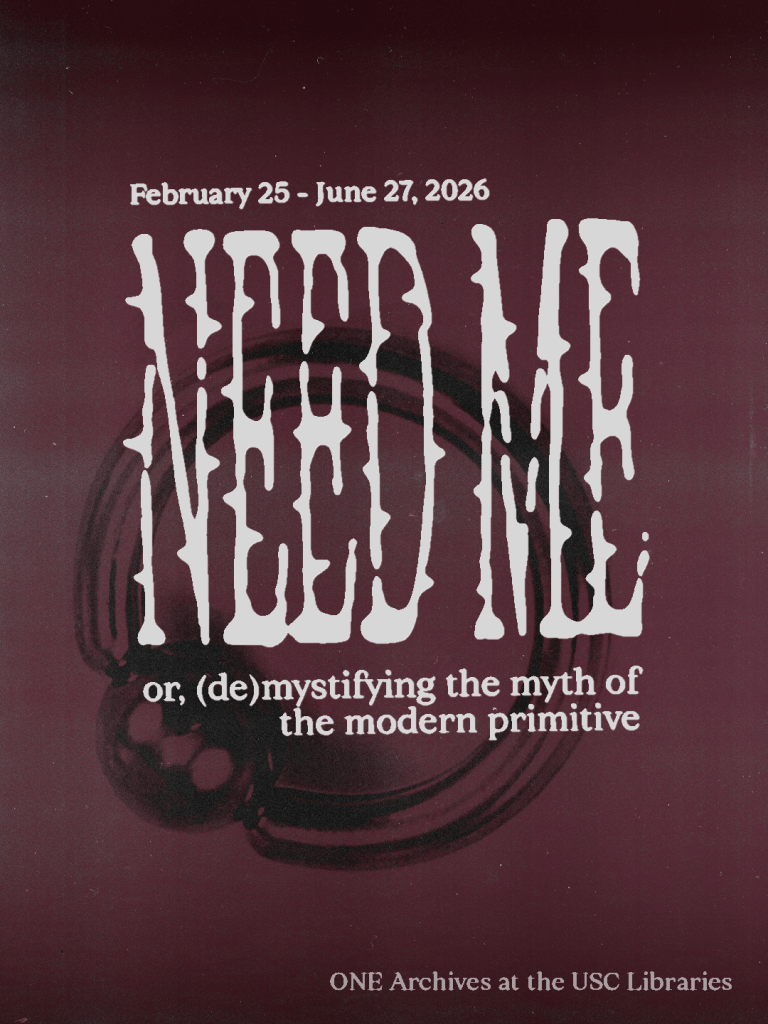
During the 2026 Fest, guests are encouraged to visit NEED ME, or, (de)mystifying the myth of the modern primitive, which is billed as “the first ever public exhibition to present the Western history of body piercing and its roots in queer history.” NEED ME will highlight the artwork and ephemera of queer individuals who were essential to modern piercing history, including Catherine Opie, Ron Athey, Bob Flagan & Sheree Rose, Leigh Bowery, Annie Sprinkle, and Efrain Gonzales.
Founded in 1952, the ONE Archives is the largest repository of LGBTQ+ materials in the world, containing millions of items including art, books, films, videos, audio recordings, and periodicals. The Fest is presented by TRANS•FORM, a growing programming series of workshops, performances, and community events which “creates space in the world for trans people through art, resources, and collective care.” The Fest is free of charge and open to the public. RSVP is not required, but encouraged. The Fest will take place in the ONE Archives parking lot. Public transportation (Metro E Line) is encouraged. Aside from street parking, a paid lot is a 2-minute walk from the Fest.
May 17, 2026, 11 a.m. to 5 p.m. Free ONE Archives at the USC Libraries, 909 West Adams Boulevard, L.A., CA 90007