Category: TV & Movies

  • Pillion Review: When Heartbreak is the Greatest Torture

    Pillion Review: When Heartbreak is the Greatest Torture

    Director and writer Harry Lighton depicts a universal toxic relationship dynamic through the guise of a queer BDSM romance film.

    By Maxwell Fong

    Rating: 5 out of 5.

    After premiering in the U.K. four months prior, I was really looking forward to seeing Pillion with my friend Malik, whom I had not seen since September. He showed up in a T-shirt and jeans, coming directly from work, but also donning his chain and padlock necklace, as well as a drawstring bag with the rubber pride flag embellished on it. When we walked into the theater, we saw others wearing leather jackets and pants from Mr. S Leather. It was evident that this was a much-anticipated movie by the BDSM community.

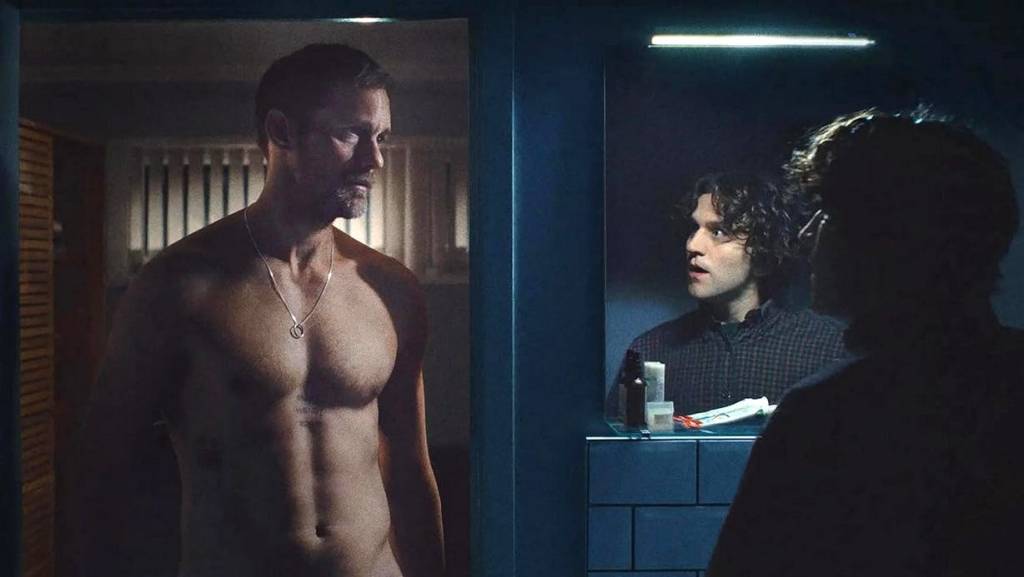
    Pillion is a film adapted by Harry Lighton from the 2020 novel Box Hill by Adam Mars-Jones. Colin (played by Harry Melling), a meek wallflower beloved by his parents, falls head over heels (or leather boots, rather) for Ray (played by Alexander Skarsgård), a prepossessing and possessive biker dom. As Colin comes to actualize his identity and discover his desires, he also has to grapple with his mother being terminally ill and Ray being emotionally unavailable.

    This film was phenomenal and captivating from start to finish. Even though the film was marketed as a “BDSM rom-com”, the story is that of self-discovery at its core, which is told through a toxic relationship presented through a BDSM lens. It is ultimately a story about Colin’s growth as a young queer person and Ray’s inability to open up emotionally. Because the core story works, everything else falls into place and enhances and texturizes the story. The sex scenes and motorcycle jackets (or as Little Mix would call them, “motorbike”) are not just for fluff and theatrics, but rather important turning points for their relationship dynamic. The narrative arcs and character traits are set up perfectly and intentionally, and I loved the pacing of most of the film; the only thing I would nitpick on is how clunky the ending felt.
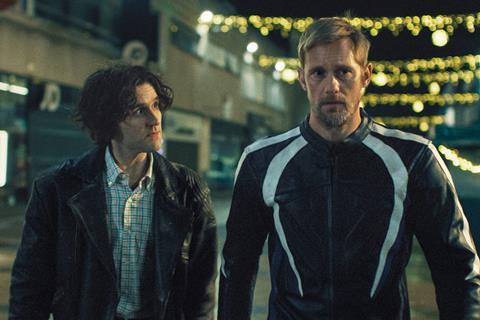
    Both actors were amazing in their roles. Obviously, Melling had the bigger part to play, and the range he showcased alongside the emotional journey of Colin was fantastic, from desperation to grief to rebellion to adoration. To my delighted surprise, Skarsgård was able to convey so many subtle emotions, even as an emotionally constipated, stoic authority. In a sense, Ray is also discovering what he actually wants and needs, like Colin, except he has no emotional resilience. Colin and Ray’s relationship is nuanced and fluid, and not being afraid to dwell in that grey area and blurred boundaries is what makes this film so great.

    This muddy relationship dynamic is one that I have rarely seen encapsulated on film. As a young queer person, Colin’s worldview has been set up by his parents and their understanding of queerness, as evidenced by an arranged date by his mother in the beginning. Ray shows up and opens Colin’s mind (and hole), and eventually goes as far as defending their relationship in front of Colin’s parents, which is my favorite scene of the film. Ray says to Colin’s mom at the dinner table: “Deciding that what makes you comfortable is bad for your son.” On the one hand, Ray is absolutely right in calling her out on conforming her son to her expectations, but on the other hand, Ray is using Colin’s trust and the foil of progressivism to treat him poorly, refusing to tend to Colin’s needs and form a romantic connection. Because of Colin’s people-pleasing character and not knowing any better, he ends up settling for scraps and convinces himself that this is what a relationship looks like. This emotional torture is harder than any boot licking and butt fucking he has to endure.

    As Malik and I walked out of the theater, we both reminisced about past relationships we had when we were younger, where the power dynamics felt extremely similar to that of this film. Right when I turned 20, I dedicated my life to someone 15 years older, only to find out his emotions flipped on a dime, and he was unwilling to give the same dedication and understanding back. Malik also brought up that he was in a situation with a dom similar to Colin’s when he was still inexperienced and new to the kink world. He then talked about how for most gay men, there is a second coming of age as an adult, where we navigate life outside of heteronormative standards. We don’t have a roadmap or understanding of what healthy relationships look like growing up. Our self-esteem and identities are often not discovered or innately internalized, but based on the perceptions of the good and bad people we encounter. I can understand how this film can be an uncomfortable watch for those who have not experienced this kind of toxicity, but unlike the leather biker gear Colin and Ray are dressed in, relationships are never black and white, are they?

    I also found the film’s depiction of the BDSM community to be quite faithful and accurate, from the fetish camping trip to Ray’s somber piano playing. (Why are so many kinksters also amazing musicians anyway?) According to Lighton, he reached out to the Gay Bikers’ Motorcycle Club in London for consultation and later hired its members as extras to make the film feel as authentic as possible. Despite Ray’s community not being verbally highlighted in the movie, it created a backbone for forming Colin’s autonomy and became a driving factor and motivation for Colin to advocate for himself through his interaction with Kevin (played by Jake Shears of Scissor Sisters). It’s refreshing and touching to see the BDSM community represented in an empowering and inclusive manner. In a film filled with hard cocks, hard emotions, and hard truths, these glimpses of communal bonding are full of tenderness and hope.

    Any kind of relationship can be flawed and messy, and the film owes it to nobody to portray the ideals of what a healthy BDSM relationship should look like, even if it hints at it in the end. Because of its flawed nature, I believe this film has struck a huge chord with gay male audiences, especially those in the kink community, and will become an important mainstream film in the queer cinema canon. As I said goodbye to Malik in the parking garage, I knew he would be safe in the community he had found for himself until the next time we met.

  • Is Rope the Queerest Thriller of All Time?

    Is Rope the Queerest Thriller of All Time?

    You may know director Alfred Hitchcock thanks to films like Psycho and The Birds, each of which pushed the boundaries of cinema through their depiction of horror and violence. But before either of these films, Hitchcock pushed boundaries with an equally revolutionary film—Rope.

    Released in 1948, Rope very well may be the queerest thriller of all time, thanks in no small part to everything on and off screen. 

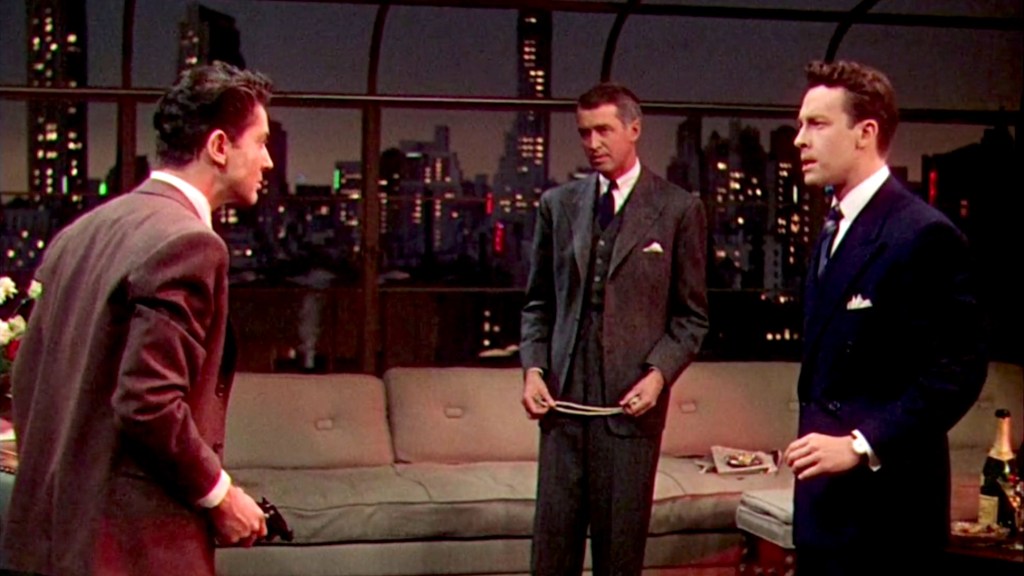
    The film follows a pair of “friends” who decide to commit the perfect murder. They kill their former classmate with a piece of rope and subsequently hide his body in a wooden chest, which is then prominently displayed in their apartment as the two host a dinner party. The tension lies not in whether the murder occurred or who did it, but whether the murderous protagonists can get away with it. 

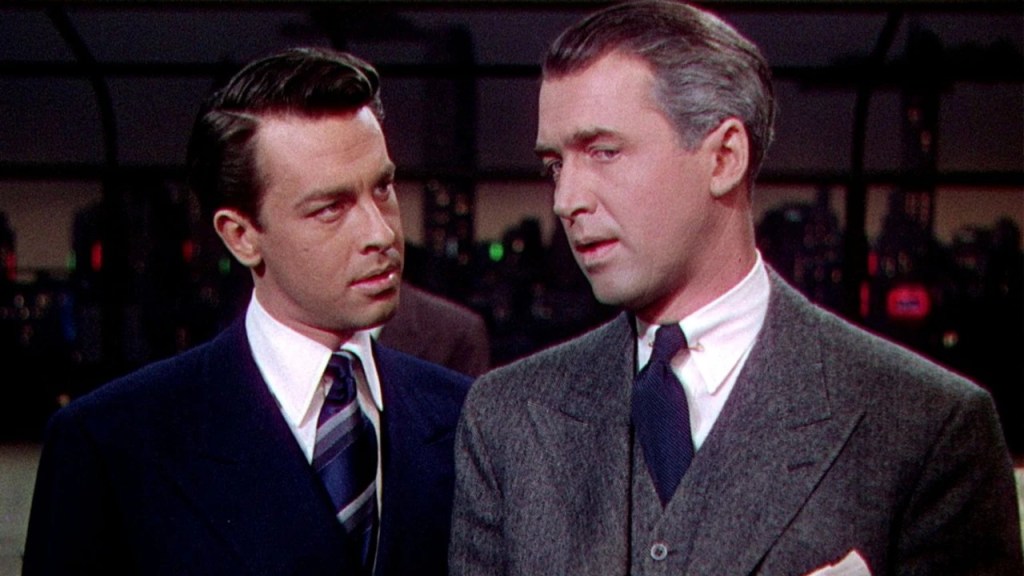
    From the onset, Rope is steeped in queer…well, we can’t even call it subtext now, can we? The two friends and former classmates, Brandon and Phillip, share a one-bedroom apartment together in New York City. They decide to kill their prep school classmate, David, with a piece of simple, taut rope. This is done in the opening scene, and the camera lingers on the faces of all three characters, notably David, whose pain in his own death could be misconstrued as almost arousal. All three men are packed closely together, hands across one another’s bodies, to commit this deed. 

    Throughout the subsequent dinner party, Brandon and Phillip are staged physically close—often shoulders against one another—and discreetly reminisce about the sensations the murder filled them with, along with their superior intellect for committing such a crime.

    Brandon says, “We’ve killed for the sake of danger and for the sake of killing. We’re alive, truly and wonderfully alive.” 

    Later, he remarks, “I don’t remember feeling very much of anything… until his body went limp and I knew it was over. I felt tremendously exhilarated.” 

    There are innuendos throughout about not just the pair’s homosexuality, but that of both their murder victim and their prep school housemaster, Rupert, who appears halfway through the film. Brandon notably says, “I’m not interested in Janet’s prattle, but you always interest me, Rupert.” 

    The innuendos of homosexuality likely flew over Republican James Stewart’s head as the elder intellectual, but they certainly didn’t for others in the cast and crew. 

    Rope, based on a 1929 stage play of the same name by Patrick Hamilton, was loosely inspired by the real-life murder of 14-year-old Bobby Franks in 1924 by University of Chicago students Nathan Leopold and Richard Loeb. Leopold and Loeb, having been in a relationship, were determined to murder as a means to tout their “superior intellect” and commit the “crime of the century.”  

    Hamilton himself was a closeted gay man and the screenwriter for the film, Arthur Laurents, was also gay–and one of the few openly gay Hollywood screenwriters in the 1940s. He and Hitchcock had a productive working relationship. Laurents said in an interview with Vito Russo for his book, The Celluloid Closet, “We never discussed, Hitch and I, whether the characters in Rope were homosexuals, but I thought it was apparent.” 

    Laurents had been drawn to write the screenplay for Rope because his then-lover, openly bisexual actor Farley Granger, was set to star as one half of the murderous duo, Phillip. The other half of this duo, Brandon, was also played by closeted gay actor, John Dall. On top of this, Brandon and Phillip’s murder victim, David, was played by Dick Hogan, yet another gay actor who had previously been with Farley Granger. 

    In writing the script for Rope, Laurents had a delicate balancing act given that the Hays Code was at its peak in enforcement. The Hays Code was a set of censorship guidelines for the film industry, which barred any “unacceptable” content in films, such as homosexuality. Laurents said, “I don’t think the censors at that time realized this was about gay people. They didn’t have a clue what was and what wasn’t, that’s how it got by.” 

    Hitchcock, though not initially intent on crafting such a queer film, had begun working on Rope to push back from the studio system which he had been trapped in for years (also using Rope to employ groundbreaking filming techniques to create the illusion that the film was done in one continuous long take). He, in many ways, sympathized with queer artisans and characters. 

    Hitchcock was more than willing to cast queer actors, wishing to promote and elevate struggling performers who, like himself, wished to push back on the studio system. Stewart, as the most bankable star, was cast to quell censorship concerns and to secure financing. But all the other primary persons associated with creating and starring in the film were keenly aware and eager to showcase queer characters less in a villainous light, but in a complex one.

    Laurents and Granger even had a double date with Hitchcock and his wife, Alma. Laurents said of Hitchcock, “He didn’t give a hoot in hell whether I was gay. It tickled him that we had a secret he knew. It was a slightly kinky touch, and kink was a quality devoutly to be desired.”     

    There were missed opportunities with Stewart’s casting, however. Laurents lamented that Stewart’s character was supposed to be the unwitting, queer inspiration for the murderers. In Laurents’s words his character was, “the head homosexual…Jimmy Stewart? Jimmy Stewart has no sex.” 

    Still, the film carries on with its queer imagery and textual assessment of vice–from smoking cigarettes after murder to stroking champagne bottle necks, all of which can be tied back to the queerness of the story.   

    Phillip and Brandon are, despite being murderers, the film’s protagonists. As an audience member, one is keenly aware of the malicious deed committed at the onset, but can’t help looking away and being charmed by the murderers. While not necessarily a positive representation of homosexuality, what Rope did was employ queer artisans in a time when punishment for sodomy in California included forced sterilization; Hitchcock crafted a thriller steeped in homosexual undertones, queer history, and evoking tawdry, sensuality between multiple characters. 

    Most essentially, the film addresses fascist ideology head-on. The murderers commit their crime after having learned of “superior intellect” from their mentor, but by the end, their headmaster rejects this thought experiment that individuals of “superior intellect” can or should dictate the lives (and deaths) of others. Hitchcock had crafted anti-fascist British propaganda during World War II and Stewart had served in the Army during the War. In the end, it’s not the homosexuality of the characters that’s repudiated, it’s their fascist thoughts, which can be held even by members of the larger queer community (I’m looking at you, “LGB without the T”). 

    Even prior to Rope’s release, the film received backlash and was either banned or severely restricted across such major cities as Seattle and Atlanta. The film was also met with mixed reviews and wound up being a financial disappointment, though not an outright financial failure thanks in no small part to its small, $2 million budget. Since the 1940s, Rope has been reassessed and, while not as appreciated as some of Hitchcock’s other films, has endured because of its bold stylistic cinematography and use of long takes, as well as its queer storytelling and complex depiction of queer characters.   

    Rope is the queerest of all thrillers perhaps not because it’s the most shocking or graphic of queer stories put to screen, but because of all that was put into the film by its multifaced creators and actors, all that the film says about vice, kink, and ideology, as well as all that the film implies through inventive cinematography and editing.

  • Wicked: For Good – A Satisfying Conclusion

    Wicked: For Good – A Satisfying Conclusion

    Rating: 3.5 out of 5.

    When I was seven or eight years old, I discovered the Broadway musical Wicked and was forever changed. Everything from the staging, music, costuming, to the performances was spectacular. Flash forward to nearly two decades later and millions of people get to experience Wicked for the first time on the big screen.

    Wicked has been running on Broadway since its 2003 opening, currently ranking as the fourth longest-running show in Broadway history. With this comes a dedicated fan base quick to find flaws in new adaptations of their beloved story. Many stage-to-film adaptations include edits to the source material because film is an entirely different medium with different storytelling requirements. While plenty of creative liberties were taken, Wicked: For Good is a beautiful adaptation of an iconic story.

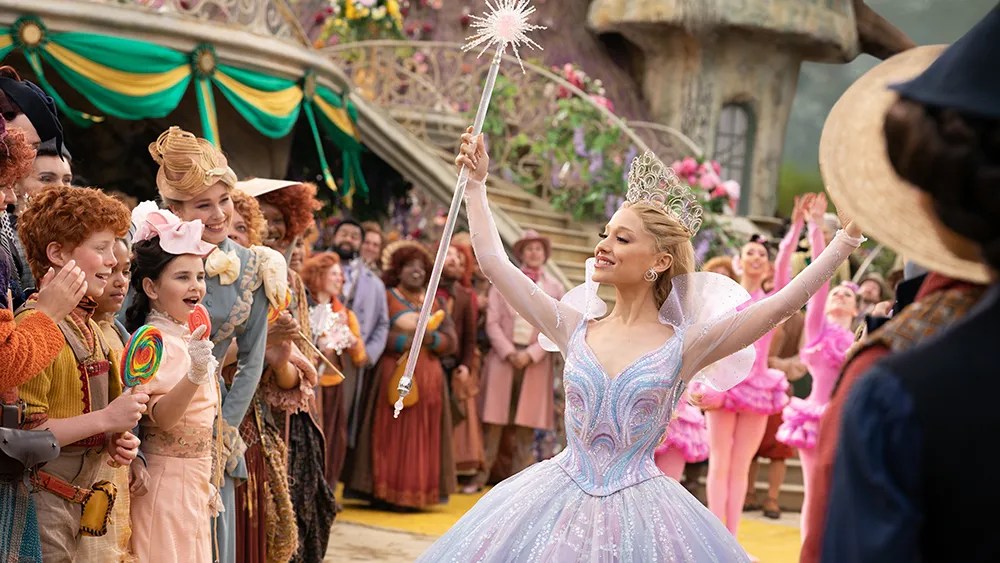
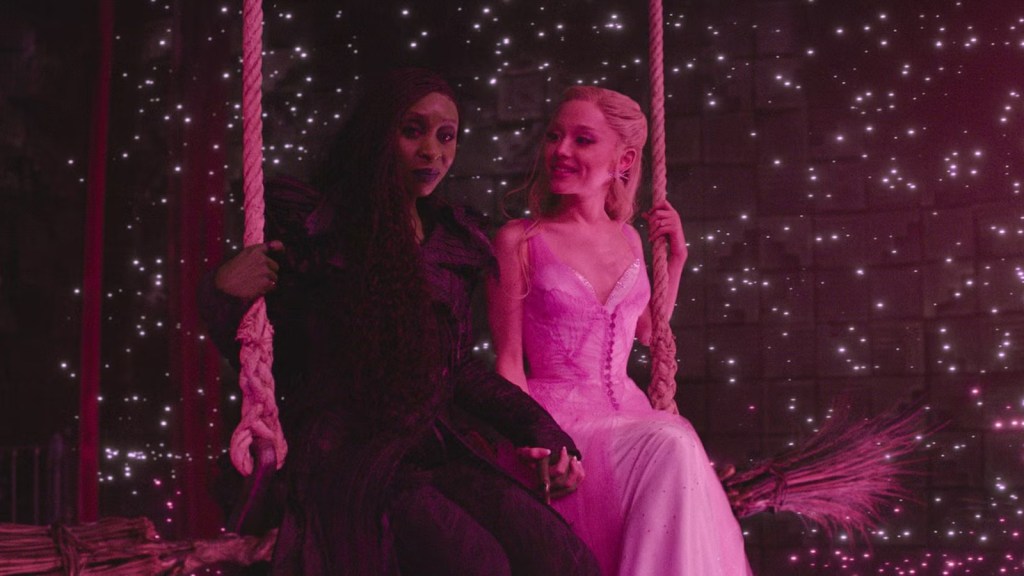
    Before delving deeper into my review of Wicked: For Good, let’s do a brief plot summary to make sure everyone is up to speed. This is your spoiler warning! Wicked: For Good opens one year after the events of Part I with Elphaba (Cynthia Erivo) fighting against hateful propaganda labeling her the “Wicked Witch of the West.” Meanwhile, Glinda (Ariana Grande) has taken the role of the “good” witch, the people’s princess of Oz, offering encouragement and optimism that good will conquer evil. After a final attempt to partner with the Wizard, Elphaba flies off, but not before Fiyero (Jonathan Bailey) joins her, calling off his engagement to Glinda. Following these events, Dorothy of Kansas finds her way to Oz. During this time, Glinda and Elphaba fight and make up over Fiyero and share a tearful goodbye before Elphaba’s death by water in which Elphaba passes the torch (in this case, the Grimmerie) to Glinda and explains that the future of Oz is now in her hands. Glinda lives up to this legacy and has a day of reckoning against the Wizard and Madam Morrible. But before the credits roll, we learn that Elphaba actually faked her own death and flees Oz with Fiyero.

    After my viewing of Wicked: For Good, I–a twenty-six-year-old Broadway-loving lady and cinephile–found myself with a laundry list of pros and cons. First order of business, Jonathan Bailey should get an Oscar nomination exclusively based on his performance in “As Long as You’re Mine.” He and Erivo mastered the romance and silent intimacy within the song. It was gentle, sensual, and had me biting down on my fist at points.

    Shifting gears from the iconic pink bubble gown Glinda wore in Part I, I found Glinda’s new blue dress absolutely stunning. It reminds me of Odette’s outfit in the animated masterpiece, Barbie in Swan Lake. The costuming is beautiful, and it is important to me to take a moment to shout out the impressive work from the hair stylists, makeup artists, and nail techs. When I see a big-budget movie like Wicked, I want this level of attention to detail.

    All of these pros aside, I did find some flaws in Wicked: For Good. My main qualm was that it did not need to be that long. I understand that it is trying to appeal to kids, the general public, the Academy Awards, and dedicated fans of the source material; however, I felt the choice to tell the story in two films, nearly doubling the runtime of the Broadway show, was unnecessary. Half of the charm in the Broadway musical is the whimsically fast pace. The extended runtime was likely pitched to give director Jon M. Chu an opportunity to flesh out characters’ stories, something ultimately helpful for a moviegoer unfamiliar with the stage show. I have no problem elaborating on secondary characters and believe these decisions helped the story rather than hurt it. My issue is that there were so many close-ups of Elphaba and Glinda’s faces. The lingering shots dragged scenes on and at times made me feel restless.

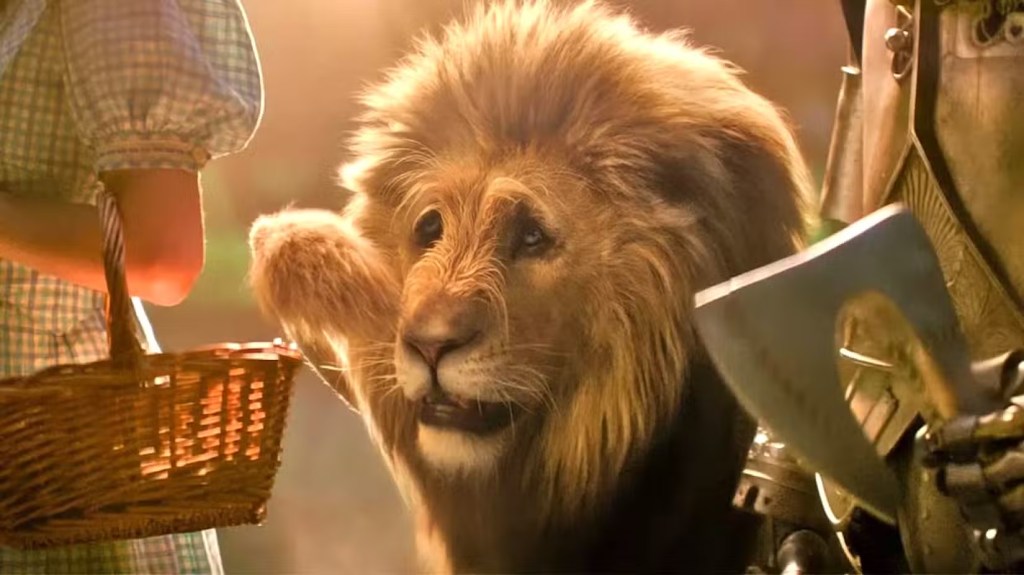
    I don’t have many complaints about the songs that were created or reprised for the film version of Wicked. I thought the reprise of “The Wizard and I” was a helpful recap and updated the audience on the condition of Elphaba’s character a year after the events of Part I. She is still hopeful that things can be made better, still naïve to the sacrifices she will end up making for the greater good. It eased me back into the story without dumping exposition on me. The original song, “No Place Like Home,” however, should have been cut. It was cheesy, unnecessary, pandering, and goofy. It reminded me of “This is Me” from The Greatest Showman, with corny lyrics about fighting for what is right and sticking up for yourself. I did enjoy how this song led to an early introduction of the Cowardly Lion before his cameo in “March of the Witch Hunters” and found it helpful to the story. Ultimately “No Place Like Home” is not that bad, but it’s pretty cliché in its execution. The second original song, “The Girl in The Bubble” was fine. I think Grande gave a beautiful performance. Her delicate falsettos and operatic voice along with the exposition of the lyrics added to my empathy for Glinda despite her flaws. Was this song groundbreaking, though? No. I think it could’ve been cut for time, but I’m not upset that it was included. 

    When it came to the character of Dorothy and her involvement in the story, the film chose to never show Dorothy’s face. This novelty paid homage to her character’s onstage absence in the Broadway production and serves as a reminder that Dorothy from Kansas is not the focus of this story. Unfortunately, it looked as though Dorothy was animated at times, which brings me to my next con: the animation. I wish they used puppets for the animal characters. The hyper-realistic CGI effects in films feel tired and boring. Wicked: For Good is a movie about magical witches, so the viewer’s sense of belief is already suspended, and it would have been cool to see the crew subvert expectations and have a little fun with practical effects.

    On the topic of practical effects, props, and set design, however, I have no notes. The blend of fantastical medieval fairy-tale design and 1930s-40s Art Nouveau motifs was perfect. Everything looked elaborate and intentional. Production designer Nathan Crowley understood the assignment and I admire his and his team’s talent for world-building. The aesthetics are also appealing commercially, Wicked: For Good has several brand collaborations selling merchandise. I would love to divulge deeper into my thoughts on the film’s marketability, but that is an entirely different essay. 

    Our secondary characters in the second half of Wicked get some major development and I thought Nessarose and Boq were amazingly portrayed. In the stage musical, I always long for more time with Nessa. Her shift to evil felt the most abrupt. Marissa Bode captured Nessa’s silent tyranny and highlighted her inability to think beyond herself. I also enjoyed Ethan Slater’s performance as Boq, and found him believable as an angry and jaded Tin Man. His solo in “March of the Witch Hunters” proved his acting chops beyond a goofy, lovesick Munchkin. 

    As it is the movie’s namesake, I must take a moment to discuss the song “For Good.” I always cry when I hear this song, and this time was no exception. Ariana Grande and Cynthia Erivo’s dynamic as performers is perfectly matched in this number. The tenderness in every lyric exhibited how the source material was handled with care and understanding. It made me release emotion. I rarely think about the plot of Wicked when I listen to this song, but rather relate the lyrics to the people I have loved and lost in my life. There is something so beautiful in art’s ability to make people feel something so deep that it must be expressed through tears.

    All in all I am pleased with 2025’s Wicked: For Good. While the film has its shortcomings, I do not think any of the issues I found in the film were due to a lack of effort or understanding of the story, but rather the fundamental values within the film industry to make money and win awards. I wish movie musicals could be more popcorn/blockbuster-style rather than the long-form Oscar-bait that we usually get. I prefer Hairspray and Mamma Mia to Tom Hooper’s 2012 Les Misérables any day of the week. I didn’t think Wicked: For Good would be groundbreaking, but knew it would be enjoyable and I am happy to say that it met my expectations. I would recommend this film to people who enjoy watching musicals, elaborate sets and costuming, and beautiful people with raw talent.

  • Yes, Emilia Pérez is as Bad as they Say

    Yes, Emilia Pérez is as Bad as they Say

    Rating: 1.5 out of 5.

    Emilia Pérez is a Spanish-language musical crime film about a Mexican notorious and ruthless cartel boss who discreetly undergoes gender affirmation surgery and fakes her death, leaving behind a wife, two children, and a life of crime. After recovering, she starts fresh as Emilia Pérez, and tries to live a moral life by founding a charity to help victims of the cartel. Despite this promising premise, the film offers little more than a sloppy characterization of a trans woman and a surface level depiction of the issues that it attempts to tackle.

    Initially, the film received critical acclaim upon its release, from receiving a standing ovation at the 2024 Cannes Film Festival to the various awards and nominations it has received from the Golden Globes and Academy Awards.

    Slowly but surely, as the buzz about the film grew, and as it reached more audiences, the reaction began to shift online. Audiences criticized the film’s depiction of Mexico from improperly representing the Mexican judicial system to awkwardly written Spanish lyrics. Audiences also criticized the film’s depiction of transness, showcasing a protagonist with an evil, violent, inner-masculine side that comes out when she’s angry. There is an entire song that her children sing about how Emilia smells like their father, the filmmakers seemingly unaware that Emilia, having taken hormones for years, would smell completely different. All of these criticisms could have easily been avoided with the smallest amount of research, which the director, Jacques Audiard openly confessed to doing none of, stating, “No, I didn’t study much. I kinda already knew what I had to understand.” As a result, the missed details expose Emilia Pérez for its laziness and insincere handling of sensitive issues. But the criticism didn’t end there; everything from its performances to its direction to its musical numbers began to receive mockery.

    In mid-January, the increasingly negative public perception of the film came to my attention when I came across a short clip on Instagram featuring the film’s “Vaginoplasty” sequence where Emilia’s lawyer meets with a doctor to discuss gender affirming surgery. The song features these inspired lyrics:

    Hello, very nice to meet you

    I’d like to know about sex change operation

    I see, I see, I see

    Man to woman or woman to man?

    Man to woman

    From penis

    to vagina

    The song continues with a doctor listing different gender affirmation operations while transgender patients undergo and recover from surgery and gawk at the camera.

    I didn’t know what was more shocking about “Vaginoplasty”: the silly lyrics or the unpleasant melody. The instrumentation is ugly, the singing is unimpressive, and the lyrics are blunt and graceless. I could hardly believe this was a real scene in Emilia Pérez, so I decided to see it for myself.

    Two hours and 10 minutes later, my confusion was even stronger. During the first 30 minutes, I was admittedly invested. The movie starts off from the perspective of Emilia’s lawyer, Rita, and learning about Emilia from this perspective adds a lot of mystery. It is easy to be sympathetic when she opens up about her gender dysphoria, but the film doesn’t let the audience forget she is still a dangerous person. When Rita is taking too long to find a doctor to perform the operations, Emilia has henchmen break into her apartment, threatening to kill her if she doesn’t hurry up. They allow Emilia to be complex and human. After she transitions, though, the film acts as though she has instantly been redeemed of any criticism, for both her past and present.

    As Emilia attempts to lead a new and moral life, I waited for the consequences of her past to catch up with her. They don’t. Instead, Emilia invites it all back herself. After four years, she starts to miss her children, so she pretends to be a long-lost cousin and orders her former wife and kids to move in with her. Surely, upon seeing how her “death” affected her wife and children, and after continuing to lie about her identity, Emilia will reflect or feel guilt over the trauma she’s been putting them through, right? No, instead, Emilia is just happy to have them around, wanting them to be as dependent on her as possible.

    Later on, when Emilia starts a nonprofit to help identify the bodies of cartel victims, I waited once again for her to reflect on her past as a vicious cartel boss. But she’s not interested in reflecting, and neither is the movie. The nonprofit is revealed to be funded by corrupt and dangerous donors, and though initially this hypocrisy is called out, Emilia doesn’t care, and the film never brings it up again. Emilia never acts remorseful, nor is she held accountable for her actions. Yet the movie’s finale presents her as a saint-like figure.

    This image released by PATHÉ FILMS via IMDB

    The problems don’t end there. Karla Sofía Gascón and Zoe Saldaña give decent performances, but the same cannot be said of Selena Gomez, who plays Emilia’s wife. At her best, she’s fine; at her worst, she appears like she doesn’t understand the words coming out of her mouth.

    While “Vaginoplasty” is by far the silliest and craziest musical number of the film, most of the songs suffer from underwhelming and occasionally awful vocal performances.

    In spite of all this, Emilia Pérez has already won four awards at the Golden Globes, including for Best Motion Picture – Musical or Comedy, and it has received 11 nominations at the Academy Awards.  I imagine that its various award wins and nominations will not be looked back at fondly.

    So yes, Emilia Pérez is as bad as they say. The movie is plagued by a lack of authenticity and it pretty much fails on every level: as a musical, a drama, and as an entertaining viewing experience.