Tag: book-review

  • Is the Best LGBTQ+ Book About a Mountain Lion?

    Is the Best LGBTQ+ Book About a Mountain Lion?

    We seem to be in something of a Renaissance with queer media (Heated Rivalry, The Emperor of Gladness, and Pluribus to name a few), which is more essential now than ever if you ask me, but I wanted to take a moment to spotlight a queer story that’s a little less known and a little stranger, told from a mountain lion’s point of view. 

    Immediately after I finished reading Henry Hoke’s 2023 novel Open Throat, I thought to myself, “This may be the best queer story I’ve ever read.”

    Open Throat follows a queer mountain lion on the prowl in Los Angeles. This lion spends its days observing humans and their strange ways of life. After a fire forces this lion to come down closer to the city from the hills, new temptations and threats emerge, and the feline begins to question whether they want to eat a person or become one. 

    When I first read this, I was immediately hooked, though a bit skeptical. Maybe this was just a case of “all flash, no substance” storytelling. However, in reading Open Throat, I found myself deeply resonating with this lonely feline. 

    In discussing the origins of Open Throat, author Henry Hoke said, “I was catching up with the real mountain lion, P-22, who was an L.A. celebrity. There was a Nick Cave song where he talks about a cougar in the Hollywood Hills, and that just sparked something in me… I felt kind of displaced and strange in Los Angeles the whole time… Instead of actually looking in on the cat I decided to just take a couple months and inhabit the fictional headspace of the cat and do a monologue of my experience of L.A., but as a mountain lion.” 

    As for the queer perspective and trans experience exhibited within the story, Hoke said in a separate interview, “It was very close to myself, an expression of deeper aspects of my own character, so I didn’t have any trouble there; I just had to meditate and tap into those inner fires.” 

    But what is it about Open Throat? How does this LA-dwelling solitary mountain lion tale stand head and shoulders above other similar stories about queer identity and the trans experience? There are a few key aspects that stood out to me. 

    For starters, there is the setting. Often, members of the LGBTQ+ community feel compelled to live in larger cities, if not purely from an economic or cultural perspective, but out of a need for safety. Rural or less densely populated areas of the United States historically tend to skew more conservative and have harsher legislation, which in some cases even targets members of the LGBTQ+ community. The unnamed mountain lion in Open Throat is driven to LA and specifically into more densely populated areas. Through this change in setting, the lion details isolation and loneliness in a new place, all while simply seeking companionship. This is an experience we may individually feel when moving to a new place, and even more so if we feel forced to move. 

    Next, there is the sheer strangeness of the story. This may be a purely “me” belief, but what is often glossed over in more mainstream queer books is the removal of the uniqueness of being part of the LGBTQ+ community. As a queer man, there are quirks I’ve discovered over the years about myself and other friends and family members within the community that aren’t often outwardly addressed. From emotional reactions to different events in life, to gravitating towards different people, to general interests, and vernacular and slang, let’s be honest with ourselves, one of the best (but most terrifying parts) about being in this community is the “not normal” quality. Or at least, “not normal” in a modern, western heteronormative socioeconomic culture. It’s “not normal” to read a story through the perspective of a mountain lion who wants to eat a human being and feel close to crying at the end of it (this is no Free Willy or Old Yeller), but critically too, it’s perhaps “not normal” to read a story from this point of view that also doesn’t shy away from the quirks of living and experiencing life in such a body as this. 

    I feel it’s sufficient to say, as LGBTQ+ people, we each have uniquely queer experiences and, if we relayed those experiences even to the most understanding straight ally, they could question or recoil. A joke about this that I’ve heard is that while women avoid men in dark alleys, parks at night, and parking garages, these are the places gay men actively congregate to seek out men. An example of this “strangeness” in Open Throat reads, 

    “piss splashes my face and wakes me up/ the sharp smell bristles my fur and my eyes pop open/ I watch the man’s dangling part and the wet pouring from it onto the pebbles in front of me/ the salt covers my lips and I lick it away/ I’m hungry again/ I turn away from the spray and my eyes must catch the sunlight because the pissing man makes a deep noise and clutches his chest and turns before pulling up his pants and he skids on the gravel and falls on his face/ he recovers and runs out of the cave and doesn’t look back/ if he looked back he’d see me not chasing/ not moving/ he’d see me not giving a fuck/ I’ve been pissed on before/ I stand and leave my cranny and sniff his puddle and straddle it and piss and the puddle gets larger/ I can smell his fear/ I walk over to where he fell and paw the frantic marks he made in the gravel and I think/ what it would be like to hunt him.” 

    There’s a great deal to unpack here (potential kinks and fetishes, past experiences with such bodily functions from oneself and others), but the one I want to focus on is right at the end. After this degrading act is done to our narrator lion, their thought goes to thinking about hunting them. Through this story, we understand that this has a double meaning. For a mountain lion, there is the literal hunting aspect of stalking and killing this man, but in a more metaphorical sense, there’s also a desire for the pursuit of such a target. Why do we so often find ourselves pursuing those who have scorned us?

    Finally, there is the trans experience. At the start of Open Throat, our narrator says, “I’ve never eaten a person but today I might.” From a predator pursuing humans to, by the end, wishing to be a human themselves and feeling uncomfortable in their furry, feline skin, our protagonist goes through an identity crisis. They begin to relate and even sympathize more with the humans that often live in fear or have animosity towards them as wild animals than they previously did. They believe that in the end, they are a human, just a human trapped in a lion’s body.

    There’s a genuine desire for connection and community found through the lens of our protagonist, wishing to be recognized as living their authentic self. Perhaps the most essential quality about queer existence is a desire to live as one’s true being—quirks and all. No queer person, no human being, or mountain lion, is perfect, nor is the queer experience a tale of striving for perfection. If anything, the truest queer experience is about coming to terms with our faults, with the experiences we’ve had along the way, and reconciling them with the individual we wish to be and finding those around us who will accept us as us. Perhaps no one, or no thing, has embodied that drive for acceptance more than a mountain lion in the City of Stars.

  • My Queer Reading List in 5 Books

    My Queer Reading List in 5 Books

    by Kath Miller

    Books have always been a tool for me to better understand myself and the world around me, but a sub-genre I have become increasingly interested in is queer literature. After several years of exploring the genre, there are 5 books in particular that stand out as important recommendations. And, except for one entry, they all have some sort of happy or satisfying conclusion that doesn’t result in too much queer suffering. So, allow me to walk you down a list of the 5 queer books that I think are worth your time.

    #5. Pulp by Robin Talley 

    Told in dual perspectives, Pulp by Robin Talley follows Janet Jones, an eighteen-year-old in 1955 who is coming to terms with her own queerness, and Abby Zimet, a modern-day teen whose senior project is 1950s lesbian pulp fiction. Abby is fascinated with one author in particular, Marion Love, and longs to track her down and find out who she really is. 

    This was a novel I picked up in the throes of the COVID-19 pandemic, but it has stuck with me after all this time due to the real pieces of history surrounding lesbian pulp fiction that permeates throughout the book, as well as an extensive list of published lesbian pulp fiction of the time that the author included in the index. While the book is written with a YA audience in mind, it is definitely worth picking up if you are at all curious about the subject matter. 

    #4. All the Young Men by Ruth Coker Burks

    All The Young Men is a devastating, informative, and hopeful memoir all at the same time.

    The subject of our story is Ruth Coker Burks, who in the midst of the AIDS crisis, went out of her way to house, feed, and befriend AIDS patients whose families had abandoned them, primarily in the Arkansas area. This memoir reveals the ugliest sides of humanity–families abandoning their sons due to their sexuality and the misinformation and inaction from the US government. However, it also reveals the good, as the relationships Coker Burns develops with these young men and her overwhelming kindness restores one’s faith in humanity a bit. I definitely recommend it for its examination of the AIDS crisis from a unique angle.

    #3. Tipping the Velvet by Sarah Waters

    Funnily enough, I discovered this book on an assigned reading list for one of the last classes I took in my undergraduate studies; I have such clear memories of sitting in my university’s library for hours and just tearing through the novel. It was one of those books I finished before its due date… that’s how good it was.

    This novel is set in Victorian London and follows Nan King, a young girl from Whitstable, Kent, who gets swept up in the male-impersonation music hall scene of that time upon meeting her idol Kitty Butler. This novel is particularly interesting with how it chooses to use the music hall space–creating a liminal space for the queer characters to exist without fear of violence from the public, which is an idea that continues on past the music hall chapters as well. Queer suffering not being the subject of this novel also makes it so refreshing as a reader, especially combined with the deconstruction of Victorian gender norms, making it a deeply gripping read. 

    #2. Fried Green Tomatoes at the Whistle Stop Cafe by Fannie Flagg

    Set in the late 1980s, Fried Green Tomatoes at the Whistle Stop Cafe tells the story of Evelyn and Mrs. Threadgoode–a middle-aged housewife and an elderly woman living in the same retirement home as her mother-in-law. During each of Evelyn’s visits, Mrs. Threadgoode begins telling the story of another two women–Idgie and Ruth–who ran a barbecue restaurant in Whistle Stop, Alabama, back in the 1930s. 

    This book has always stood out to me as it was one of the first books I ever read that depicted a lesbian romance. That and it made me laugh, cry, and turn the pages at an alarming rate to follow the twists and turns of the plot. It’s a heartwarming read and a very wholesome exploration of relationships between women–platonic and romantic. You won’t regret it!

    #1 The Color Purple by Alice Walker

    The Color Purple was a book I had been urged to read for many a year before I finally purchased a copy and picked it up in the summer of 2023. My older sibling ultimately got me to read it.

    “It’s about lesbians who live together and make pants,” they said, and they have great taste so I gave it a chance. My only regret is that I did not read it sooner

    Winning the Pulitzer Prize for Fiction in 1983, Alice Walker’s The Color Purple follows Celie, a poor Black girl living in rural Georgia in the 1900s. Celie’s story is one of horrific abuse that turns into one of self-discovery and empowerment. While the queer themes are not the central focus of this narrative, it is Celie’s relationship with Shug Avery that teaches her to love and value herself. This is my favorite book of all time and while it may not be as explicitly queer as the  other entries, I simply had to include it as a book I think every single person should read.

    Thus concludes my list of 5 queer books I think are worth reading. Seeing as how since the dawn of queer media, queer suffering has always been a low-hanging-fruit trope. Therefore, I was motivated to include books that showcase queer perseverance and strength. It is important to show queer readers of any age that hope and love can exist even in the face of tragedy. 

    I hope some of these entries made it onto your reading list and hopefully as I read more books in 2025, I will be able to expand upon this list with another! Thank you for reading. 

  • The First American Gay Novel That Nobody Knows About

    The First American Gay Novel That Nobody Knows About

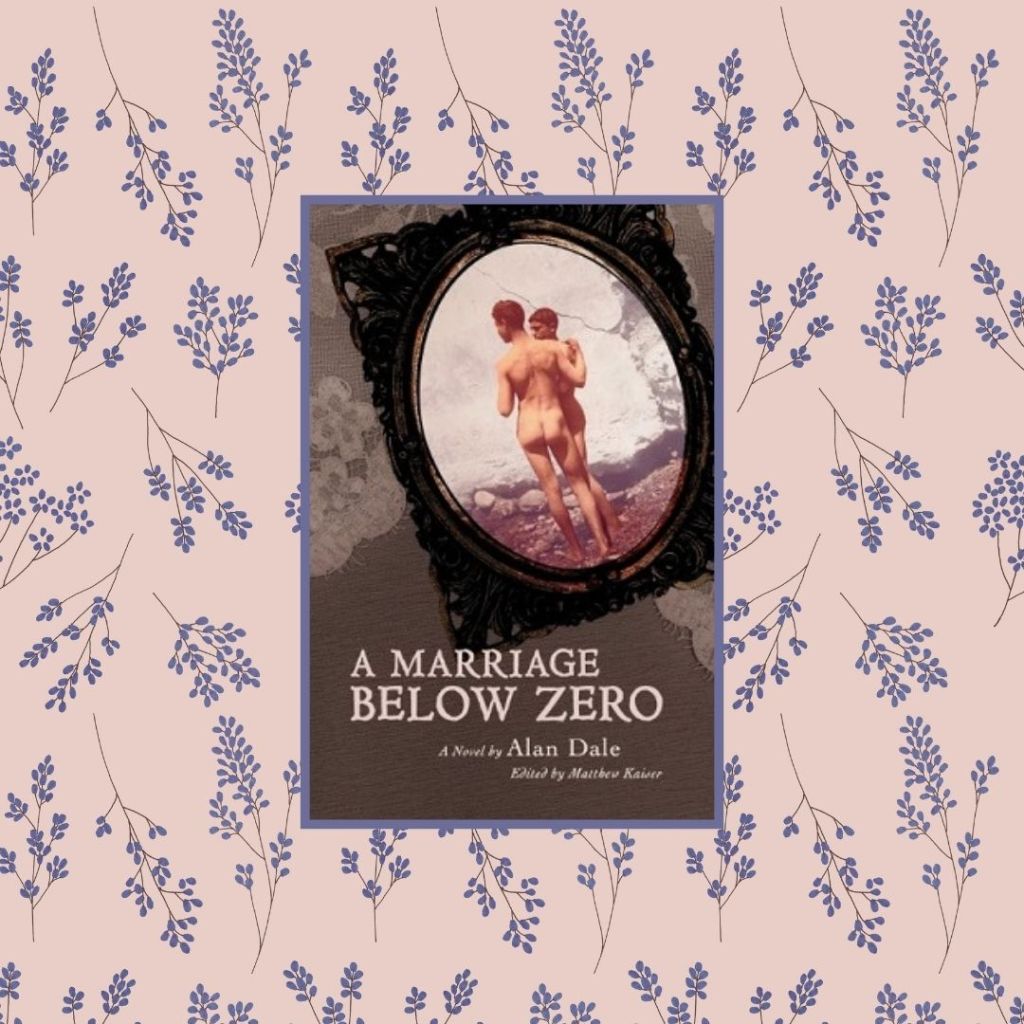
    I recently discovered and read the 1889 melodrama often attributed as the first English-language gay novel, A Marriage Below Zero, written by Alan Dale. After finishing it, I was refreshed by its bold depiction of queer sexuality and baffled as to why it remains as obscure as it is.

    For 1889, the homosexuality in the story is surprisingly obvious. While a work like Oscar Wilde’s 1890 The Picture of Dorian Gray was very queer in terms of themes and symbols, here, it’s not subtext; it’s the foreground. The characters’ relationship and sexualities aren’t explicitly labeled, however, I imagine even readers of the time put two and two together. While that is all remarkable in itself, progressive subject matter alone does not equate quality. So is the book any good? Well, for the most part, yes.

    The story centers on Elsie, an unmarried, modern woman with little interest in men until she meets the charming and mysterious Arthur Ravener. He is intelligent and humorous and treats Elsie as an equal. The only downside: he spends all of his time with another man, Captain Dillington, whom Elsie immediately distrusts. Nonetheless, Arthur and Elsie continue to bond and he eventually proposes to her. They get married and set off to live in the Countryside together. Much to Elsie’s frustration, however, Arthur rushes off to London the very night of their honeymoon, and continues to abandon her every chance he gets in the following months. When she expresses her concerns, Arthur dismisses them, often gaslighting her into thinking his behavior is completely normal. Elsie loses her patience and takes matters into her own hands, finding out (if you haven’t already guessed) that he is having an affair with Dillington.

    The work is greatly enhanced by the cleverness and comedic nature of Dale’s writing. The first chapter, for example, opens with Elsie telling the reader: “No, I shall not weary you with a long account of my childhood, and all that sort of thing. When I read a story, I always skip the pages devoted to the juvenile days of the hero or heroine. They are generally insufferably uninteresting, or interesting only to the writer…” only to follow up with multiple pages dedicated to an account of her childhood. The book is written with a humor and sweetness that I found particularly engaging. I was completely hooked by this comedic introduction.

    While Dale triumphs as a writer, he ultimately does not demonstrate the same consistency as a storyteller. The novel suffers from poor pacing, especially during the middle chapters which drag on in a tedious pattern of Arthur doing something secretive and Elsie being suspicious. It is tiresome to read about the same frustration over and over again. While it must be more obvious to a reader in 2024 that Arthur is having an affair with Captain Dillington, I imagine even a reader in 1889 might have grown bored of the same repeating scenes. After all, affairs were not shocking in the 19th century, yet it takes Elsie a dreadfully long time to suspect one. Thankfully, when she does find out, the story picks up again, eventually catching Arthur in bed, naked, with Dillington.

    A Marriage Below Zero is an important book and it deserves more recognition. Many people are completely unaware that 19th century queer literature exists in the first place! Obscure novels like this have the power to paint a more authentic picture of the time they were released in. Though it is flawed, there is something so special about reading a novel from 135 years ago that features a gay relationship, even if it isn’t destined for a happy ending. The novel was controversial and written by a fairly unknown theater critic, so it makes sense that it wasn’t a major success upon its release. However, for its subject matter, it is a highly significant piece of work that should no longer be lost to history.