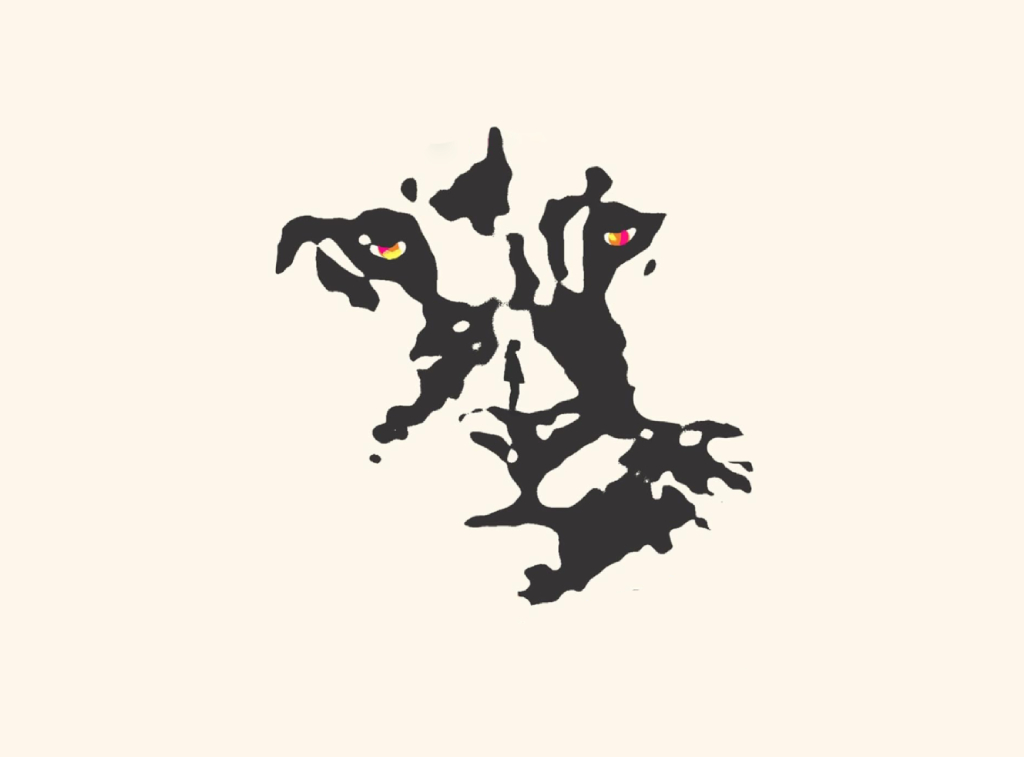
We seem to be in something of a Renaissance with queer media (Heated Rivalry, The Emperor of Gladness, and Pluribus to name a few), which is more essential now than ever if you ask me, but I wanted to take a moment to spotlight a queer story that’s a little less known and a little stranger, told from a mountain lion’s point of view.
Immediately after I finished reading Henry Hoke’s 2023 novel Open Throat, I thought to myself, “This may be the best queer story I’ve ever read.”
Open Throat follows a queer mountain lion on the prowl in Los Angeles. This lion spends its days observing humans and their strange ways of life. After a fire forces this lion to come down closer to the city from the hills, new temptations and threats emerge, and the feline begins to question whether they want to eat a person or become one.
When I first read this, I was immediately hooked, though a bit skeptical. Maybe this was just a case of “all flash, no substance” storytelling. However, in reading Open Throat, I found myself deeply resonating with this lonely feline.
In discussing the origins of Open Throat, author Henry Hoke said, “I was catching up with the real mountain lion, P-22, who was an L.A. celebrity. There was a Nick Cave song where he talks about a cougar in the Hollywood Hills, and that just sparked something in me… I felt kind of displaced and strange in Los Angeles the whole time… Instead of actually looking in on the cat I decided to just take a couple months and inhabit the fictional headspace of the cat and do a monologue of my experience of L.A., but as a mountain lion.”
As for the queer perspective and trans experience exhibited within the story, Hoke said in a separate interview, “It was very close to myself, an expression of deeper aspects of my own character, so I didn’t have any trouble there; I just had to meditate and tap into those inner fires.”
But what is it about Open Throat? How does this LA-dwelling solitary mountain lion tale stand head and shoulders above other similar stories about queer identity and the trans experience? There are a few key aspects that stood out to me.
For starters, there is the setting. Often, members of the LGBTQ+ community feel compelled to live in larger cities, if not purely from an economic or cultural perspective, but out of a need for safety. Rural or less densely populated areas of the United States historically tend to skew more conservative and have harsher legislation, which in some cases even targets members of the LGBTQ+ community. The unnamed mountain lion in Open Throat is driven to LA and specifically into more densely populated areas. Through this change in setting, the lion details isolation and loneliness in a new place, all while simply seeking companionship. This is an experience we may individually feel when moving to a new place, and even more so if we feel forced to move.
Next, there is the sheer strangeness of the story. This may be a purely “me” belief, but what is often glossed over in more mainstream queer books is the removal of the uniqueness of being part of the LGBTQ+ community. As a queer man, there are quirks I’ve discovered over the years about myself and other friends and family members within the community that aren’t often outwardly addressed. From emotional reactions to different events in life, to gravitating towards different people, to general interests, and vernacular and slang, let’s be honest with ourselves, one of the best (but most terrifying parts) about being in this community is the “not normal” quality. Or at least, “not normal” in a modern, western heteronormative socioeconomic culture. It’s “not normal” to read a story through the perspective of a mountain lion who wants to eat a human being and feel close to crying at the end of it (this is no Free Willy or Old Yeller), but critically too, it’s perhaps “not normal” to read a story from this point of view that also doesn’t shy away from the quirks of living and experiencing life in such a body as this.
I feel it’s sufficient to say, as LGBTQ+ people, we each have uniquely queer experiences and, if we relayed those experiences even to the most understanding straight ally, they could question or recoil. A joke about this that I’ve heard is that while women avoid men in dark alleys, parks at night, and parking garages, these are the places gay men actively congregate to seek out men. An example of this “strangeness” in Open Throat reads,
“piss splashes my face and wakes me up/ the sharp smell bristles my fur and my eyes pop open/ I watch the man’s dangling part and the wet pouring from it onto the pebbles in front of me/ the salt covers my lips and I lick it away/ I’m hungry again/ I turn away from the spray and my eyes must catch the sunlight because the pissing man makes a deep noise and clutches his chest and turns before pulling up his pants and he skids on the gravel and falls on his face/ he recovers and runs out of the cave and doesn’t look back/ if he looked back he’d see me not chasing/ not moving/ he’d see me not giving a fuck/ I’ve been pissed on before/ I stand and leave my cranny and sniff his puddle and straddle it and piss and the puddle gets larger/ I can smell his fear/ I walk over to where he fell and paw the frantic marks he made in the gravel and I think/ what it would be like to hunt him.”
There’s a great deal to unpack here (potential kinks and fetishes, past experiences with such bodily functions from oneself and others), but the one I want to focus on is right at the end. After this degrading act is done to our narrator lion, their thought goes to thinking about hunting them. Through this story, we understand that this has a double meaning. For a mountain lion, there is the literal hunting aspect of stalking and killing this man, but in a more metaphorical sense, there’s also a desire for the pursuit of such a target. Why do we so often find ourselves pursuing those who have scorned us?
Finally, there is the trans experience. At the start of Open Throat, our narrator says, “I’ve never eaten a person but today I might.” From a predator pursuing humans to, by the end, wishing to be a human themselves and feeling uncomfortable in their furry, feline skin, our protagonist goes through an identity crisis. They begin to relate and even sympathize more with the humans that often live in fear or have animosity towards them as wild animals than they previously did. They believe that in the end, they are a human, just a human trapped in a lion’s body.
There’s a genuine desire for connection and community found through the lens of our protagonist, wishing to be recognized as living their authentic self. Perhaps the most essential quality about queer existence is a desire to live as one’s true being—quirks and all. No queer person, no human being, or mountain lion, is perfect, nor is the queer experience a tale of striving for perfection. If anything, the truest queer experience is about coming to terms with our faults, with the experiences we’ve had along the way, and reconciling them with the individual we wish to be and finding those around us who will accept us as us. Perhaps no one, or no thing, has embodied that drive for acceptance more than a mountain lion in the City of Stars.



 The Queerest