
When I was seven or eight years old, I discovered the Broadway musical Wicked and was forever changed. Everything from the staging, music, costuming, to the performances was spectacular. Flash forward to nearly two decades later and millions of people get to experience Wicked for the first time on the big screen.
Wicked has been running on Broadway since its 2003 opening, currently ranking as the fourth longest-running show in Broadway history. With this comes a dedicated fan base quick to find flaws in new adaptations of their beloved story. Many stage-to-film adaptations include edits to the source material because film is an entirely different medium with different storytelling requirements. While plenty of creative liberties were taken, Wicked: For Good is a beautiful adaptation of an iconic story.
Before delving deeper into my review of Wicked: For Good, let’s do a brief plot summary to make sure everyone is up to speed. This is your spoiler warning! Wicked: For Good opens one year after the events of Part I with Elphaba (Cynthia Erivo) fighting against hateful propaganda labeling her the “Wicked Witch of the West.” Meanwhile, Glinda (Ariana Grande) has taken the role of the “good” witch, the people’s princess of Oz, offering encouragement and optimism that good will conquer evil. After a final attempt to partner with the Wizard, Elphaba flies off, but not before Fiyero (Jonathan Bailey) joins her, calling off his engagement to Glinda. Following these events, Dorothy of Kansas finds her way to Oz. During this time, Glinda and Elphaba fight and make up over Fiyero and share a tearful goodbye before Elphaba’s death by water in which Elphaba passes the torch (in this case, the Grimmerie) to Glinda and explains that the future of Oz is now in her hands. Glinda lives up to this legacy and has a day of reckoning against the Wizard and Madam Morrible. But before the credits roll, we learn that Elphaba actually faked her own death and flees Oz with Fiyero.

After my viewing of Wicked: For Good, I–a twenty-six-year-old Broadway-loving lady and cinephile–found myself with a laundry list of pros and cons. First order of business, Jonathan Bailey should get an Oscar nomination exclusively based on his performance in “As Long as You’re Mine.” He and Erivo mastered the romance and silent intimacy within the song. It was gentle, sensual, and had me biting down on my fist at points.
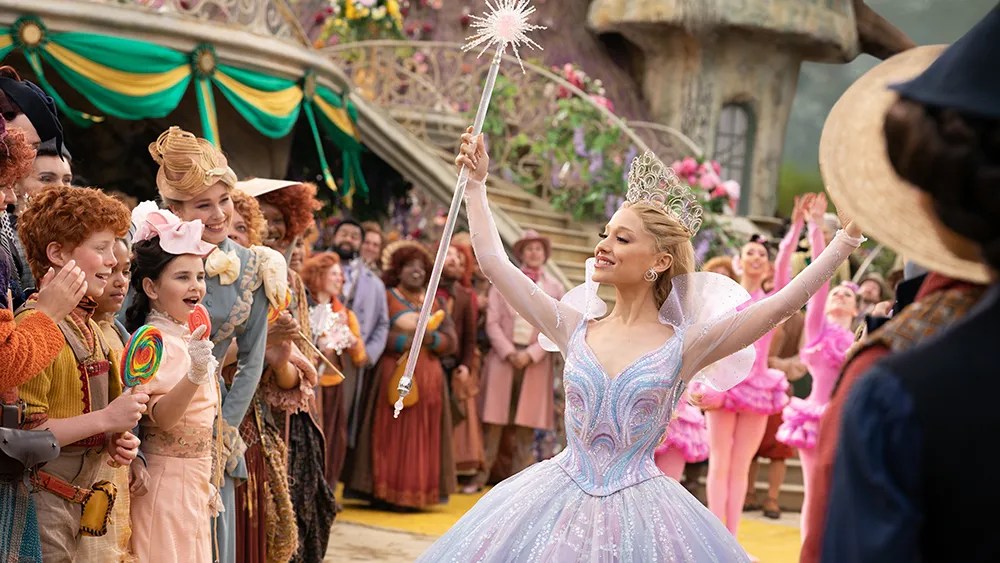
Shifting gears from the iconic pink bubble gown Glinda wore in Part I, I found Glinda’s new blue dress absolutely stunning. It reminds me of Odette’s outfit in the animated masterpiece, Barbie in Swan Lake. The costuming is beautiful, and it is important to me to take a moment to shout out the impressive work from the hair stylists, makeup artists, and nail techs. When I see a big-budget movie like Wicked, I want this level of attention to detail.
All of these pros aside, I did find some flaws in Wicked: For Good. My main qualm was that it did not need to be that long. I understand that it is trying to appeal to kids, the general public, the Academy Awards, and dedicated fans of the source material; however, I felt the choice to tell the story in two films, nearly doubling the runtime of the Broadway show, was unnecessary. Half of the charm in the Broadway musical is the whimsically fast pace. The extended runtime was likely pitched to give director Jon M. Chu an opportunity to flesh out characters’ stories, something ultimately helpful for a moviegoer unfamiliar with the stage show. I have no problem elaborating on secondary characters and believe these decisions helped the story rather than hurt it. My issue is that there were so many close-ups of Elphaba and Glinda’s faces. The lingering shots dragged scenes on and at times made me feel restless.
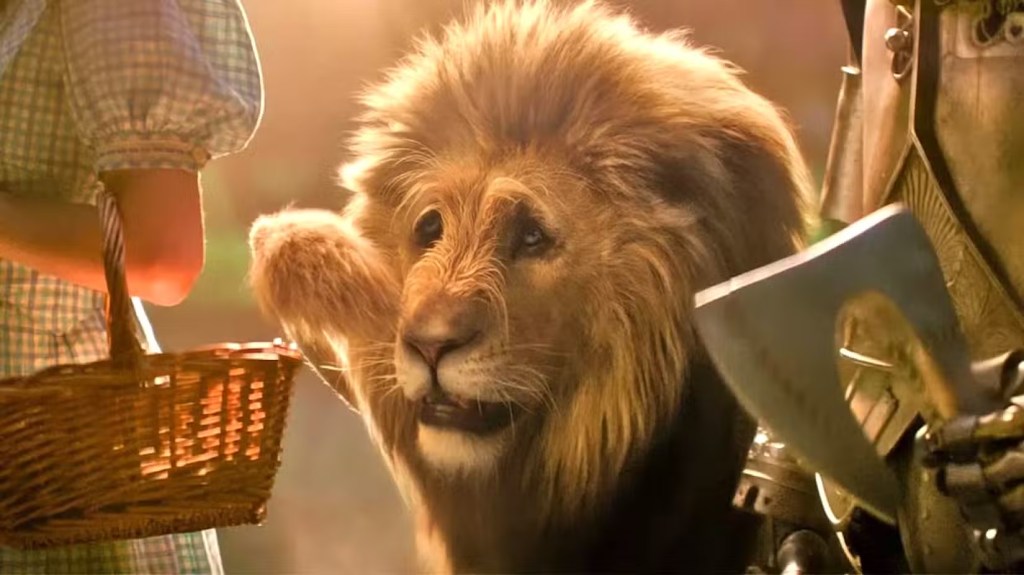
I don’t have many complaints about the songs that were created or reprised for the film version of Wicked. I thought the reprise of “The Wizard and I” was a helpful recap and updated the audience on the condition of Elphaba’s character a year after the events of Part I. She is still hopeful that things can be made better, still naïve to the sacrifices she will end up making for the greater good. It eased me back into the story without dumping exposition on me. The original song, “No Place Like Home,” however, should have been cut. It was cheesy, unnecessary, pandering, and goofy. It reminded me of “This is Me” from The Greatest Showman, with corny lyrics about fighting for what is right and sticking up for yourself. I did enjoy how this song led to an early introduction of the Cowardly Lion before his cameo in “March of the Witch Hunters” and found it helpful to the story. Ultimately “No Place Like Home” is not that bad, but it’s pretty cliché in its execution. The second original song, “The Girl in The Bubble” was fine. I think Grande gave a beautiful performance. Her delicate falsettos and operatic voice along with the exposition of the lyrics added to my empathy for Glinda despite her flaws. Was this song groundbreaking, though? No. I think it could’ve been cut for time, but I’m not upset that it was included.
When it came to the character of Dorothy and her involvement in the story, the film chose to never show Dorothy’s face. This novelty paid homage to her character’s onstage absence in the Broadway production and serves as a reminder that Dorothy from Kansas is not the focus of this story. Unfortunately, it looked as though Dorothy was animated at times, which brings me to my next con: the animation. I wish they used puppets for the animal characters. The hyper-realistic CGI effects in films feel tired and boring. Wicked: For Good is a movie about magical witches, so the viewer’s sense of belief is already suspended, and it would have been cool to see the crew subvert expectations and have a little fun with practical effects.
On the topic of practical effects, props, and set design, however, I have no notes. The blend of fantastical medieval fairy-tale design and 1930s-40s Art Nouveau motifs was perfect. Everything looked elaborate and intentional. Production designer Nathan Crowley understood the assignment and I admire his and his team’s talent for world-building. The aesthetics are also appealing commercially, Wicked: For Good has several brand collaborations selling merchandise. I would love to divulge deeper into my thoughts on the film’s marketability, but that is an entirely different essay.
Our secondary characters in the second half of Wicked get some major development and I thought Nessarose and Boq were amazingly portrayed. In the stage musical, I always long for more time with Nessa. Her shift to evil felt the most abrupt. Marissa Bode captured Nessa’s silent tyranny and highlighted her inability to think beyond herself. I also enjoyed Ethan Slater’s performance as Boq, and found him believable as an angry and jaded Tin Man. His solo in “March of the Witch Hunters” proved his acting chops beyond a goofy, lovesick Munchkin.
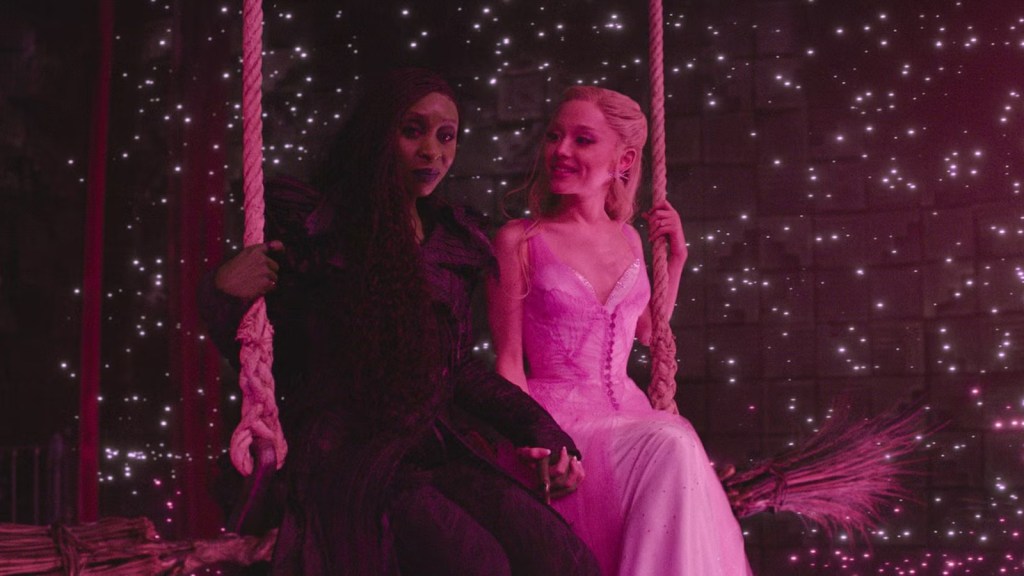
As it is the movie’s namesake, I must take a moment to discuss the song “For Good.” I always cry when I hear this song, and this time was no exception. Ariana Grande and Cynthia Erivo’s dynamic as performers is perfectly matched in this number. The tenderness in every lyric exhibited how the source material was handled with care and understanding. It made me release emotion. I rarely think about the plot of Wicked when I listen to this song, but rather relate the lyrics to the people I have loved and lost in my life. There is something so beautiful in art’s ability to make people feel something so deep that it must be expressed through tears.
All in all I am pleased with 2025’s Wicked: For Good. While the film has its shortcomings, I do not think any of the issues I found in the film were due to a lack of effort or understanding of the story, but rather the fundamental values within the film industry to make money and win awards. I wish movie musicals could be more popcorn/blockbuster-style rather than the long-form Oscar-bait that we usually get. I prefer Hairspray and Mamma Mia to Tom Hooper’s 2012 Les Misérables any day of the week. I didn’t think Wicked: For Good would be groundbreaking, but knew it would be enjoyable and I am happy to say that it met my expectations. I would recommend this film to people who enjoy watching musicals, elaborate sets and costuming, and beautiful people with raw talent.
 The Queerest