The Academy Museum of Motion Pictures in Los Angeles celebrated the career of Marilyn Monroe with an exhibition in her honor: “Marilyn Monroe: Hollywood Icon,” featuring screenings of her films as well as original photographs, scripts, letters, costumes, and rare personal items on display for the first time ever.
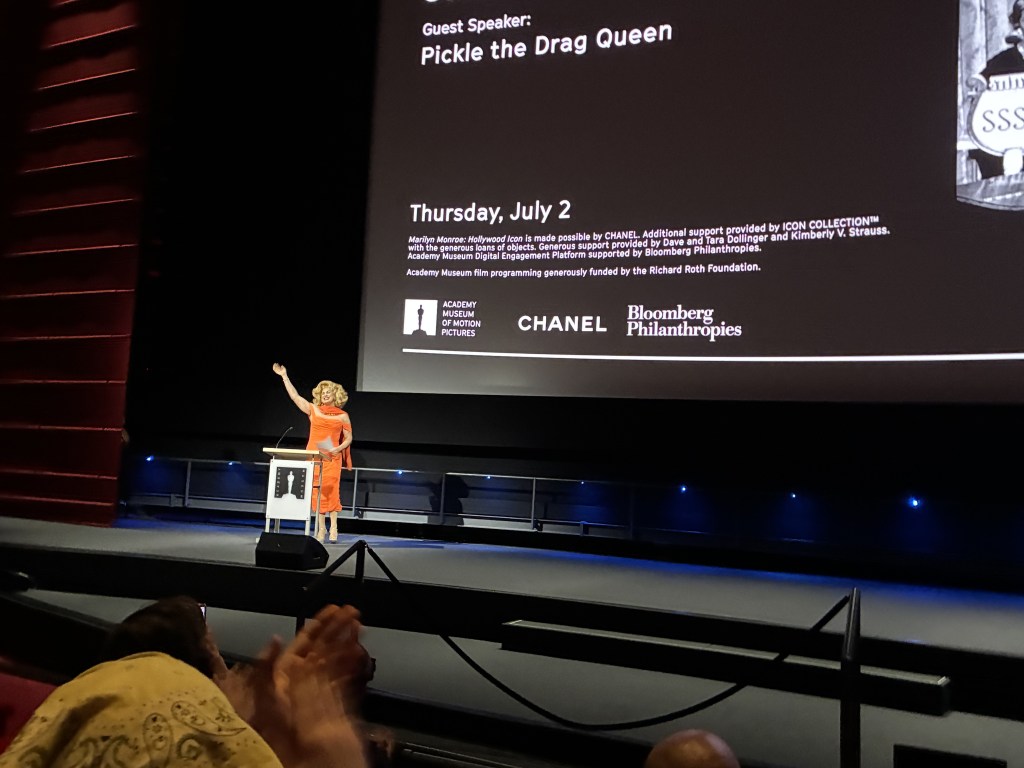
On Thursday, June 2, the museum screened a 4K restoration of Some Like It Hot, with Drag Laureate of West Hollywood, Pickle, presenting the film.
Wearing a recreation of one of Monroe’s many iconic costumes from Gentlemen Prefer Blondes, Pickle inspired the audience with her discussion of the icon and her history with Some Like It Hot, calling the film “quintessentially Marilyn.”
After she praised Monroe’s performance, Pickle compared the control Monroe exerted over her image and presentation to that of a drag queen, stating:
“In drag, we conceal aspects of ourselves with big hair and makeup, or padding or costuming, but the irony is that in doing so we reveal a deeper truth about who we are. I like to say that in acting, you’re always in service of a bigger story being told, but in drag, you are the story. Marilyn embodied that, both in her work and her public life, and was very intentional about the story of Marilyn.”
Billy Wilder’s Some Like It Hot is a classic comedy from 1959 known for its queer undertones. The film stars Tony Curtis and Jack Lemmon as two down-on-their-luck jazz musicians who disguise themselves as women after witnessing a mob murder, hiding out in an all-female band.
Curtis and Lemmon spend the majority of their screentime in drag and often find themselves in overtly queer scenarios like when Lemmon is courted by a wealthy retiree and seems to genuinely express excitement over his marriage proposal.
A drag performer named Barbette, a popular female impersonater from Paris in the 1920s/30s, was even hired on set to teach Curtis and Lemmon how to impersonate women.
This queer material was very bold for the 1950s. All Hollywood movies at the time were expected to receive a seal of approval from the Motion Pictures Producers and Distributors of America but Some Like it Hot was considered too inappropriate. However, despite the disapproval of the Hays office, the studio released the film anyways and it ended up performing extremely well, which helped loosen censorship in Hollywood down the line.
For those who missed this screening and any others in the Monroe series, the exhibition will remain open through February 2026, and the screenings will return in the fall. Specific dates are yet to be announced.
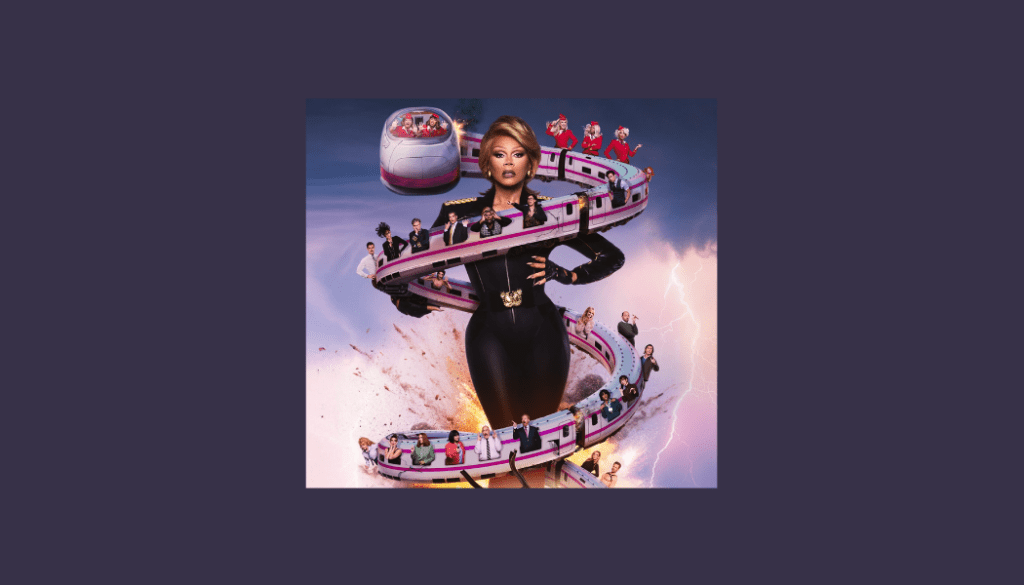
In the weeks leading up to its theatrical release, RuPaul’s upcoming comedy Stop! That! Train! has been under immense scrutiny for its alleged use of AI-generated special effects.
Much of the controversy started when Gloria Cook, a VFX artist and experimental filmmaker, attended the film’s premiere in New York on May 28 and posted a review on Letterboxd shortly after, writing, “It’s one of the most conspicuous uses of AI I’ve seen in a film, with a lot of VFX looking like gen AI… Confirmed in the end credits that Acme AI was the top-billed VFX company on the film.”
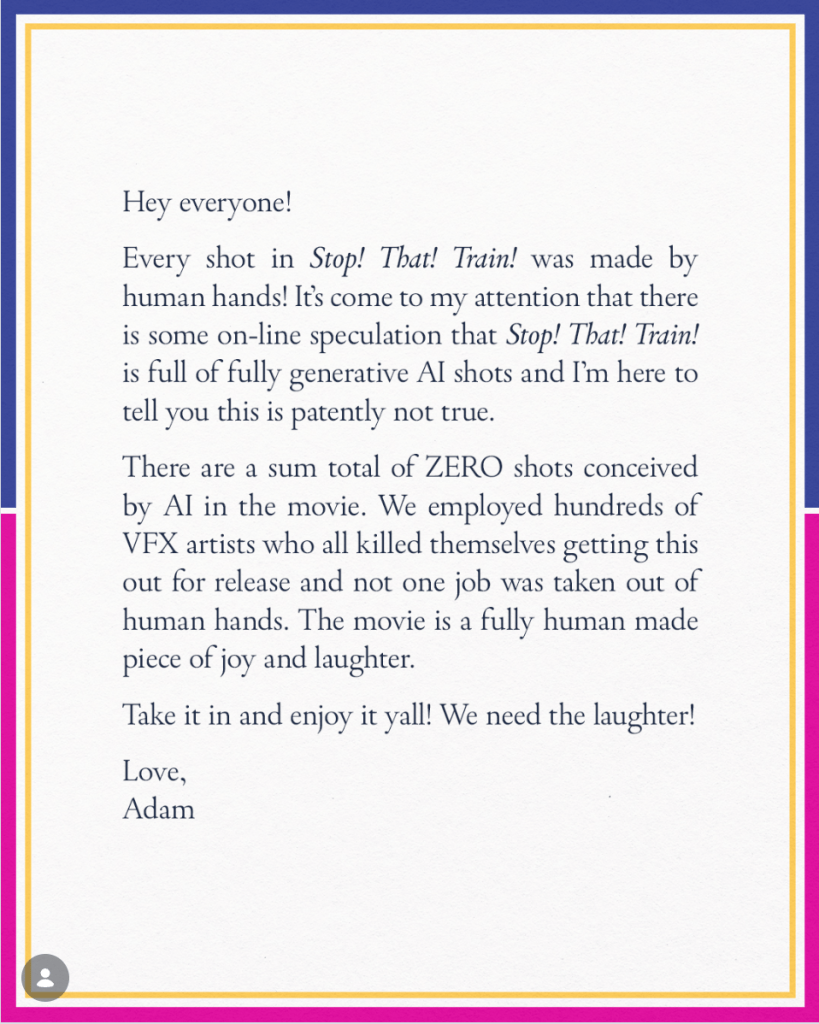
After similar allegations rapidly spread across the internet, Shankman addressed the controversy on June 3, posting an official statement on Instagram, stressing that the movie was “made by human hands.” However, he notably did not address the undeniable collaboration with AI VFX companies.
Cook, now clapping back at Shankman’s vehement denial, released a video pointing out several discrepancies in the movie, visible even in the film’s trailer.
The train, for example, appears with a different number of windows in various shots, a suspicious detail since human VFX artists would have reused the same CG model for different shots. There would be no purpose in recreating and intentionally changing the amount and placement of windows.
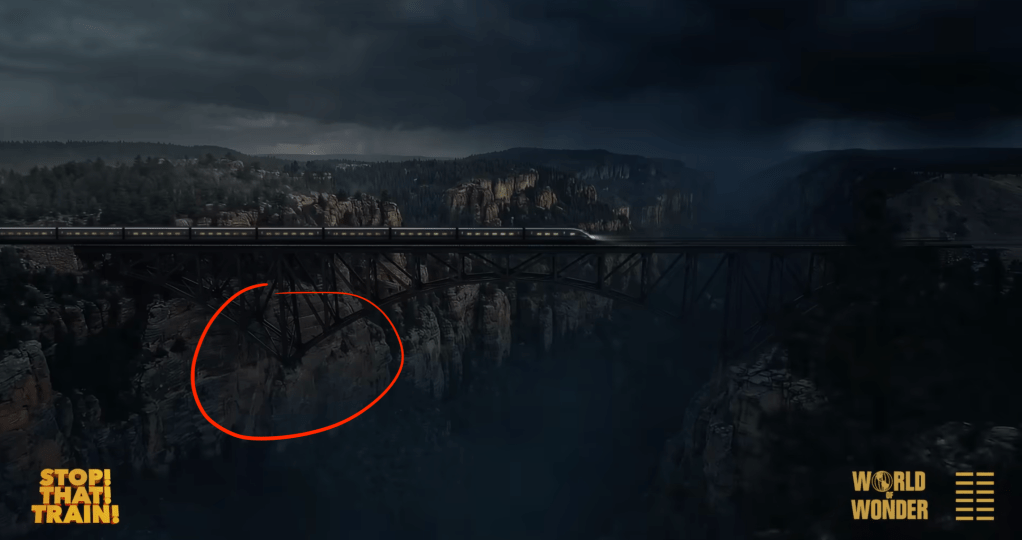
Additionally, there is a shot of the train crossing a bridge with one of its support legs completely missing, another highly suspicious detail.
The IMDb credits list 26 compositing artists but not a single 3D or CG artist. No one is credited with creating the train assets, only with combining assets. While there is a chance that the IMDb credits are incomplete, Cook notes that “it feels like an odd omission, especially when these VFX shots could only be done with CGI… or AI. And AI requires no animators, only compositors to clean up shots and combine elements together.”
Cook adds that proving these effects were not AI-generated would be fairly easy. “All [Shankman] has to do is post wireframes of these scenes to show off the 3D models.”
But instead, he released a very carefully worded statement, dancing around the issue:
Claiming that the movie doesn’t contain any “fully generative AI shots” (emphasis on “fully”) and that not a single shot was “conceived by AI” does not dispute the accusation that AI was used to generate special effects that would have otherwise been created by a human.
Generative AI is extremely harmful to the environment, with data centers increasing carbon dioxide emissions and pressure on the electric grid, straining municipal water supplies, and disrupting local ecosystems. On top of that, it takes jobs away from actual people. But of course, it is faster and cheaper for a company to use generative AI than to pay a human being. So the only thing we can do to stop it is to make our anger known. Filmmakers must be held accountable for using generative AI; otherwise, its use in the film industry will only grow and become normalized.
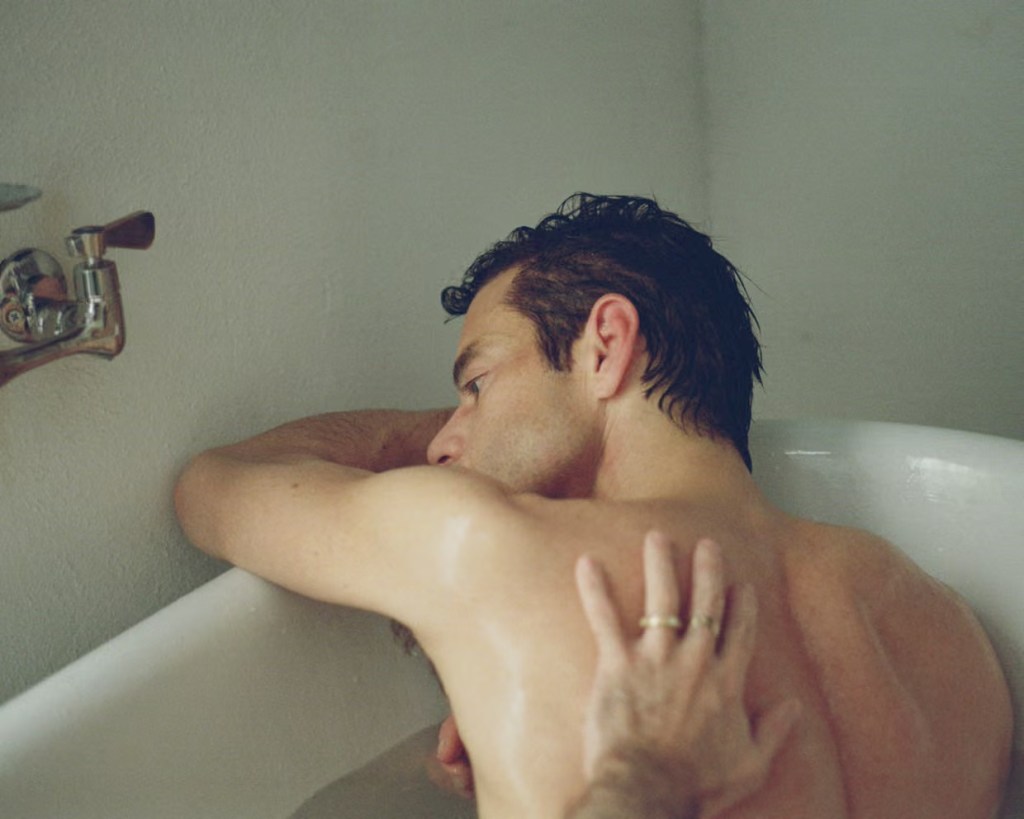
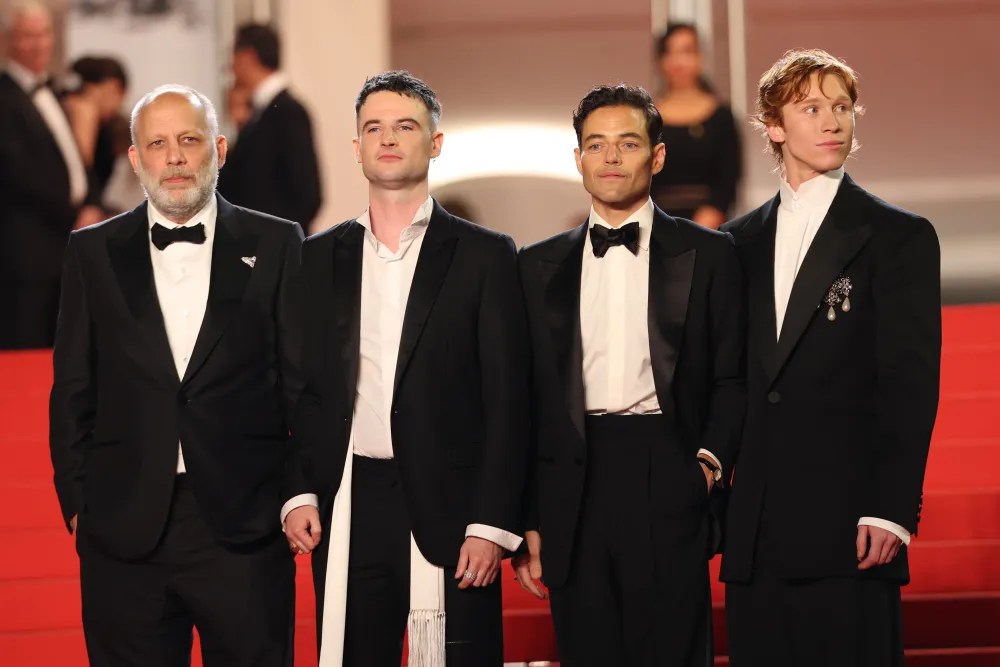
After The Man I Love debuted at Cannes this week, Rami Malek made comments about his initial hesitation to accept the role of Jimmy George, a gay theater artist in the 1980s diagnosed with AIDS. The character was originally intended for queer actor Ben Whishaw, who had to drop out due to another commitment. Though Malek is a talented actor, it is a shame that director Ira Sachs didn’t prioritize casting another queer actor in Whishaw’s place.
When the film screened at Cannes, Malek told reporters: “When I read the script, I said, ‘I can’t do this,’” noting too many similarities between Jimmy George and Freddie Mercury, the latter of whom Malek portrayed in Bohemian Rhapsody back in 2018, winning him the Academy Award for Best Actor.
“There was a certain sense of fear,” Malek said. “And I started to really think about what I was afraid of. Was it the similarities? Was it the singing? Was it obviously what was going on in the period? And the fear was, I knew I had to address the fear.”
Malek further reflected on his performance as Freddie Mercury, stating, “If there’s anything Freddie taught me, it was ‘address the fear.’ And when I raced into it, I started to discover that these were men that were similar, but they were also worlds apart . . . You have an icon, a legend in Freddie, who really had a destination, whereas Jimmy is just searching for creativity and love and intimacy and joy and pleasure in every moment.”
The film received an eight-minute standing ovation at Cannes and initial reactions to the film have mostly been positive. However, this expression of “fear” from Malek comes across as somewhat tone-deaf, given the frequent backlash when straight actors play queer characters.
The majority of roles in Hollywood are already written for straight, cisgender men, so it’s frustrating to see Malek taking this role from a queer actor. It’s even more frustrating to see Malek admit that he was scared to play “another” gay character with AIDS, and how he feels the need to justify the decision, when a queer actor likely wouldn’t feel the need to address it all . . .
Although it is noteworthy that there is more queer representation in Hollywood (and at Cannes) in 2026, queer actors are not getting cast in lead roles. LGBTQ+ actors are out there, but as long as bigger names are prioritized for these roles, it remains extremely difficult for queer actors to break into the industry and make a name for themselves.
You may know director Alfred Hitchcock thanks to films like Psycho and The Birds, each of which pushed the boundaries of cinema through their depiction of horror and violence. But before either of these films, Hitchcock pushed boundaries with an equally revolutionary film—Rope.
Released in 1948, Rope very well may be the queerest thriller of all time, thanks in no small part to everything on and off screen.
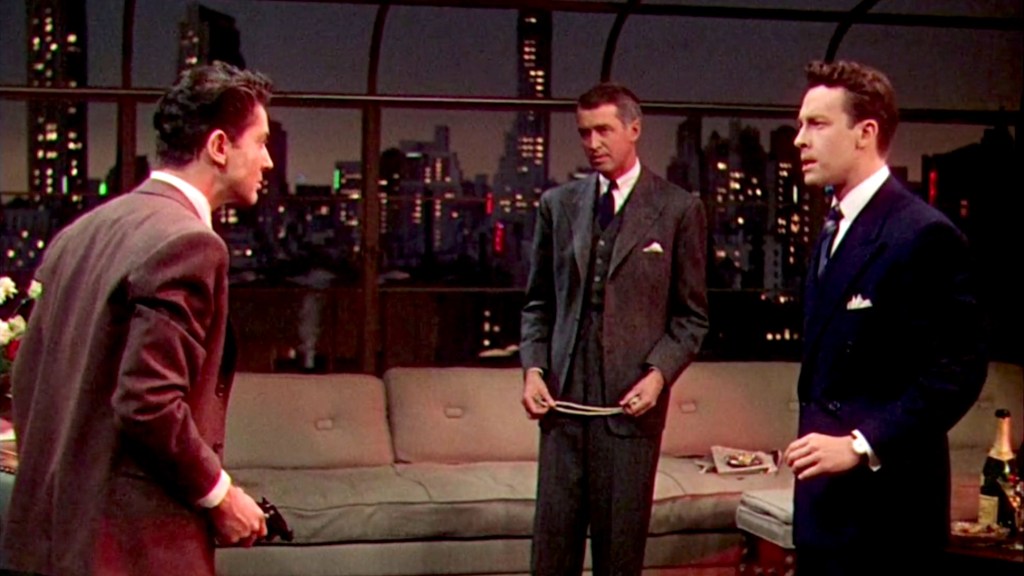
The film follows a pair of “friends” who decide to commit the perfect murder. They kill their former classmate with a piece of rope and subsequently hide his body in a wooden chest, which is then prominently displayed in their apartment as the two host a dinner party. The tension lies not in whether the murder occurred or who did it, but whether the murderous protagonists can get away with it.
From the onset, Rope is steeped in queer…well, we can’t even call it subtext now, can we? The two friends and former classmates, Brandon and Phillip, share a one-bedroom apartment together in New York City. They decide to kill their prep school classmate, David, with a piece of simple, taut rope. This is done in the opening scene, and the camera lingers on the faces of all three characters, notably David, whose pain in his own death could be misconstrued as almost arousal. All three men are packed closely together, hands across one another’s bodies, to commit this deed.
Throughout the subsequent dinner party, Brandon and Phillip are staged physically close—often shoulders against one another—and discreetly reminisce about the sensations the murder filled them with, along with their superior intellect for committing such a crime.
Brandon says, “We’ve killed for the sake of danger and for the sake of killing. We’re alive, truly and wonderfully alive.”
Later, he remarks, “I don’t remember feeling very much of anything… until his body went limp and I knew it was over. I felt tremendously exhilarated.”
There are innuendos throughout about not just the pair’s homosexuality, but that of both their murder victim and their prep school housemaster, Rupert, who appears halfway through the film. Brandon notably says, “I’m not interested in Janet’s prattle, but you always interest me, Rupert.”
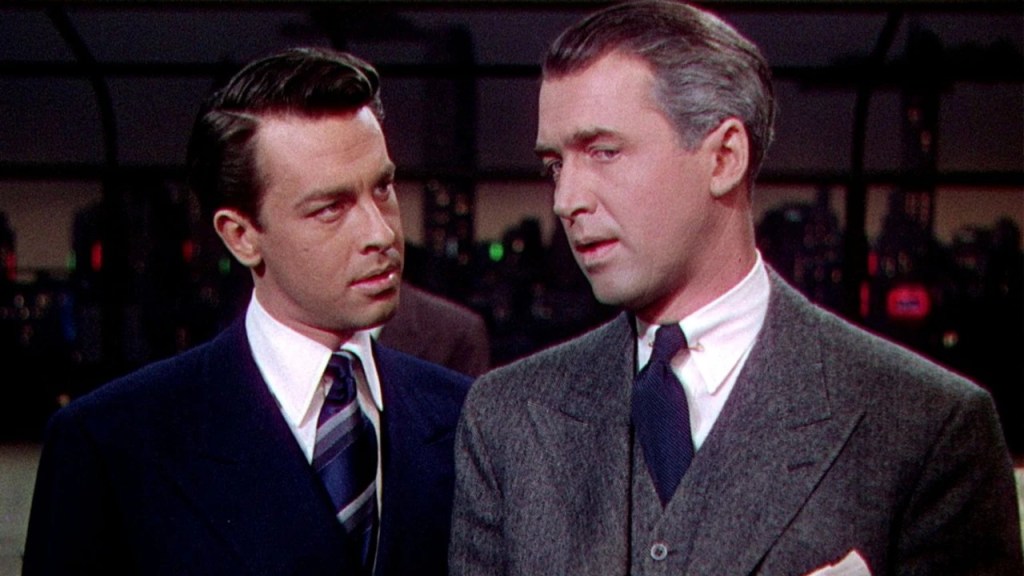
The innuendos of homosexuality likely flew over Republican James Stewart’s head as the elder intellectual, but they certainly didn’t for others in the cast and crew.
Rope, based on a 1929 stage play of the same name by Patrick Hamilton,was loosely inspired by the real-life murder of 14-year-old Bobby Franks in 1924 by University of Chicago students Nathan Leopold and Richard Loeb. Leopold and Loeb, having been in a relationship, were determined to murder as a means to tout their “superior intellect” and commit the “crime of the century.”
Hamilton himself was a closeted gay man and the screenwriter for the film, Arthur Laurents, was also gay–and one of the few openly gay Hollywood screenwriters in the 1940s. He and Hitchcock had a productive working relationship. Laurents said in an interview with Vito Russo for his book, The Celluloid Closet, “We never discussed, Hitch and I, whether the characters in Rope were homosexuals, but I thought it was apparent.”
Laurents had been drawn to write the screenplay for Rope because his then-lover, openly bisexual actor Farley Granger, was set to star as one half of the murderous duo, Phillip. The other half of this duo, Brandon, was also played by closeted gay actor, John Dall. On top of this, Brandon and Phillip’s murder victim, David, was played by Dick Hogan, yet another gay actor who had previously been with Farley Granger.
In writing the script for Rope, Laurents had a delicate balancing act given that the Hays Code was at its peak in enforcement. The Hays Code was a set of censorship guidelines for the film industry, which barred any “unacceptable” content in films, such as homosexuality. Laurents said, “I don’t think the censors at that time realized this was about gay people. They didn’t have a clue what was and what wasn’t, that’s how it got by.”
Hitchcock, though not initially intent on crafting such a queer film, had begun working on Rope to push back from the studio system which he had been trapped in for years (also using Rope to employ groundbreaking filming techniques to create the illusion that the film was done in one continuous long take). He, in many ways, sympathized with queer artisans and characters.
Hitchcock was more than willing to cast queer actors, wishing to promote and elevate struggling performers who, like himself, wished to push back on the studio system. Stewart, as the most bankable star, was cast to quell censorship concerns and to secure financing. But all the other primary persons associated with creating and starring in the film were keenly aware and eager to showcase queer characters less in a villainous light, but in a complex one.
Laurents and Granger even had a double date with Hitchcock and his wife, Alma. Laurents said of Hitchcock, “He didn’t give a hoot in hell whether I was gay. It tickled him that we had a secret he knew. It was a slightly kinky touch, and kink was a quality devoutly to be desired.”
There were missed opportunities with Stewart’s casting, however. Laurents lamented that Stewart’s character was supposed to be the unwitting, queer inspiration for the murderers. In Laurents’s words his character was, “the head homosexual…Jimmy Stewart? Jimmy Stewart has no sex.”
Still, the film carries on with its queer imagery and textual assessment of vice–from smoking cigarettes after murder to stroking champagne bottle necks, all of which can be tied back to the queerness of the story.
Phillip and Brandon are, despite being murderers, the film’s protagonists. As an audience member, one is keenly aware of the malicious deed committed at the onset, but can’t help looking away and being charmed by the murderers. While not necessarily a positive representation of homosexuality, what Rope did was employ queer artisans in a time when punishment for sodomy in California included forced sterilization; Hitchcock crafted a thriller steeped in homosexual undertones, queer history, and evoking tawdry, sensuality between multiple characters.
Most essentially, the film addresses fascist ideology head-on. The murderers commit their crime after having learned of “superior intellect” from their mentor, but by the end, their headmaster rejects this thought experiment that individuals of “superior intellect” can or should dictate the lives (and deaths) of others. Hitchcock had crafted anti-fascist British propaganda during World War II and Stewart had served in the Army during the War. In the end, it’s not the homosexuality of the characters that’s repudiated, it’s their fascist thoughts, which can be held even by members of the larger queer community (I’m looking at you, “LGB without the T”).
Even prior to Rope’s release, the film received backlash and was either banned or severely restricted across such major cities as Seattle and Atlanta. The film was also met with mixed reviews and wound up being a financial disappointment, though not an outright financial failure thanks in no small part to its small, $2 million budget. Since the 1940s, Rope has been reassessed and, while not as appreciated as some of Hitchcock’s other films, has endured because of its bold stylistic cinematography and use of long takes, as well as its queer storytelling and complex depiction of queer characters.
Rope is the queerest of all thrillers perhaps not because it’s the most shocking or graphic of queer stories put to screen, but because of all that was put into the film by its multifaced creators and actors, all that the film says about vice, kink, and ideology, as well as all that the film implies through inventive cinematography and editing.