There is no shortage of negative news surrounding the LGBTQ+ community as of late in the United States, with the community being targeted with healthcare and history rollbacks. Fortunately, amidst all the negative news we may be overwhelmed with, there are still some positive developments to highlight, a lot of which are in a continent not often featured or discussed when it comes to LGBTQ+ issues: Asia.
Nepal elects its first transgender woman lawmaker.

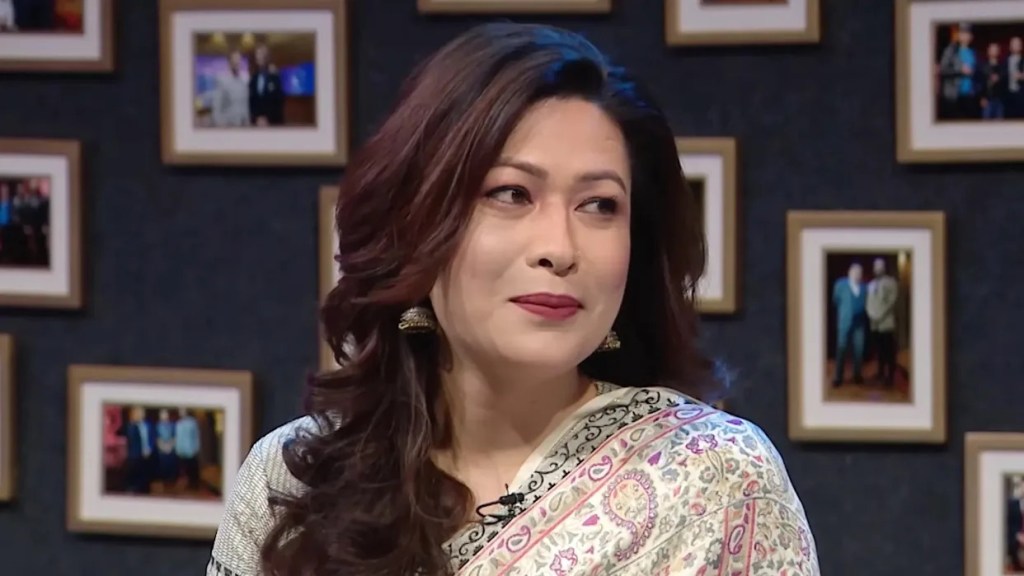
Nepal has been heralded as one of South Asia’s most progressive countries in terms of LGBTQ+ rights and protections. Over 900,000 Nepalese identify as being sexual minorities, and earlier this March, Bhumika Shrestha was elected as the country’s first transgender woman lawmaker.
Nepal’s Election Commission confirmed the 37-year-old LGBTQ rights advocate’s victory following the Rastriya Swatantra Party (RSP) landslide victory in the March 5 general election. The RSP won 182 seats out of the 275 available in the Nepalese House of Representatives.
“I am very excited but also feel the responsibility on my shoulders,” Shrestha said. “Our constitution has provisions for our community, but they have not translated to laws and policies. Our community expects me to raise our issues [in parliament].”
Blue Diamond Society, one of Nepal’s largest LGBTQ+ rights organizations in Nepal, established in 2001, hailed Shrestha’s election. Blue Diamond Society’s president, Umisha Pandey, said this was “historic.”
“Our pains, our sufferings, our feelings, our stories, and our every problem is only understood by us, not by others,” Pandey said.
Despite its progressive laws for LGBTQ+ individuals, an openly queer lawmaker hasn’t been elected to public office since 2008.
India elects its first openly queer lawmaker ever
Just south of Nepal, India has had a more contentious history with LGBTQ+ rights and protections. However, during the March 16 election, Menaka Guruswamy was elected as a Member of Parliament, making her the first openly queer woman to be elected in such a role.
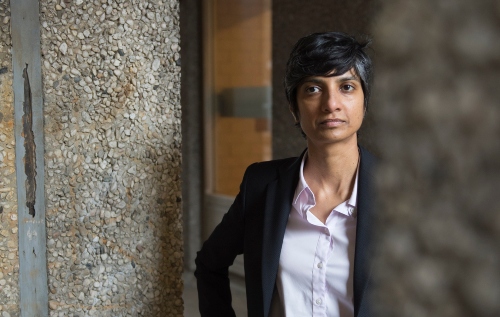
A constitutional lawyer educated at the University of Oxford, Harvard Law School, and the National Law School of India University, Guruswamy has been one of the leading voices of democratic and civil liberties in India. She is a member of the Trinamool Congress (TMC), a political party that has long focused on improving women’s political representation.
Malavika Rajkotia, a fellow Indian attorney, said that Guruswamy’s victory signaled a new wave for leaders who are “fearless, intelligent, and inspiration.”
“They stand against toxic crude masculinity that defines present-day politics,” Rajkotia said.
While other openly queer politicians have been elected to roles at more local or regional levels, this is the first instance in which an LGBTQ+ voice has been added at a national level.
Guruswamy and her partner, fellow attorney Arundhati Katju, were instrumental in having the Supreme Court strike down India’s 158-year colonial law criminalizing same-sex relationships in 2018.
Taiwan gears up to host the 2026 Kaohsiung Asia Pride Games.
This April 30-May 4, Kaohsiung, Taiwan is set to host Asia’s largest queer multi-sports event. Taiwan’s second-largest city after Taipei, Kaohsiung, has hosted these games since 2023 and includes sports for queer athletes such as volleyball, tennis, swimming, bowling, and basketball. The Games will be jointly hosted by the Kaohsiung City Government to promote diversity, equity, and inclusion alongside athleticism. There are planned to be over 1,000 athletes participating in these sporting events.
Taipei will also host the country’s largest LGBT+ Pride event in October, which brings in over 150,000 attendees and is the largest Pride event in all of Asia. Taiwan has also been named one of the 26 best travel destinations for LGBTQ+ people by TravelPulse.
Progress, But More to Be Done
What we are seeing in Asia is a greater championing of LGBTQ+ voices and greater visibility in all levels of government and culture. But there are still tremendous obstacles ahead. Japan, for instance, recently elected its first female Prime Minister, but Sanae Takaichi is staunchly conservative. Though she has said she is “fine” with same-sex partnerships and that “there should be no prejudice against sexual orientation or gender identity,” she has also said she would not support legalizing same-sex marriage. Japan remains the only G7 country not to offer same-sex marriage.
Additionally, 21 Asian countries still have laws barring same-sex relationships, and 14 have laws in which same-sex relationships can be punishable with imprisonment. Seven Asian countries still have the death penalty for same-sex relationships. All this is to say, progress is being made in often incremental steps, but it is occurring.
In countries large and small, progress, acceptance, and openness can be achieved as colonial laws and attitudes are addressed, activities such as sports events and Pride rallies gain greater prominence, and individuals from the LGBTQ+ community are elected into office.
 The Queerest