Tag: reflection

  • Elwim Is Not Zortifa, but Zortifa Is Elwim

    Elwim Is Not Zortifa, but Zortifa Is Elwim

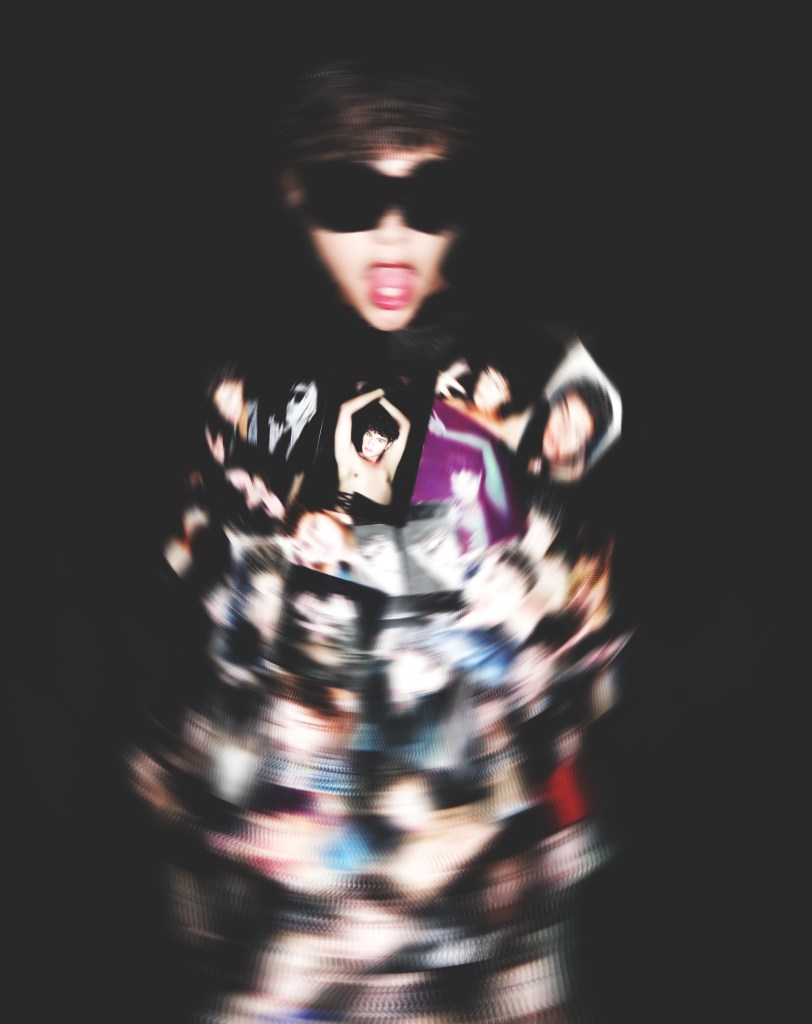
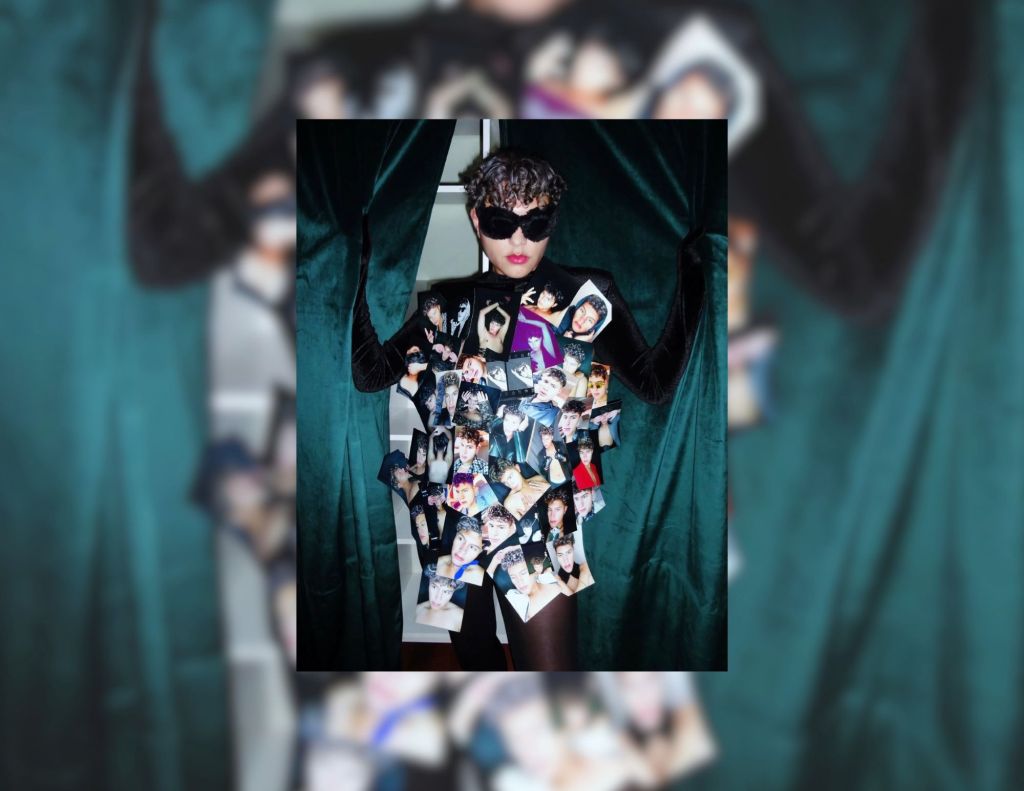
    In one of my recent photo projects, I am standing in a black velvet high-neck cropped top with built-in gloves and fuzzy glasses, with photographs of myself covering the rest of my body. Different poses, different expressions, different versions of me are everywhere. It is excessive. Maybe a little narcissistic, but definitely intentional.

    To understand why I wanted to literally wear myself, you first have to understand Zortifa.

    My last name is Sorto. Growing up in a Salvadoran family, I learned that a family name could carry weight. There were expectations around what a son was supposed to look like, how he was supposed to act, and who he was supposed to become. But I also grew up hearing homophobic remarks from family, from people I loved, and from the culture I was learning how to exist within.

    As I got older, I realized I did not want becoming a successful son to mean becoming somebody I did not recognize.

    So I started changing things. I got piercings. I highlighted my hair. I grew it out and curled it. I wore fake hazel contacts because I liked the way I looked in them. I started using makeup to cover my rosacea. None of those things alone were some grand act of rebellion, but together they meant something to me. I was learning that I could participate in creating myself.

    Somewhere in that process, Zortifa appeared.

    The name still holds onto Sorto, but the ending sounds feminine to me. I liked that. Zortifa became a way of keeping where I came from while changing what I believed I was allowed to become. It felt like I was taking my last name and reshaping it into something that could actually hold more of who I was.

    Elwim is not Zortifa, but Zortifa is Elwim.

    Zortifa is louder. More exaggerated. More fearless. Zortifa is willing to play with femininity and masculinity without sitting there asking which one I am technically allowed to do. There is something almost like drag in it for me, not because I consider Zortifa a drag character, but because there is a performance involved. Sometimes performance gives you permission to express something that was already there.

    The kindness in Elwim is still there. So is the insecurity and that little thought in the back of my head wondering what somebody else might say when I walk into a room.

    Zortifa just gives those thoughts less authority.

    Sometimes I describe it as feeling like myself without contamination. By contamination, I mean the expectations, shame, family roles, ideas about masculinity, and other people’s opinions that can get mixed into the way we understand ourselves before we even get the chance to decide who we are.

    That does not mean Zortifa fixed everything.

    Sometimes I wonder whether I know Zortifa better than I know Elwim.

    I came out in my late teens, and Zortifa has really grown with me in my twenties. Part of me knows this confidence probably developed because I did not always feel affirmed for who I was growing up. When something helps you survive, it can become difficult to imagine who you are without it.

    Maybe that is why putting the piece together felt more emotional than just mounting a bunch of pictures of myself onto a board.

    Covering myself in photographs became almost like building a shrine to confidence. Some are polished. Some are strange. Some never made it onto Instagram. They are not all perfect, but together they helped construct the person standing in the photograph now.

    The glasses cover part of my face, but I am still the lens through which I see my own life. The fuzzy textures feel luxurious to me. The velvet feels delicate, because I am delicate too. I do not think delicateness has to cancel out power.

    And yes, there is ego involved.

    I think sometimes we are taught to be embarrassed by openly liking ourselves. Too much confidence becomes narcissism. Too much sexuality becomes inappropriate. Too much femininity becomes a problem. Too much of anything becomes something other people feel entitled to correct.

    I spent enough time feeling like I was not enough. I am interested now in what happens when I allow myself to be too much.

    That has changed the way I approach photography too. I used to wonder whether a setting was beautiful enough for a picture. Now I ask something different. Does the background create the aesthetic, or can I?

    I can take a picture next to a trash can and still eat.

    Sometimes I do not need the background. The background needs me.

    Art is subjective. I do not have to wait for a photographer, an editor, or somebody with more authority than me to decide that I am worth looking at. I can control the pose. I can control the movement. I can decide which photograph feels beautiful, strange, ugly, sexual, funny, or interesting.

    I am an artist.

    I can be my own muse.

    That does not mean I think everything I create is perfect. Sometimes I like the shot a photographer might throw away. Sometimes beauty comes from what an image makes me feel rather than how closely it follows somebody else’s rules.

    Lady Gaga has always inspired me for a similar reason. She did not become interesting by recreating everything the world already had. She created something that felt like her. I think we are put into boxes so easily that eventually we stop noticing the walls.

    I have already broken out of a few of mine.

    I am part of the first U.S.-born generation in my Salvadoran family. I was the first in my family to graduate high school and the first to earn a college degree. I became a veteran. I earned my master’s degree, and now I am working toward a doctorate.

    I feel iconic saying that.

    Not because I think I am better than anyone else, but because the younger version of me did not always know whether being fully himself and becoming successful could exist at the same time.

    Now I know they can.

    Zortifa gives me confidence, but they also leave me with questions. How much of Zortifa is armor? How much is art? How much is simply me? Will there ever be a version of Elwim who does not need to perform confidence first?

    I do not know yet.

    Maybe I am not supposed to.

    For now, I can look at that photograph and see all of those versions of myself attached to one body. Masculine, feminine, insecure, confident, soft, sexual, strange, successful, unfinished.

    They are all Zortifa.

    They are all Elwim.

    Becoming my own muse was never really about inventing someone better than myself. It was about finally giving every version of myself permission to exist. Giving myself permission to exist.

    So I must adore what I have become.
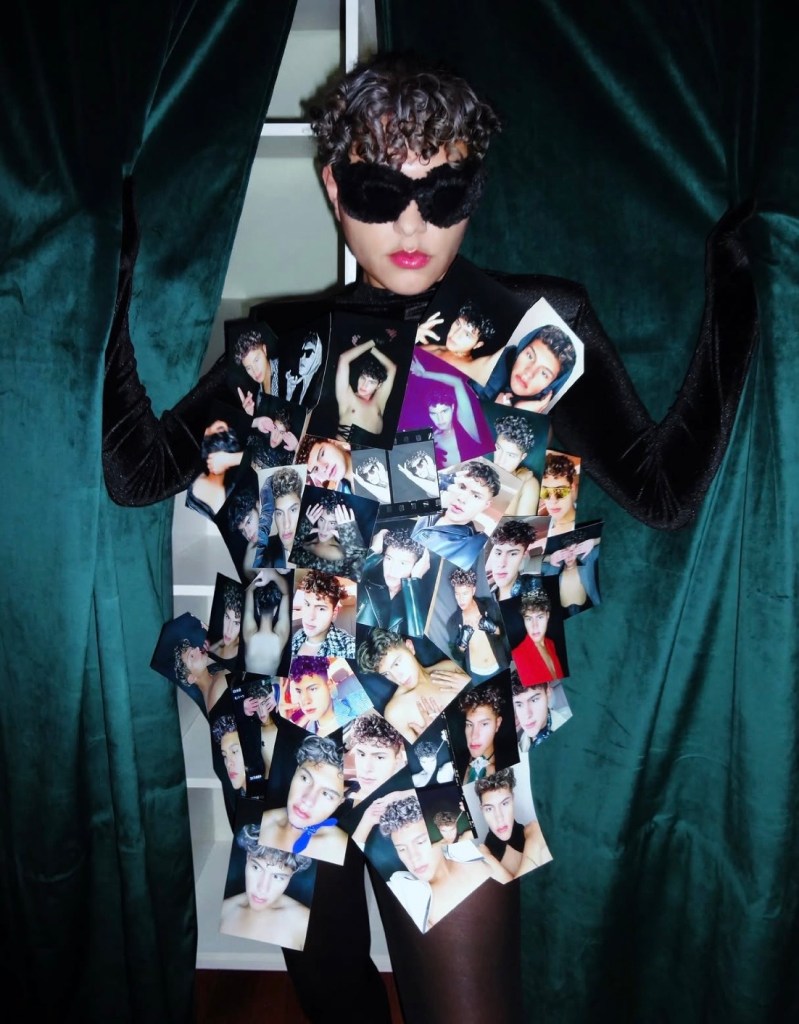
    Photography by Lizbeth Sandoval.
  • A Place for Kink at Pride

    A Place for Kink at Pride

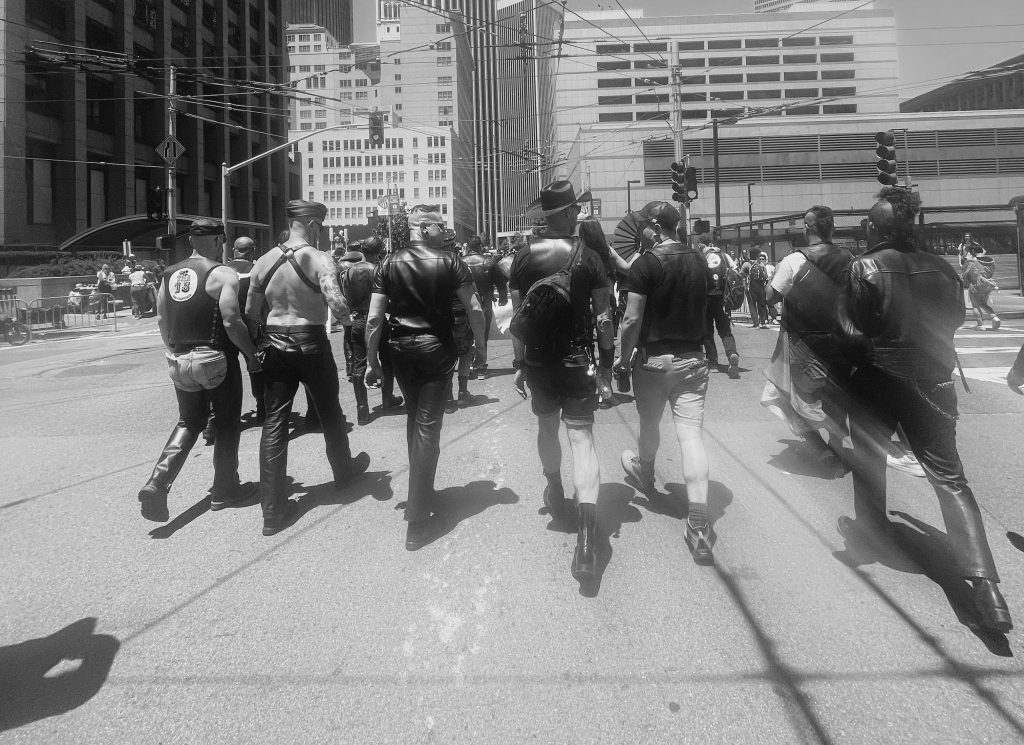
    Every year during Pride month, there is a surge of negative reactions online (and in person) regarding who Pride is for and to what degree. This is particularly salient for kink at Pride. Posts and news stories routinely question why kink is even at Pride. Just a sampling of kink-related Pride posts I found on Instagram offered such original comments as: 

    “Freaks.” 

    “Kink gear in a public area around minors is weird though am i too woke r sum”

    “Keep it in your home.” 

    This type of reaction is unsurprising. Virtually anything furry, kinky, or fetish-adjacent has become increasingly scrutinized amongst the LGBTQ+ community. However, this raises a question that frequently emerges in June as Pride (at least in the United States) becomes more of a focal point: Who belongs at Pride? 

    As celebrations, parades, and parties kick into high gear to celebrate all aspects of the LGBTQ+ community throughout the month, the kink community is a recurring, easy target. 

    While I am not the definitive voice in the matter by any means, the answer seems obvious to me, of course, kink belongs at Pride. Pride is for all within the LGBTQ+ community, and, surprise, surprise, there are a great number of us who also have kinks or fetishes. Additionally, there’s an exhaustive history within the LGBTQ+ community that directly addresses kinks and fetishes; there are artistic influences that go back centuries; there’s cultural heritage, and a celebration of an individual’s sexual orientation and sexual identity could be easily connected to sexual interests.  

    The question of kink’s place at Pride almost becomes a boring one. For most within the LGBTQ+ community (myself included), we are at least aware of the histories of our community more so than those on the periphery of the community. Even the most supportive of allies may draw a blank if questioned about Tom of Finland, Saint Sebastian, or Saint Andrew and his cross. 

    There will always be outrage about displays at Pride events, regardless of whether kink is there or not. A completely “vanilla” Pride event would still be derided by those with preconceived notions and deeply embedded homophobia. If someone already has a distrust or negative view of anything even remotely queer-related, they will find a means to continue advocating for that hate. Suppressing displays of kink, then, in an attempt at appeasement, is a fruitless and even regressive endeavor.       

    But what about individuals who are enthusiastic about Pride, allyship, or who may be in the LGBTQ+ community itself, but are uninterested in or even disturbed by kink? Shouldn’t we, as a welcoming community, then at least accommodate those who would otherwise be open but could be uncomfortable seeing, say, a rubber gimp or a leather daddy? 

    (Insert The Simpsons, “Won’t someone please think of the children?”) 

    Or worse! The corporate sponsors! After all, we cannot have a pup on all fours in front of a Raytheon float.  

    The point of Pride is not to make everyone completely comfortable. It never will be, nor ever should be. Pride’s origins as a political movement in the 1960s and 70s—alongside Stonewall, “Gay is Good,” and the Christopher Street Liberation Day—were to equate living one’s authentic self without shame. That act may itself make people—particularly outsiders of the community—uncomfortable. 

    As a commemoration of the first Stonewall Riot, “Pride” as a term was coined by L. Craig Schoonmaker as a means to counteract the immense social shame directed at the LGBTQ+ community. Schoonmaker said, “The poison was shame, and the antidote [was] pride.” At the time, people were “very repressed, they were conflicted internally and didn’t know how to come out and be proud. That’s how the movement was most useful, because they thought, ‘Maybe I should be proud’”

    Isn’t then the truest essence of Pride being able to showcase one’s kink and fetish interests without the often-internal conflict associated with enjoying them? 

    Many kinks are still derided and ridiculed today, even by members of the LGBTQ+ community. It can be easy to point and mock kinks and individuals who engage in them. Look at the reaction to former Department of Homeland Security Advisor Kristi Noem’s husband, Bryon, and the revelation of his “bimboification” kink. This is a type of role-playing in which someone pretends to be a stereotypical bimbo or Barbie doll. The ridicule can focus on the hypocrisy associated with the Noems and their rampant animosity towards the LGBTQ+ community (particularly the trans community), but shouldn’t be towards the kink itself. But that level of nuance in discussion is often ignored.

    This can then lead many (arguably most) people to keep their own kink and fetish interests fiercely private, to avoid ridicule or ostracization. This itself can have a ripple effect, as these individuals remain unaware of how many others share those interests and how safe it can be to explore between consenting adults. From bondage to gear to roleplaying, there’s no shortage of kinks for everyone interested. But many do not believe they can or should engage in these. Where else but at a Pride celebration could one in this situation learn more about kinks and meet those who could illuminate them? 

    As for the ‘keep it to the bedroom’ argument with kink, Pride provides safety in numbers. Many people just starting to dip their toes into kink could risk physical or emotional harm with someone else who may lack proper knowledge or expertise in some kinks, such as bondage or impact play, in an isolated setting. Demonstrations, educational courses, and communal settings serve as ideal places to ask questions, engage, be curious, and reduce taboos. In today’s often reactionary world, Pride can be one of the few genuine opportunities people have for this. 

      Individuals who have the chance to showcase kinks and genuine interest or curiosity at Pride can learn a great deal about themselves, too, and become all the more personally courageous and introspective as a result. 

    On a personal note, after a few years of skipping Pride celebrations, in 2022, I returned to Pride celebrations, given that a former high school classmate of mine had been arrested as part of a thwarted white supremacist riot at an Idaho-based Pride celebration. I had known him for years, had gone to lunches with him with classmates and other friends, and was shocked and horrified to see this white nationalist turn and vitriol towards Pride. 

    So, I got a rubber tank top, some splashy pants, and even some impressive leather boots, and strutted my stuff at Denver Pride. If for nothing else than to show, this was a hell of a lot better look than whatever lame tough guy cosplay these hate-mongers would ever hope to wear. But in a more real sense, I did it because I wanted to be proud of who I was and could be. That is the core of Pride’s existence. No matter what hate, ridicule, or mockery countless others may throw, Pride should be a beacon of hope for self-expression.  

  • For Halloween, I Dressed Up As Myself

    For Halloween, I Dressed Up As Myself

    Growing up, I wanted to dress up as desirable. I wanted to trade in my straight eyelashes for curled ones and change my brown eyes to blue. I wanted to grow four inches in height and lose two around my waist. I yearned for wavy hair that framed my face instead of the stick-straight hair I was given. My eyes were wide enough to see, but not wide enough to be seen. I would have traded them in an instant. When I walked into a room, I wanted people to turn their heads to look at me. I wanted to hear it, the rustling of hair against shirt collars. I wanted the air to shift around me so that the music sounded a little clearer and the drinks tasted a little sweeter. All of this yearning and shapeshifting to be liked by boys. Boys who looked straight through me to get a better glimpse of my friends. Boys who made racist remarks about me as a joke, and friends who let it happen. I knew that the costume I wanted could never be bought online. In a world full of tricks, that was the biggest one of them all. 

    When Halloween rolled around, I was reminded that even on a day where anything was possible, I would never be able to be the one thing I really wanted: an equal. While I didn’t love the holiday, I knew an opportunity when I saw one. Without its quality of childlike wonder, it was a chance to flip expectations on their head. It was the one day a year when the impossible was possible. A nice girl could be a witch and a shy girl could be noticed.

    When I fell in love, things began to change. At last, I had caught the feeling I spent my whole life pursuing. The fog of self-loathing cleared, and I looked around, assessing the damage. I was alive, and other than 22 years of mental turmoil, remained mostly intact. I discovered that what made me undesirable was my environment, not me. And I discovered that the feeling I had when I looked at a pretty girl, the one I had almost convinced myself wasn’t real, was, in fact, the thing I had been wanting all along. With this newfound knowledge, I could start over as someone new, someone who dressed up as the character from their favorite childhood movie, for no reason other than for themselves. How strange and wonderful it was to put me first!

    Now, Halloween has taken on a new meaning. I no longer have to choose between pleasing others and pleasing myself, because the only person I care about is already next to me, holding my hand. Embracing my queerness helped me to accept many things, some more obvious than others, but I never imagined that a holiday that used to symbolize conformity could return to one of storybook characters and laughter.

  • I Forgive You

    I Forgive You

    by Liv Gardner


    I forgive you

    For the hurt

    For the tears

    I forgive you

    Whether you want forgiveness

    Or not

    The words you spoke

    Echoing for years

    Deep inside

    I release them

    They belong to you

    Like they did before

    They hold power over me no longer

    And I relieve you of that power too

    Maybe you’ll understand

    Maybe you won’t

    But at last

    We are free

    Unbound

    From each other

  • Playing Dress Up

    Playing Dress Up

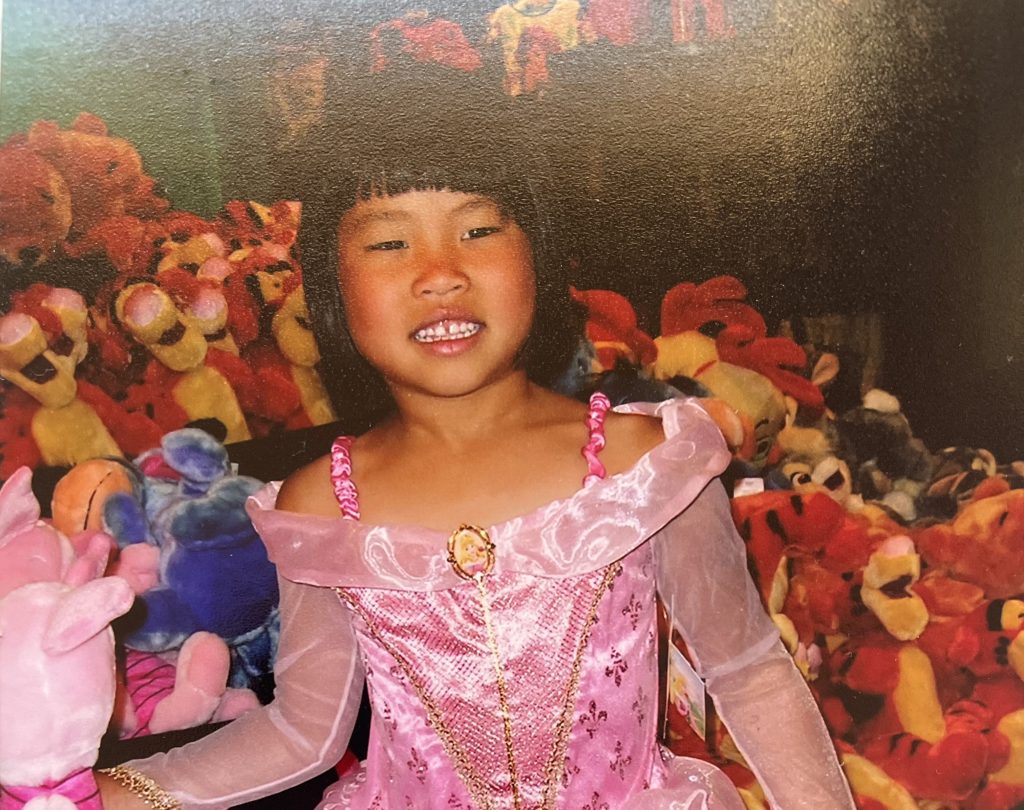
    I don’t remember a lot from my childhood. There’s no deeper reason like I’m trying to forget certain events or particular people–it’s not that serious; I simply have a bad memory. However, amongst the collection of things I do remember, like my old childhood best friend’s birthday and Greek alphabet song, are the consecutive Halloweens I spent dressing up as Sleeping Beauty. Everything about the holiday besides my costume is a blur and frankly unimportant. In my memory, it was all about the dress.

    Like many six-year-old girls, my favorite color was pink and this dress was my perfect shade. It had stretchy silk-like straps that looked like scrunchies attached to a tulle off-the-shoulder neckline that revealed my childish decolletage. In the middle sat a pendant with Sleeping Beauty herself. The sleeves were full length and ended at my wrists with a piping of gold stitching. The bodice held the most detail, with a v shape joining in the middle made with that same gold stitching, to create shape where there was none. Fleur de lis littered the top and bottom of the dress and shimmered in the light. I adored this dress, getting much more wear out of it than just once a year. I have a picture of me at six years old wearing it to the mall on a random Monday in August. At the time, I’m sure it was the color that lured me to it, but as I reflect now, it’s apparent that there was a part of me who loved it because I could finally be something that everyone else was. I wasn’t the adopted Asian girl with white parents, I was Sleeping Beauty. I had blond hair and fair skin and a prince who would do anything for me. I may have looked different but my dreams were the same. 

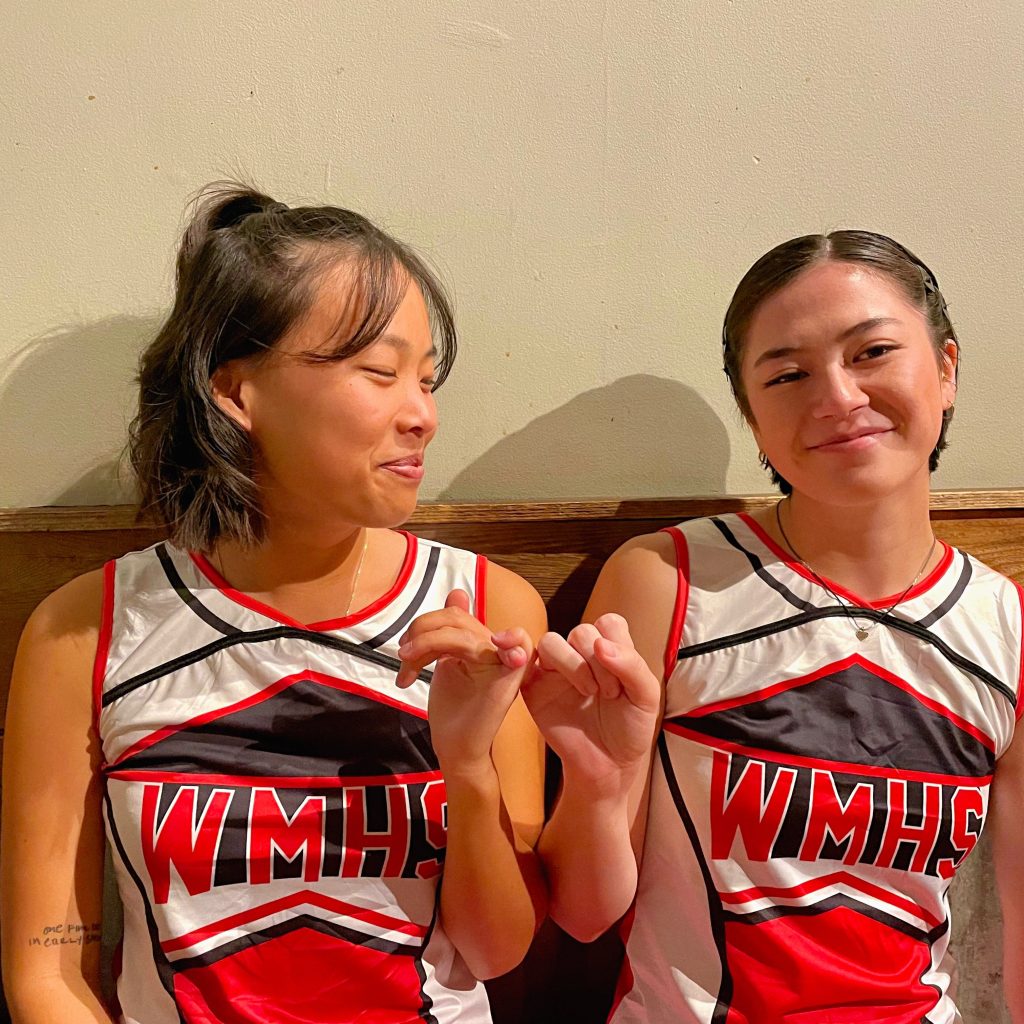
    Eventually, I grew up and the dress was passed on to someone else, and I was still chasing that feeling of belonging. Growing up in a small town meant that I was among only a handful of other Asians. As a whole, I was met with kindness, but to exist meant to stick out, and so I did my best to exist quietly. I fell in with the right crowd: friends from well-known families in the community who were popular but kind, and smart but humble. I excelled in school enough to remain in step with my friends but not enough to be noticed. I participated in student government but ran for historian instead of president, and joined the cheer team, choosing the position that faced away from the audience instead of towards it. I didn’t come out as queer until I was 16, though I knew a lot earlier than that. I couldn’t stand being even more different than I already was, so I sacrificed my love for uniformity. This became my new costume, which I wore comfortably and without hesitation. I didn’t stand out at all, and that’s exactly what I wanted. What felt like a persona at the time became synonymous with who I was. Before I knew it I was floating through life content with being 70% happy, so long as on the outside it looked like I was 100%. I didn’t find that last 30% until I was 22 years old. When I first met my now-girlfriend, I couldn’t believe that life was meant to be this good. The way our lives intertwined so seamlessly made me believe that that’s how it should have been all along. As someone who lives their life with bated breath, I didn’t think I’d ever find someone who felt like fresh air.

    The costume I had eagerly worn to survive had become my skin. It was the good things now that felt like make-believe. I would come home from a day of holding hands and writing love notes and look in the mirror and see a stranger. She looked like me, but there was a quality about her that was different. She shimmered, like how heat radiates off of the pavement on a hot day and how the air almost looks like it’s vibrating. Patches of my old self would reappear in moments of vulnerability or anxiety, but as time went on I started to shed my old skin. 

    It took my whole life to get to this point, but it doesn’t feel like I’m playing dress-up anymore. I used to have to pretend to be someone else to feel like enough, but now there’s no one I’d rather be than myself. I still experience all the hard parts of life, like everyone else, but I can find comfort in knowing that trying to suppress who I am is no longer one of them.

  • An Accumulation of Poetry from Bethany Clark’s Original Book A 24 Year-Old Girl

    An Accumulation of Poetry from Bethany Clark’s Original Book A 24 Year-Old Girl


    One girl made me so upset. 

    Afraid. 

    Not of her, 

    But rather 

    The butterflies in my stomach. 

    The “it” girl. 

    Beautiful, funny, smart and kind. 

    Perfection in the flesh. 

    How could anyone ever love me 

    When they could have her? 

    “It’s okay for others, but I could never!” 

    This silent mantra subliminally messaged me constantly. 

    One day I realized I am worthy of the same grace I extend to others. 

    I want to kiss a woman. But not because I’m drunk, or want attention, but because I want to. Because I like her smile and the way she laughs. Because she gives me butterflies. I want to run my fingers through her hair and hold her hand, stay in bed until 11 on a Sunday and know how she takes her coffee. I want to exchange our hopes and dreams, have dinner with her mom and laugh at old baby pictures. 

    There she was in pixels 

    Illuminating in front of my eyes. 

    Oh there you are, 

    There’s the love of my life. 


    A note from the poet: 

    While writing these poems for my first book, A 24 Year-Old Girl, I was struggling with the aftermath of heartbreaks, the transition into adulthood, and you guessed it: my sexuality. My sexual identity was always something I questioned, but being that I had only ever dated cis, straight men, I never fully allowed myself the chance to explore as I was otherwise committed. Once I found myself single, and deep in the throws of self-improvement, queer discovery wasn’t far behind.

    I struggled for a long time with finding a label for my sexuality. I knew I wasn’t straight, but I felt as though I didn’t fit in any particular box. I suppose if you were to put a gun to my head I would say I’m pansexual, but the artist in me prefers the terms “queer” or “fluid.” Trying to define my sexuality ended up limiting the expression and exploration I needed to be out and proud. If I waited any longer to have the proper name for myself, I would be waiting forever. 

    To me, sexuality is a beautiful, complex, and fluid thing that cannot be described with a label. So I decided to stop trying to understand what I was, and embrace being a member of the community in some way, shape, or form even if I didn’t know how. Like I’ve always known, I am not straight, and at last, that is enough for me. 

    I have friends who love their labels of trans, lesbian, bisexual, etc. because it makes them feel seen or gives them an understanding of themselves; I applaud them! The main takeaway from my personal growth I want to share with you, reader, is to allow yourself a chance to breathe. 

    Remember, there are no rules, it truly is not that deep. There is no “right” way to discover yourself, and it is okay for you to belong to one community and one day find another that feels like home. We are multifaceted beings, constantly evolving and are “worthy of the same grace [we] extend to others.” 

    Peace & luv, 

    Bethany Clark

  • Reflection Piece

    Reflection Piece

    by Honor

    They tried so hard for you. Please keep trying. In 20 more years, you can start to finally see yourself and you will do anything to let that happen. You’re not disgusting. Not embarrassing. Not to be ashamed of.

    Please. Honor. You will make this happen. We won’t let our life pass us by.

    Please don’t let it, okay?

    Love, Honor