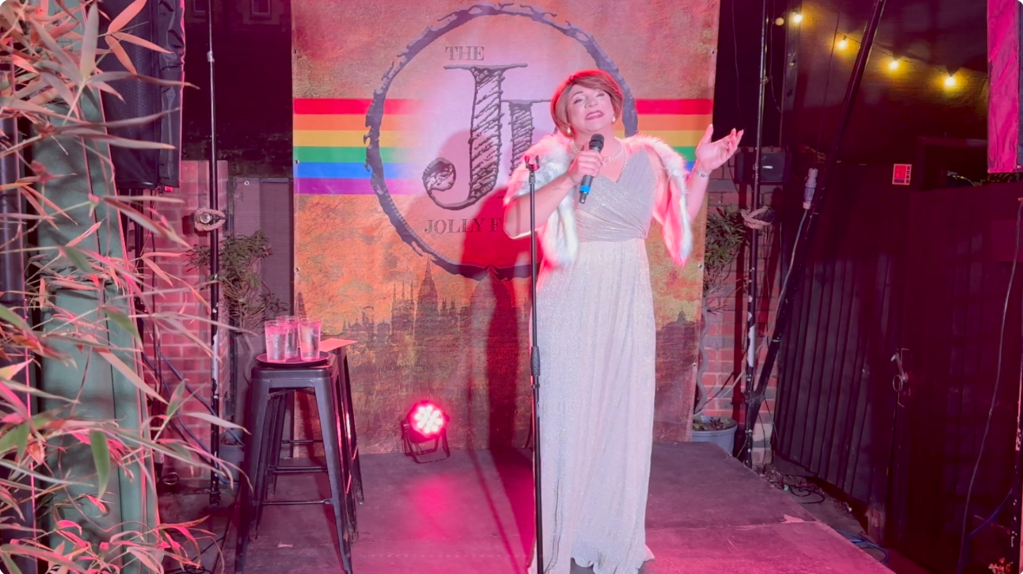
There is a question running beneath all of Jake Robertson’s work: What is it that makes us human, and what happens when someone tries to take that away?
Robertson (They/He) is a Soviet cultural historian, educator, theatermaker, and storyteller. They studied Slavic Languages and Literatures at Princeton, trained in acting at the Royal Conservatoire of Scotland, and recently completed a PhD at Oxford, where they researched professional theater inside Soviet Gulag camps.
But Robertson’s work has never been confined to the archive. They have taught Russian language, history, and theater to students around the world. Robertson’s scholarship examines the relationship between artistic expression and political control, exploring how culture survives and sometimes resists under authoritarian systems.
At the same time, Robertson’s career as a theatermaker and drag artist has taken him from Off-Broadway theaters to queer pubs to Shakespeare’s Globe.
Robertson’s creative projects include Saundra Lezzenbaum: Love in Concert!, a one-woman drag spectacular combining original music, improv comedy, and couples therapy. Love in Concert! was just one of Saundra’s shows. Her current rep is a monthly community mixer called Saturday Night Love. It also combines comedy, cabaret, and group therapy in an effort to foster connections and build community.
There is also Songbird, a play in development that weaves together the life and music of queer Soviet cabaret icon and Gulag theater star Vadim Kozin with the story of a drag artist facing imprisonment in contemporary Russia.
On paper, these worlds might seem impossible to reconcile. An Oxford historian and drag performer. Soviet archives and comedy clubs. Gulag theater and queer performance. But for Robertson, they are all part of the same lifelong inquiry.
“What binds us all together, while at the same time making us wholly unique?”
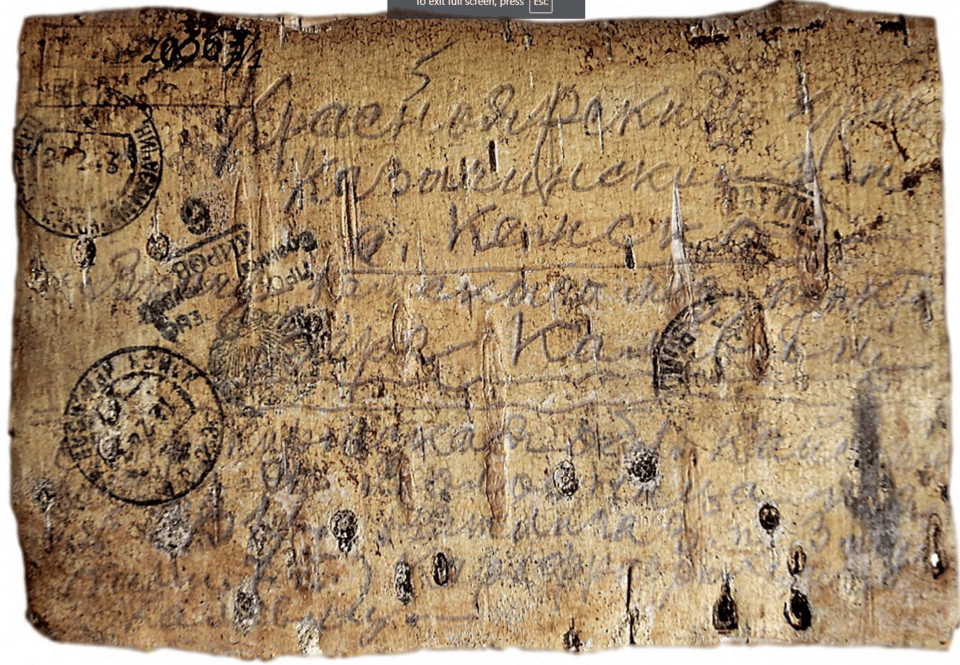
The Search for What Connects Us
Robertson’s fascination with humanity has always existed between individuality and belonging.
For much of Robertson’s early life, they carried the weight of a divided identity. They describe spending two decades closeted, negotiating questions about who they were and how openly they could live.
“I began as a nerdy sensitive gay boy in the Midwest and now have broken out of the binary and embrace an expansive queer identity that transcends gender and sexuality, shaping my perspective on almost everything,” Robertson says.
“Now that I have embraced who I am and opened that up more and more, I have become even more interested in bringing us together and what we all share.”
Whether sitting in an archive in Siberia researching a forgotten performer, or stepping onto a stage as Saundra Lezzenbaum, Robertson keeps returning to the same essential human longing. To be recognized.
“There is something magical that happens when you can be seen by someone else,” Robertson says. “We are vast and complex, but in some profound way, we want to be seen.”
For Robertson, that recognition carries almost spiritual weight.
“Namaste,” comes to mind. “The divine in me sees the divine in you.”
That belief may seem far removed from the brutal realities of Soviet repression, but Robertson sees the same human impulse everywhere: the desire to connect and find meaning even in circumstances designed to destroy those possibilities.
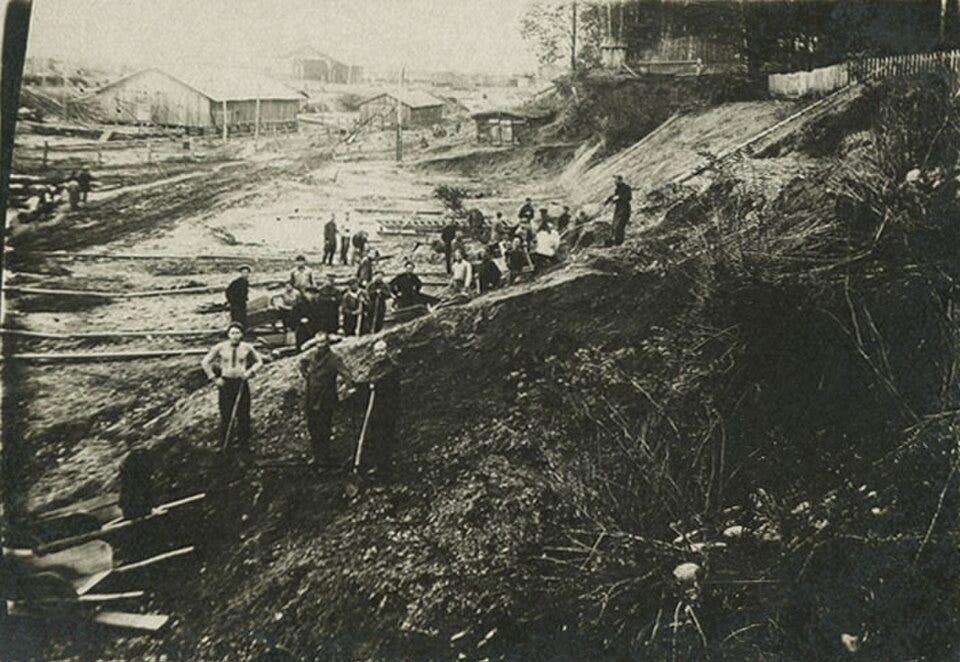
The Stage Behind the Barbed Wire
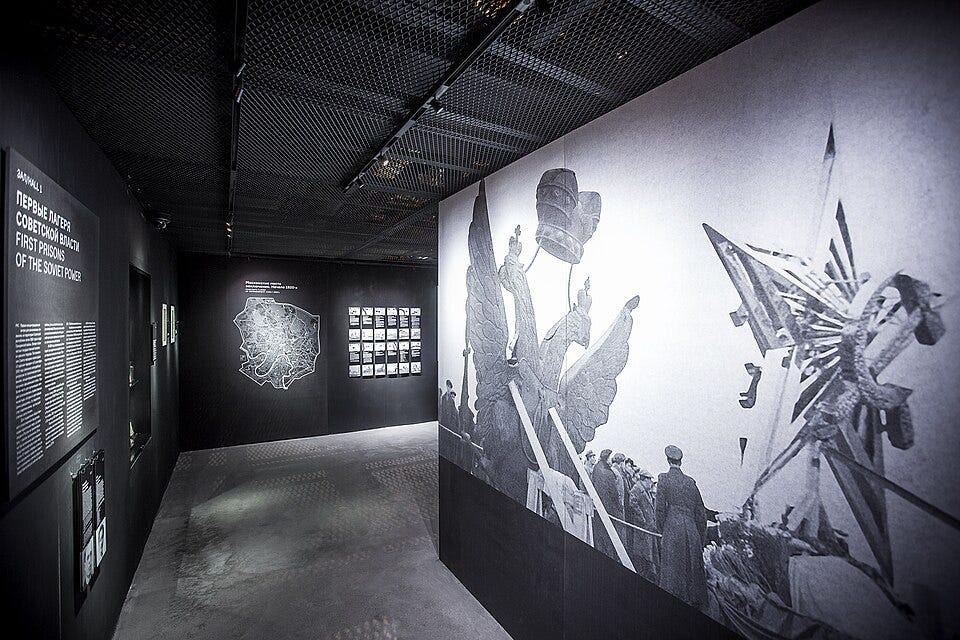
Robertson’s doctoral research examined one of history’s most unlikely artistic landscapes: professional theater inside the Soviet Gulag.
The Gulag system was built around forced labor and political control. It was designed to extract productivity from millions of prisoners while attempting to reshape them according to Soviet ideology.
Yet within that system, something unexpected emerged: Theater.
“I got into Gulag theater through memoirs,” Robertson says. “Through these experiences in the camps, I felt this connection to the artists.”
Prisoners who had been actors, directors, musicians, and designers before their imprisonment continued creating. Others found artistic roles within the camps. They built stages, organized performances, designed sets, and produced operas and plays, all while receiving the support and resources of local Gulag administrators.
Within the very system that sought to destroy their humanity, these artists found a way to preserve that humanity through their art.
For Robertson, this transformed his understanding of creativity.
“As a theater maker and a creative, it gave me a deeper reverence for the creative act as an expression of your identity…There is something about revering that act.”
Art was not simply entertainment but proof of existence. It was a declaration.
I am still here.
Robertson’s research also complicates easy narratives. Gulag theater was not simply a story of heroic resistance. The performers often faced impossible moral questions. Some felt guilty because theater offered them privileges unavailable to others. Some prisoners accused them of collaborating with camp authorities.
“The people who survived,” Robertson explains, “are the ones whose memories we are reading.”
History, like humanity itself, is complicated.
“That spectrum of humanity and barbarity is fascinating… The same camp boss who took up the role of patron-of-the-arts, who joyously cheered for the Gulag opera, also oversaw a regime of mass starvation, exploitation and death.”
The contradiction is unsettling. But it is also revealing. History does not only show us what people do. History forces us to contemplate the contradictory vastness of being human.
Robertson’s dissertation will be a book set for release in 2028 with Cornell University Press.
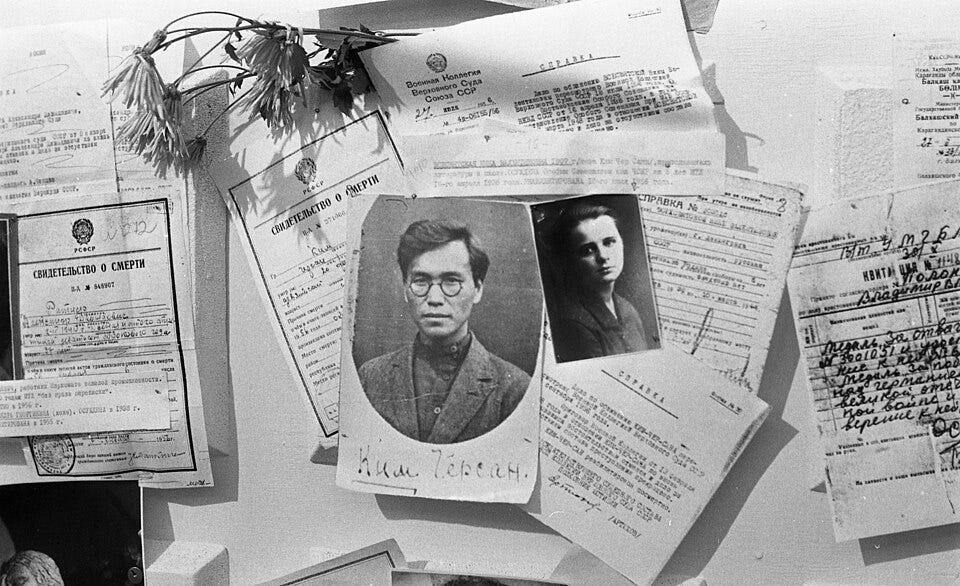
Documents of the Gulag’s victims.
Why Authoritarians Fear Stories
For Robertson, the struggle over history is ultimately a struggle over storytelling.
“Stories were everything. All human institutions and civilizations are built around stories.”
Governments use stories to create national identity, justify policies, and define enemies. The Soviet Union carefully constructed narratives about progress and the inevitable triumph of communism.
But stories are dangerous because they can never be fully controlled. They can also complicate official narratives.
“I believe official narratives are also a form of storytelling, and a powerful one at that. But our stories, especially those that illuminate the expansive complexity of human reality, can also serve as an incisive challenge to those hegemonic discourses. That to me is the power of queer stories, the kind that refuse to submit to norms, conventions and binaries.”
Authoritarian systems often demand simplicity: one truth, one version of history, one acceptable identity. But human experience resists simplicity.
“Reality is more complex,” Robertson says. “That complexity is exactly what my work seeks to preserve.”
“The story of Gulag theater would have been lost to the snowdrifts of time were it not for the local historians, survivors, descendants who preserved those memories and materials. My goal with my decade of research was to do my part to make sure they did not die and disappear.”
Historians are trained to analyze evidence carefully. Artists are trained to explore possibility. Robertson believes both are necessary and mutually enriching.
“I have years of training as a serious historian and as an artist. There is something to be said about the reality and limits of our knowledge, understanding what we can and cannot know for certain.”
But scholarship cannot remain locked away.
“It can’t exist in a vacuum. We need to communicate what we learn and share it.”
At NYU, Robertson went on to create a brand new multidisciplinary course on Soviet Theater. It was called “Soviet Stages: Theatre as Revolution, Repression & Resistance in the USSR.” This fall, they will teach Introduction to Theatre Studies, building the course around the frame of drag and performing gender onstage and off.
“When we did the scenes in class, we learned much more,” Robertson says, reflecting on Soviet Stages. “We could never get that just from words on a page. The artist enlivens and brings to life so many new things that we cannot do as researchers.”
That philosophy informs Saundra Lezzenbaum, Robertson’s drag persona.
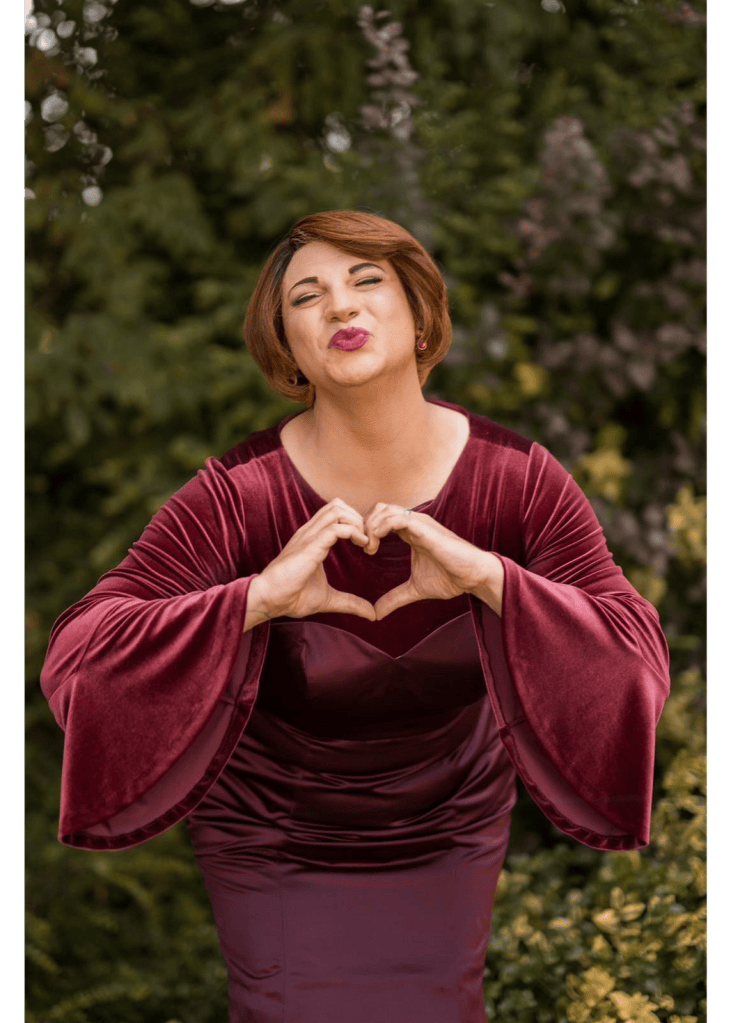
Saundra Lezzenbaum is a fictional character, drag cabaret persona, and self-proclaimed “America’s Queen of Hearts” whose larger-than-life mission is to rescue romance one laugh at a time. Hailing from her “palatial duplex in Ronkonkoma, Long Island,” Saundra presents herself as a world-famous love coach, matchmaker, and relationship expert whose improbable résumé includes a cosmetology background, a lunchtime Emmy-winning television show called Queen of Hearts on The CW, and a collection of wildly imaginative self-help books, including Married to Menopause: Keeping Things Hot Through the Hot Flashes and her love memoire Heart Attack, the Good Kind.
At the center of her carefully crafted mythology is her supposedly flawless marriage to her beloved husband, Max Lezzenbaum, which she uses as the foundation for her advice on achieving “#PerfectMarriage” bliss. In performance, Saundra becomes a comedic Cupid for the modern age, hosting interactive New York City mixers, cabaret shows, and variety events aimed at solving what she jokingly calls the city’s “Cost of Loving Crisis.”
Through her one-woman musical comedy spectacular Love in Concert!, featuring original parody “Saungs” from her fictional album Saungs for a Perfect Marriage, and her audience-driven “Love Lezzons,” where she improvises relationship advice based on real dating dilemmas, Saundra blends satire, theater, and audience participation into a joyful exploration of love and the absurdities of modern romance.
For Robertson, drag is not an escape from serious scholarship. It is another form of historical inquiry. A way of asking: Who gets to be visible and who gets to imagine another version of themselves?
“By doing drag as a community mixer, it combines celebration of individual identity with a commitment to bringing us together and building real human connection.”
Remembering People Well
Robertson’s projects repeatedly return to forgotten voices.
His genealogy project, Ancestory, transforms family history into narrative experience. It asks people to confront their ancestors honestly, not as perfect heroes or permanent villains, but as complicated human beings shaped by their circumstances. Ancestory weaves together rigorous archival archeology and inspired people-centered storytelling, fostering an accessible personalized journey through your family tree. This unique ancestry experience is curated by Robertson.
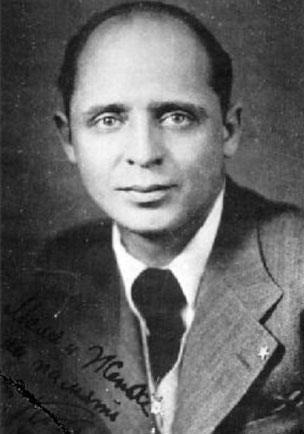
The play Songbird continues this work by exploring the life of Vadim Kozin (1903–1994), a queer Soviet cabaret icon whose career was transformed by Stalinist repression. Known as the “Soviet tango king,” his powerful, lyrical voice blended traditional Russian romance with gypsy soul.
In 1944, at the height of his fame, Kozin suddenly vanished from public life. He was arrested by the Soviet secret police and charged with homosexuality, which was criminalized under Joseph Stalin’s regime. Convicted and sentenced to hard labor, Kozin became the star of the Gulag Theater of Magadan.
The details shift but the mechanisms remain. The attempt to silence certain identities is an attempt to decide whose lives are worthy of recognition.
Near the end of our conversation, Robertson considers a thought experiment: What if tomorrow every archive disappeared? Every book. Every historical document. Every official record. What would remain?
Human storytelling.
What stories would they fight hardest to preserve?
The stories of connection and creativity. The stories of people who found ways to remain human in the face of inhuman circumstances.
“I guess what comes to mind,” Robertson says, “is that there is something in us all that connects us.”
A historian might hesitate because such a statement is difficult to prove. But Robertson has spent their life witnessing it. In Soviet archives and on theatrical stages. In classrooms and in moments of performance and vulnerability.
“There is something that does unite us at our core. And it can be seen by people of vastly different experiences.”
Perhaps that is the thread running through everything Jake Robertson does.
The historian searches the past for forgotten voices. The teacher shares knowledge across cultures. The storyteller preserves complexity. The performer creates spaces where people can be fully seen. And beneath it all is a belief that may be the most radical story of all: Even in the darkest places, human beings continue creating. They continue connecting. They continue telling one another:
I see you.
 The Queerest