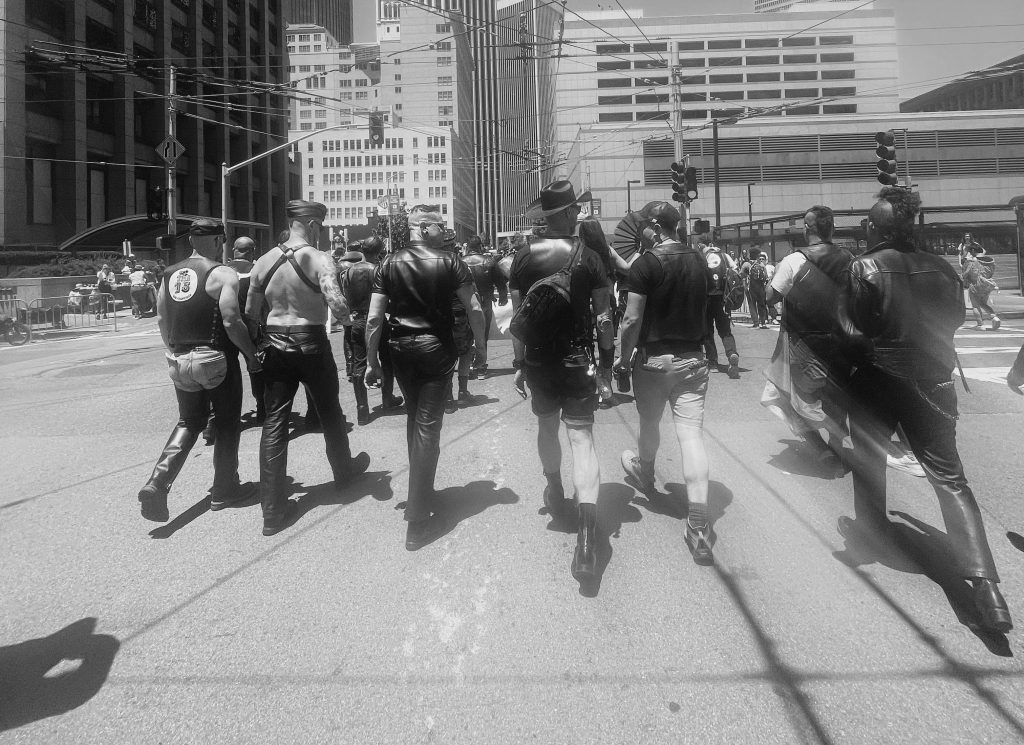
Every year during Pride month, there is a surge of negative reactions online (and in person) regarding who Pride is for and to what degree. This is particularly salient for kink at Pride. Posts and news stories routinely question why kink is even at Pride. Just a sampling of kink-related Pride posts I found on Instagram offered such original comments as:
“Freaks.”
“Kink gear in a public area around minors is weird though am i too woke r sum”
“Keep it in your home.”
This type of reaction is unsurprising. Virtually anything furry, kinky, or fetish-adjacent has become increasingly scrutinized amongst the LGBTQ+ community. However, this raises a question that frequently emerges in June as Pride (at least in the United States) becomes more of a focal point: Who belongs at Pride?
As celebrations, parades, and parties kick into high gear to celebrate all aspects of the LGBTQ+ community throughout the month, the kink community is a recurring, easy target.
While I am not the definitive voice in the matter by any means, the answer seems obvious to me, of course, kink belongs at Pride. Pride is for all within the LGBTQ+ community, and, surprise, surprise, there are a great number of us who also have kinks or fetishes. Additionally, there’s an exhaustive history within the LGBTQ+ community that directly addresses kinks and fetishes; there are artistic influences that go back centuries; there’s cultural heritage, and a celebration of an individual’s sexual orientation and sexual identity could be easily connected to sexual interests.
The question of kink’s place at Pride almost becomes a boring one. For most within the LGBTQ+ community (myself included), we are at least aware of the histories of our community more so than those on the periphery of the community. Even the most supportive of allies may draw a blank if questioned about Tom of Finland, Saint Sebastian, or Saint Andrew and his cross.
There will always be outrage about displays at Pride events, regardless of whether kink is there or not. A completely “vanilla” Pride event would still be derided by those with preconceived notions and deeply embedded homophobia. If someone already has a distrust or negative view of anything even remotely queer-related, they will find a means to continue advocating for that hate. Suppressing displays of kink, then, in an attempt at appeasement, is a fruitless and even regressive endeavor.
But what about individuals who are enthusiastic about Pride, allyship, or who may be in the LGBTQ+ community itself, but are uninterested in or even disturbed by kink? Shouldn’t we, as a welcoming community, then at least accommodate those who would otherwise be open but could be uncomfortable seeing, say, a rubber gimp or a leather daddy?
(Insert The Simpsons, “Won’t someone please think of the children?”)
Or worse! The corporate sponsors! After all, we cannot have a pup on all fours in front of a Raytheon float.
The point of Pride is not to make everyone completely comfortable. It never will be, nor ever should be. Pride’s origins as a political movement in the 1960s and 70s—alongside Stonewall, “Gay is Good,” and the Christopher Street Liberation Day—were to equate living one’s authentic self without shame. That act may itself make people—particularly outsiders of the community—uncomfortable.
As a commemoration of the first Stonewall Riot, “Pride” as a term was coined by L. Craig Schoonmaker as a means to counteract the immense social shame directed at the LGBTQ+ community. Schoonmaker said, “The poison was shame, and the antidote [was] pride.” At the time, people were “very repressed, they were conflicted internally and didn’t know how to come out and be proud. That’s how the movement was most useful, because they thought, ‘Maybe I should be proud’”
Isn’t then the truest essence of Pride being able to showcase one’s kink and fetish interests without the often-internal conflict associated with enjoying them?
Many kinks are still derided and ridiculed today, even by members of the LGBTQ+ community. It can be easy to point and mock kinks and individuals who engage in them. Look at the reaction to former Department of Homeland Security Advisor Kristi Noem’s husband, Bryon, and the revelation of his “bimboification” kink. This is a type of role-playing in which someone pretends to be a stereotypical bimbo or Barbie doll. The ridicule can focus on the hypocrisy associated with the Noems and their rampant animosity towards the LGBTQ+ community (particularly the trans community), but shouldn’t be towards the kink itself. But that level of nuance in discussion is often ignored.
This can then lead many (arguably most) people to keep their own kink and fetish interests fiercely private, to avoid ridicule or ostracization. This itself can have a ripple effect, as these individuals remain unaware of how many others share those interests and how safe it can be to explore between consenting adults. From bondage to gear to roleplaying, there’s no shortage of kinks for everyone interested. But many do not believe they can or should engage in these. Where else but at a Pride celebration could one in this situation learn more about kinks and meet those who could illuminate them?
As for the ‘keep it to the bedroom’ argument with kink, Pride provides safety in numbers. Many people just starting to dip their toes into kink could risk physical or emotional harm with someone else who may lack proper knowledge or expertise in some kinks, such as bondage or impact play, in an isolated setting. Demonstrations, educational courses, and communal settings serve as ideal places to ask questions, engage, be curious, and reduce taboos. In today’s often reactionary world, Pride can be one of the few genuine opportunities people have for this.
Individuals who have the chance to showcase kinks and genuine interest or curiosity at Pride can learn a great deal about themselves, too, and become all the more personally courageous and introspective as a result.
On a personal note, after a few years of skipping Pride celebrations, in 2022, I returned to Pride celebrations, given that a former high school classmate of mine had been arrested as part of a thwarted white supremacist riot at an Idaho-based Pride celebration. I had known him for years, had gone to lunches with him with classmates and other friends, and was shocked and horrified to see this white nationalist turn and vitriol towards Pride.
So, I got a rubber tank top, some splashy pants, and even some impressive leather boots, and strutted my stuff at Denver Pride. If for nothing else than to show, this was a hell of a lot better look than whatever lame tough guy cosplay these hate-mongers would ever hope to wear. But in a more real sense, I did it because I wanted to be proud of who I was and could be. That is the core of Pride’s existence. No matter what hate, ridicule, or mockery countless others may throw, Pride should be a beacon of hope for self-expression.

