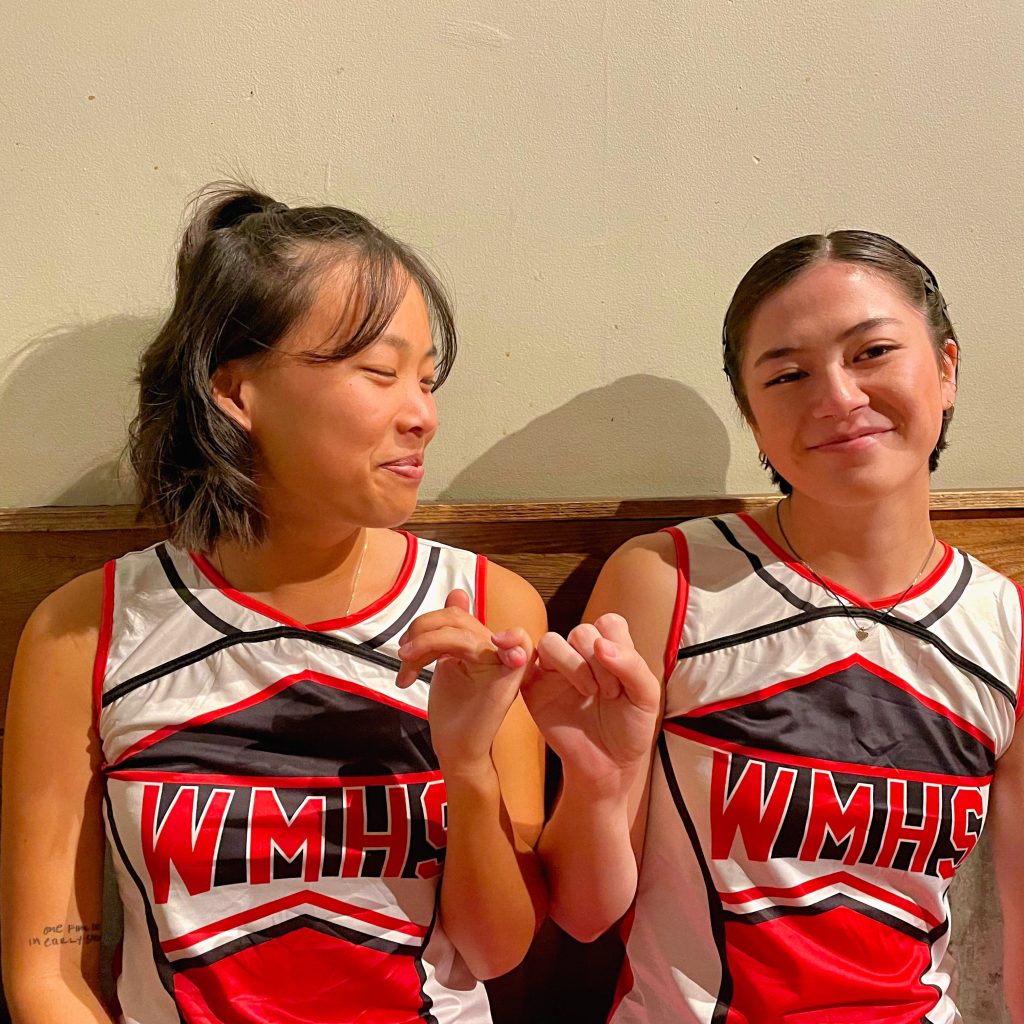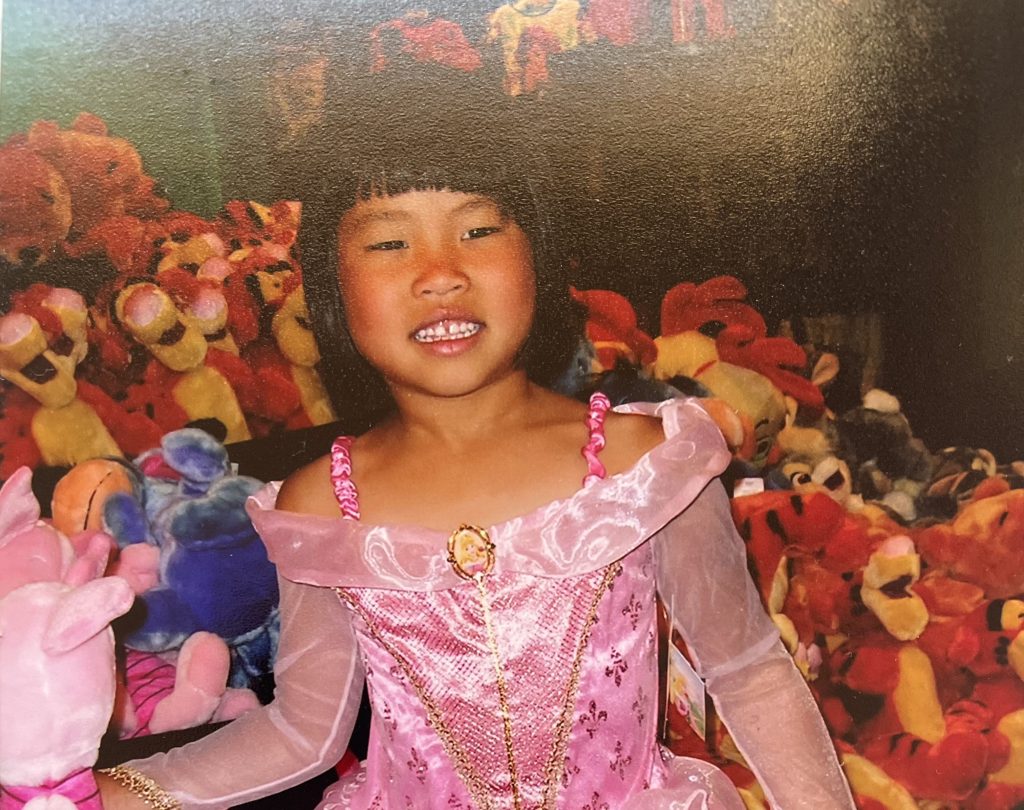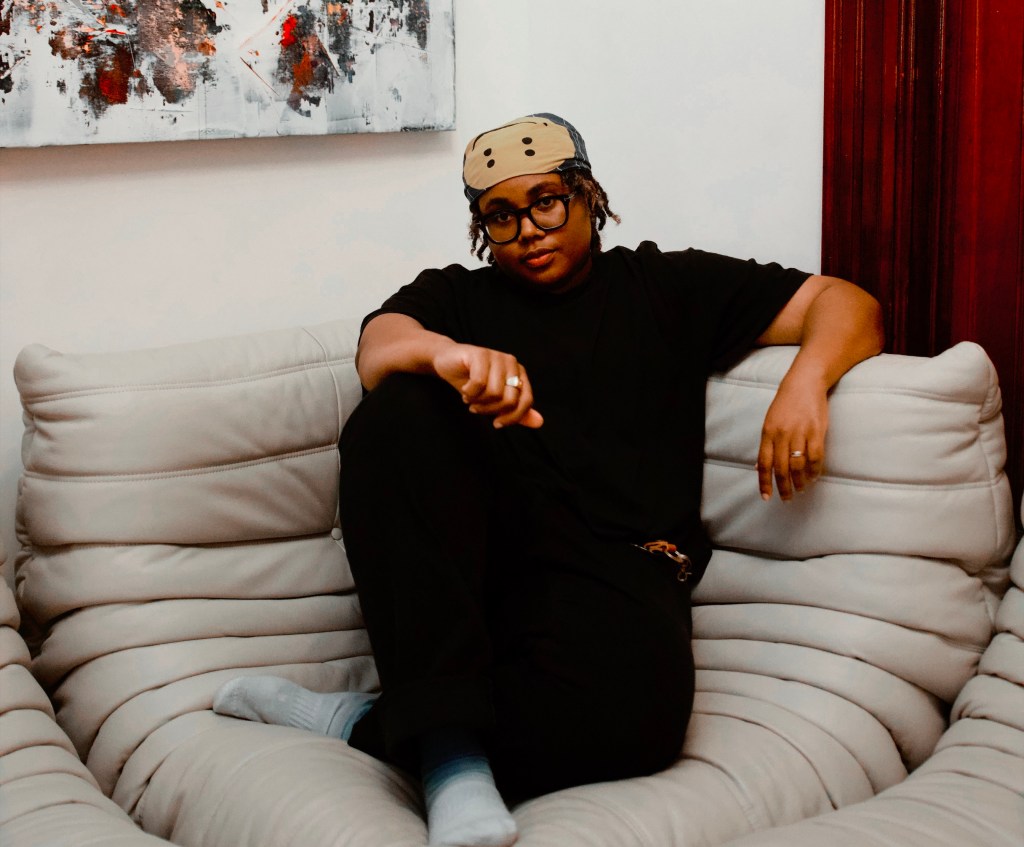
Justy, an independent queer artist, makes music at the intersection of alternative R&B, indie soul, jazz, and hip-hop. With her new single, “Traer(te) la luna,” set to be released on August 28, we were eager to ask about her musical inspirations and how she expresses queerness through song.
10 Questions with Justy
- You’ve said that your upcoming single, “Traer(te) la luna,” which roughly translates to “Bring you the moon,” highlights the impossibility of giving someone everything because of how they feel. Do you feel queer individuals are more uniquely susceptible to this feeling of impossibly high standards–in life, romance, love–than straight counterparts?
That’s a great question. I don’t think impossibly high standards are exclusive to queer people, but I do think queer people can experience them in a very specific way. Many of us grow up without seeing our love reflected back to us, so when we finally find someone who makes us feel understood, that connection can carry an enormous amount of weight. It can feel rare, almost miraculous, and that rarity can make us want to preserve it at any cost.
“Traer(te) la luna” lives inside that feeling. It’s about wanting to offer someone something as impossible as the moon because ordinary gestures no longer seem big enough. But underneath that devotion is the realization that love cannot always overcome timing, fear, circumstance, or the way someone feels. You can give someone your patience, your vulnerability, and every version of the future you imagined, but you cannot love them into being ready.
For me, that is where the song becomes especially connected to queer love: not because queer people love more intensely than anyone else, but because our relationships can carry the additional pressure of scarcity, secrecy, delayed discovery, or feeling like we have finally found something we were once told was impossible.
- Your work crosses multiple different genres–alternative R&B, indie soul, jazz, and hip-hop. What gravitates you towards a specific genre, and how, as an artist, are you able to find harmony between these multiple genres within a song or album?
I’m usually drawn to a sound based on what the story needs. I don’t enter the studio thinking, “This has to be an R&B song” or “This needs to sound like jazz.” Sometimes an emotion calls for the warmth of live instrumentation and jazz chords; sometimes it needs the intimacy of indie soul, the rhythm of hip-hop, or the freedom and atmosphere of alternative R&B. Genre becomes another part of the language I use to communicate.
Finding harmony between those influences feels natural because they all shaped the way I hear music. I grew up loving artists who refused to stay in one lane, from Lauryn Hill and Amy Winehouse to J Dilla, Noname, and Anderson .Paak. Their work showed me that contrast can create cohesion when the artist’s perspective remains consistent.
Across a song or album, my voice and storytelling are the connecting threads. The production may move between genres, but the emotional world stays intact. I’m not trying to make different styles compete with one another. I’m interested in the place where they meet and become something that feels distinctly mine.
- How have your experiences as a lesbian artist shaped the themes and ideas within your works?
Before I had the language or confidence to express who I was, songwriting became a place where I could explore desire, uncertainty, intimacy, and identity honestly. That is why so much of my music lives in the space between what we feel and what we are able to say.
I want to write about more than the struggle to be accepted. Queer people also experience so many facets of life that we don’t have nearly enough forms of representation for. Those stories deserve to exist without always needing to explain or defend themselves.
At the same time, I understand the importance of being visible. I did not always see people who looked or presented like me occupying space in the genres I loved. By writing openly from my perspective, I hope another queer person can hear my music and recognize that their love, vulnerability, and contradictions are worthy of being documented.
Every project I’ve dropped, from my debut [album] Pain With Benefits to now, aims to be a transparent representation of my experience.
- Who have been some of the greatest queer inspirations in your own artistic endeavours?
Some of my greatest queer inspirations are Syd, CHIKA, Joy Oladokun, Arlo Parks, and Orion Sun. I’m inspired by the honesty in their work, the individuality of their sounds, and the different ways they represent queer experiences through music. Each of them creates without being limited by genre or expectations, while remaining authentic to who they are. Seeing queer artists take up space and build meaningful careers has encouraged me to trust my own perspective, experiment with my sound, and create the kind of honest representation I would have valued when I was younger.
- You focus on queer tenderness in your works. Why do you think it’s important to look at queer tenderness specifically in art?
I think queer tenderness is important because queer stories are often framed around struggle, rejection, or the need to fight for acceptance. Those stories are real, but they are not the entirety of our lives. We also experience softness, safety, longing, quiet intimacy, and the feeling of being fully understood by another person.
Focusing on tenderness allows me to show queer love as something expansive and deeply human rather than something that must always be explained through conflict.
- Did your musical journey work in tandem with your own understanding of your sexual orientation, or did one clearly begin before the other?
I would say so. For me, making music was discovering parts of myself that didn’t have space to live comfortably. When I started creating, I felt I could finally connect with thoughts that had been building within me. It almost felt as if my identity was flourishing as I continued to lean into my writing process and musicality.
- Along with utilizing multiple genres, you also use multiple languages in your works, such as English and Spanish. How has working with multiple languages shaped or changed your songs?
“Traer(te) la luna” is actually the first song where I’ve worked with multiple languages. Collaborating with Kiki Corona and bringing Spanish into the song opened up a new emotional and musical dimension for me. Some feelings take on a different texture when expressed in another language, and Kiki’s contribution allowed the tenderness and longing at the heart of the song to come through organically.
The collaboration also made me think beyond the literal meaning of each line and consider how language affects a song’s rhythm, tone, and emotional weight. The Spanish does not feel like a separate addition; it is central to the atmosphere and identity of the track. Working with Kiki showed me how collaboration and language can expand not only what a song communicates, but also how deeply it can be felt.
- Can you offer some details about your artistic process and how you create a song that is so uniquely Justy?
My process usually begins with a feeling, a phrase, or a chord progression that stays with me. I tend to write from emotions I have not completely worked through yet, so the song becomes a way of discovering what I am actually trying to say. I’ll record melodies and scattered lyrics in my voice notes, then slowly build the story around the lines that feel the most honest.
Production is also an important part of my writing. I naturally pull from jazz, hip-hop, neo-soul, and alternative R&B.I love warm chords, layered vocals, conversational lyrics, and small details that make a song feel intimate and lived-in.
What makes a song uniquely Justy is probably that balance between honesty and restraint. I’m interested in the things people feel deeply but do not always say aloud. I try to leave enough space in the music for listeners to place their own memories and experiences inside it.
- Have you felt pressured to change or alter your work to reach larger audiences? And what do you say to people who may themselves feel pressured to change themselves to accommodate heteronormative standards with art?
There is always some pressure as an independent artist to make your work easier to categorize or more comfortable for a wider audience. For queer artists, that can also mean feeling encouraged to make lyrics less specific, avoid pronouns, or present ourselves in a way that fits someone else’s idea of what is marketable. Earlier in my journey, I sometimes kept parts of my writing intentionally vague because I wanted everyone to relate to it. Over time, I realized that specificity does not make a song less universal. The more honest I am, the more people seem to find themselves in the music.
To anyone feeling pressured to accommodate heteronormative standards, I would say that you do not have to dilute yourself to make your art meaningful. There is no single correct way to create queer art, and you should never feel obligated to disclose more than feels safe. But when you are ready, trust that your perspective is not an obstacle to connection. It is often the very thing that makes your work memorable. The goal is not to make yourself smaller for an audience; it is to create honestly enough that the right audience can recognize you.
- What would you like to see listeners take away from your work, and especially listeners within the LGBTQ+ community?
I want listeners to feel understood. My songs often explore emotions that are difficult to say aloud, such as longing, uncertainty, vulnerability, and the stories we create around the people we love. Even when a song comes from a very personal experience, I hope listeners can place their own memories inside it and find language for something they have felt.
For LGBTQ+ listeners specifically, I want the music to feel like a space where their love is allowed to be tender, complicated, ordinary, and fully human. Queer stories do not always have to center on trauma or explain themselves to others. We deserve songs about crushes, mixed signals, romance, heartbreak, and all the quiet moments in between. If someone hears my work and feels less alone, more visible, or more comfortable embracing their own softness, then the song has done what I hoped it would do.
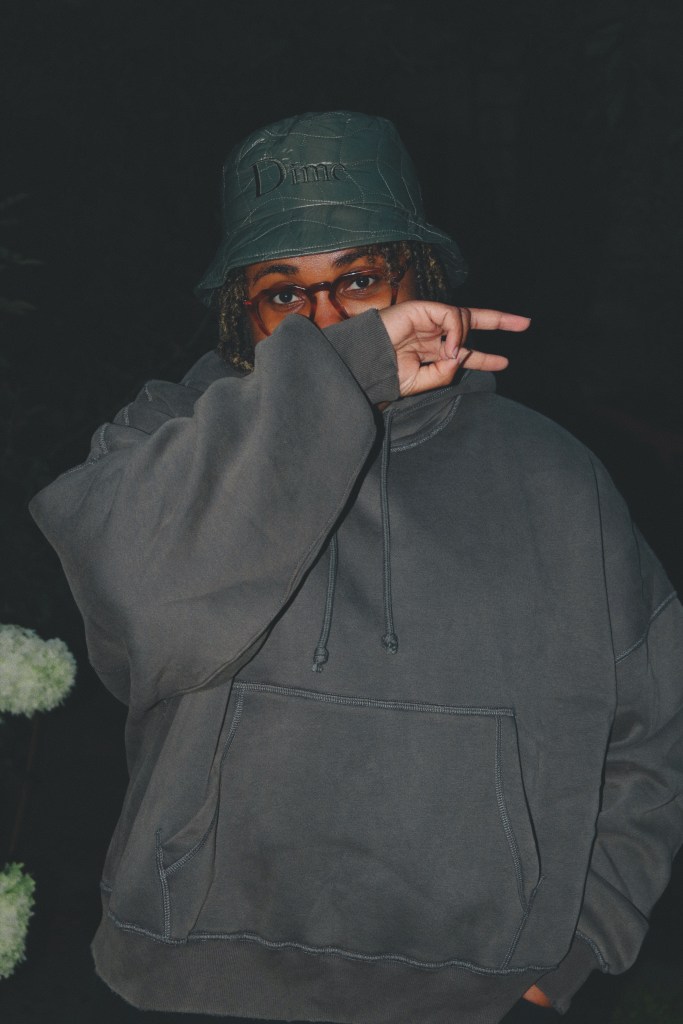
“Traer(te) la luna,” Justy’s new single is described as “A dreamy bilingual indie soul / alternative R&B record about the space between attraction and imagination. Moving between English and Spanish over warm guitars and jazz-influenced production, the song captures the beautiful irrationality of wanting someone so much you’d give them the moon.” The single will be available on all music platforms on August 28.